
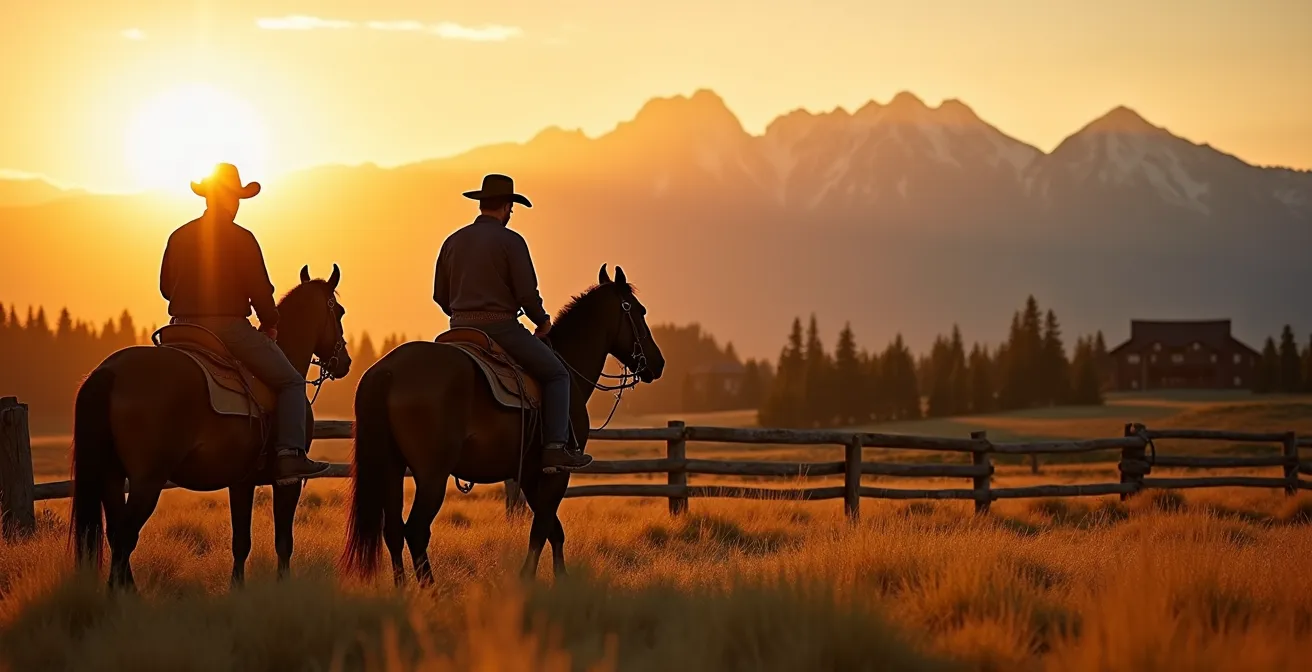
Choosing an Alberta ranch based on the “Yellowstone” fantasy is the fastest way to a miserable vacation; the real decision is a frank assessment of your family’s tolerance for dirt, sweat, and rules.
- A working ranch demands a “can-do” attitude for real chores, where riding is a tool, not a tour. Comfort is secondary to the job.
- A guest ranch delivers the scenery and comfort you see on TV, with curated activities designed for safety and enjoyment, not cattle quotas.
Recommendation: If your family has mixed riding skills or values comfort, start with a guest ranch or a “hybrid” ranch. The authentic “authenticity tax” of a true working ranch is steeper than you think.
So, you’ve been watching “Yellowstone” and now the family’s got a hankering for the cowboy life. You’re picturing yourselves on horseback, gazing at the Rocky Mountains, living out a frontier fantasy. That’s a powerful dream, and here in Alberta, we’ve got the land to make it happen. Many folks think the choice is simple: a luxury guest ranch for comfort or a working ranch for “authenticity.” They’ll tell you to just pack your boots and get ready to ride.
But that’s where they’re wrong. Having run a horse operation for decades, I can tell you the most important choice has nothing to do with the thread count of the sheets or the price of the steak. It’s about a hard, honest look at what your family can—and wants to—actually handle. The gap between the cowboy dream and the on-the-ground reality can be wide. This isn’t about just choosing a vacation; it’s about understanding the fundamental difference between being a spectator and being a participant in a life that’s often more grit than glamour.
But what if the real key isn’t finding the perfect ranch, but first understanding the unfiltered reality of the work, the environment, and your own limits? Forget the TV drama for a minute. We’re going to talk straight about what mustering cattle really involves, why your fancy athletic wear is useless here, what the seasons truly dictate, and how to tell which “Yellowstone” dream actually fits your family’s skills, not just your imagination.
This guide will walk you through the real-world considerations for choosing your Alberta ranch experience. We’ll cover everything from the gear you need to the work you’ll be expected to do, ensuring you make a choice that leads to great memories, not sore muscles and disappointment.
Summary: Your Guide to a Real Alberta Cowboy Experience
- What Can You Legally Collect in Alberta’s National Parks?
- Beginner or Intermediate: Can You Safely Muster Cattle Without Riding Skills?
- Family Style vs A La Carte: How Do Ranch Meals Work?
- Jeans and Boots: Why Your Yoga Pants Won’t Survive a Day in the Saddle?
- Working Ranch vs Guest Ranch: Which Experience Matches Your “Yellowstone” Dream?
- Branding or Round-Up: Which Season Offers the Most Action?
- Roughstock vs Timed Events: What is Actually Happening in the Arena?
- Highway 22 Guide: Why Choose the Cowboy Trail Over the QE2 Highway?
What Can You Legally Collect in Alberta’s National Parks?
Before you even think about the ranch, let’s get one thing straight about the land itself. Many visitors arrive dreaming of taking a piece of the Rockies home with them—a unique fossil, a pretty wildflower, or an interesting rock. The answer to “what can I collect” is simple and absolute: nothing. In both federal National Parks like Banff and Jasper and in Alberta’s Provincial Parks, the rules are ironclad. There is a 100% prohibition on collecting plants, fossils, and artifacts in protected wilderness areas.
This isn’t a suggestion; it’s a strictly enforced law. Federal park wardens and provincial conservation officers have the authority to issue significant fines. The “take only pictures, leave only footprints” mantra is the law of the land here. This rule is the first dose of reality: the wild west you see on TV is now a carefully managed landscape with firm boundaries. This applies to ranch lands too; just because it’s private doesn’t mean it’s a free-for-all. You are a guest, and the land’s integrity comes first.
This table breaks down the jurisdictions and rules clearly. Understanding this is the first step in respecting the environment you’ve come to enjoy.
| Jurisdiction | Collection Rules | Enforcement |
|---|---|---|
| National Parks (Banff, Jasper) | Strict no-take policy under Parks Canada regulations | Federal park wardens |
| Provincial Parks | Prohibited without permit | Conservation officers |
| Private Ranch Land | Owner permission required | RCMP/landowner rights |
Beginner or Intermediate: Can You Safely Muster Cattle Without Riding Skills?
This is the million-dollar question for families inspired by on-screen drama. Can you really help move a herd of cattle if you’ve barely sat on a horse? The honest answer is: probably not in the way you’re imagining. Real cattle work—mustering, cutting, sorting—is fast, unpredictable, and requires a rider who is one with their horse. For insurance and safety reasons, guest participation in high-risk activities is almost always limited on any reputable ranch, working or otherwise.
However, that doesn’t mean non-riders are useless. A real working ranch has a hundred jobs that need doing. As some Alberta ranches note, they welcome helpers without horse experience for tasks like barn sweeping, fence mending, or meal prep. The key is a ‘can do’ attitude with all ranch work, not just a desire for saddle time. If your family’s primary goal is riding, a guest ranch is a much better fit. They have well-trained horses and controlled environments perfect for beginners.
The crucial difference is between “participation” and “observation.” On a working ranch, a non-rider might help by managing gates or spotting cattle from a high point on foot. On a guest ranch, you’ll have a guided trail ride. Both are valid experiences, but they are not the same. It’s vital to have an honest conversation about your family’s actual abilities and expectations before you book.
Your Family’s Ranch Skill Checklist: A Reality Check
- Riding Level: Honestly assess each family member. Are you a true beginner (never ridden) or an intermediate (can comfortably canter and handle uneven terrain)?
- Physical Fitness: Can everyone handle long days of physical activity, whether in the saddle or on their feet doing chores? Ranch work is not a 9-to-5 job.
- Attitude Check: Is your family more interested in the “work” (mending fences, helping in the kitchen) or the “perks” (scenic trail rides, relaxing)? Be truthful.
- Safety Tolerance: Are you prepared for the reality that kids and novice riders will be observers during high-action cattle work for safety reasons?
- Goal Alignment: Discuss as a family: Is the goal to learn about real ranching (accepting all tasks) or to have a horse-centric vacation (better suited for a guest ranch)?
Family Style vs A La Carte: How Do Ranch Meals Work?
After a long day in the saddle or mending fences, food isn’t just fuel; it’s a cornerstone of the ranch experience. But how meals work depends entirely on where you are. On a traditional working ranch, expect hearty, family-style communal meals. You eat what’s cooked, when it’s cooked, and you eat it with the entire crew. It’s about efficiency and community. Don’t expect a menu, and picky eaters might have a tough time. The food is there to power you for the next day’s work.
Luxury guest ranches, on the other hand, treat dining as a highlight. Here, you’ll find menus, options for dietary restrictions, and sometimes even private tables. It’s a restaurant experience in a rustic setting. As highlighted in guides to Alberta’s ranch experiences, over 90% of these luxury ranches feature AAA Alberta beef and ingredients from local producers, making it a culinary event. It’s less about refueling and more about savoring the high-quality bounty of the province.
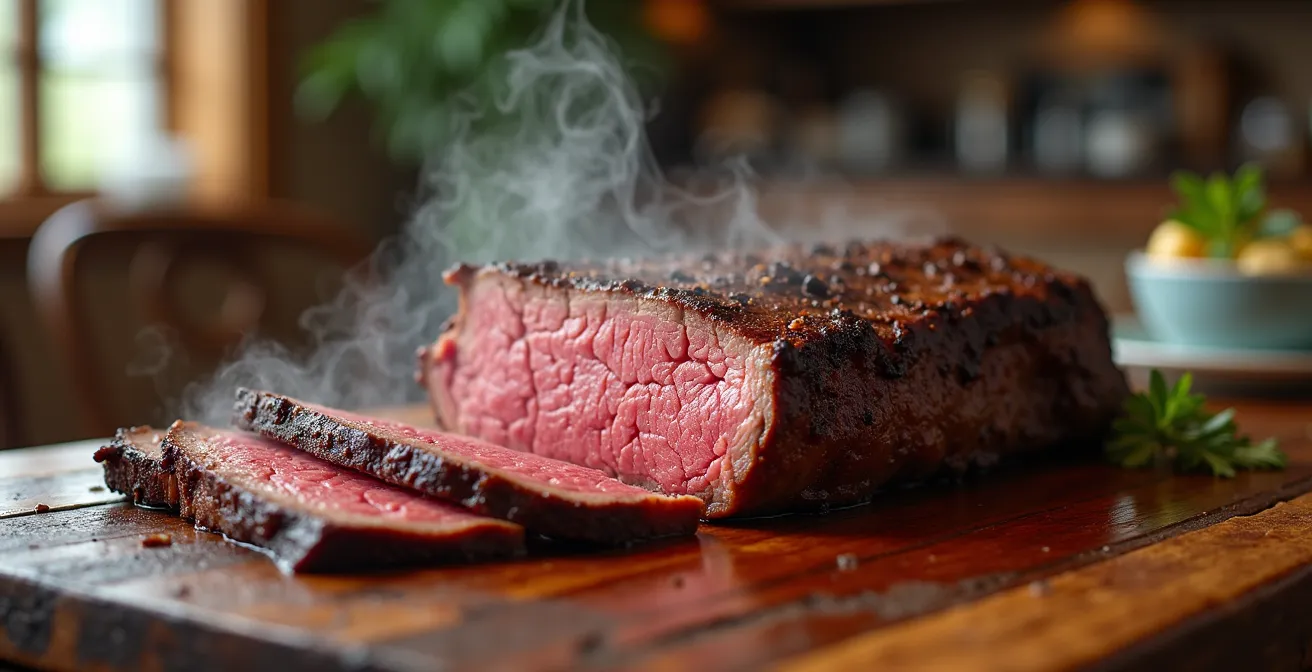
As the image shows, the focus at a guest ranch is often on a beautifully presented, delicious meal that becomes an experience in itself. Some high-end places, like The Lodge at Thanksgiving Ranch, go even further, tailoring experiences to a guest’s preferences, whether that’s an action-packed schedule or a restful escape. Ultimately, you have to decide: do you want to eat like a cowboy, or dine like a guest?
Jeans and Boots: Why Your Yoga Pants Won’t Survive a Day in the Saddle?
Let’s talk gear. This isn’t a fashion show, and the “western” look has a purpose. I see folks show up in yoga pants or athletic leggings, and I know they’re in for a rough day. Those materials offer zero protection. A good pair of heavy denim jeans isn’t just about preventing chafing from the saddle; it’s your first line of defense against the environment. As the experts at Lammle’s Western Wear, Alberta’s premier outfitter, point out, denim is essential against the thorny wild rose and buckbrush common in the foothills. Your expensive leggings will be shredded in an hour.
The same goes for footwear. Running shoes have no place near a horse. A genuine cowboy boot with a proper heel is a critical piece of safety equipment. That heel prevents your foot from sliding all the way through the stirrup, which can be incredibly dangerous if you fall. It’s not about looking the part; it’s about staying safe.
Furthermore, the Alberta foothills have their own set of rules. The weather can turn on a dime. A beautiful sunny morning can become a cold, rainy afternoon in minutes. Layering isn’t a suggestion, it’s a survival skill. A merino wool base layer for a cool morning, a sun shirt for the intense midday sun, and a waterproof shell for the inevitable thunderstorm are non-negotiable. Thinking your city jacket will do the trick is a rookie mistake.
Your Essential Alberta Foothills Packing Checklist
- Base Layer: Pack merino wool shirts. Temperatures can drop to 5°C even in summer mornings, and wool manages moisture and temperature.
- Mid-Layer & Sun Protection: Bring at least one long-sleeved sun shirt with a high UPF rating. The Alberta sun is intense and reflects off everything.
- Outer Layer: A high-quality, fully waterproof shell jacket is mandatory. Not “water-resistant.” Afternoon thunderstorms are a regular occurrence.
- Lower Body: Pack at least two pairs of heavy, non-stretch denim jeans. They are your armor against brush, branches, and saddle wear.
- Footwear & Headwear: Invest in proper cowboy boots with a distinct heel for stirrup safety. Add a wide-brimmed hat for sun and rain protection.
Working Ranch vs Guest Ranch: Which Experience Matches Your “Yellowstone” Dream?
This is the heart of the matter. As Travel Alberta aptly puts it, “Alberta is infused with a hearty dose of old-school cowboy culture,” and ranching is its soul. But “cowboy culture” comes in two very different packages. Your choice will define your entire trip. A working ranch is a business first and a tourist destination second. The priority is the livestock and the land. Accommodations are often basic, the work is real, and your schedule is dictated by the needs of the ranch, not your whims. You are there to help, and you’ll experience the “authenticity tax”—paying for the privilege to do hard, sometimes monotonous, labor. The reward is an unfiltered look into the real life.
A guest ranch (or luxury resort ranch) is the opposite. It’s a hospitality business designed to deliver the *feeling* of the west with maximum comfort and minimal risk. The riding is on curated trails, not through dense brush chasing a stray calf. You’ll find hot tubs, fine dining, and a schedule of activities to choose from. It delivers the stunning scenery and dramatic backdrops you see on TV, but the “work” is a carefully managed simulation.
The table below gives you an honest breakdown. There is no “better” option, only the one that aligns with your family’s reality.
| Ranch Type | Location | Yellowstone Factor | Comfort Level |
|---|---|---|---|
| Guest Ranch (Banff area) | Mountain vistas | Dramatic scenery | Luxury cabins, hot tubs |
| Working Ranch (East of Hwy 22) | Prairie/foothills | Authentic cattle work | Basic accommodations |
| Hybrid Ranch (e.g. Rocking R) | Near Strathmore | Best of both worlds | Comfortable with real work |
Some places try to offer the best of both worlds, but it’s crucial you ask direct questions before booking. Ask “What specific tasks will guests be involved in?” and “What is your policy on guest participation with cattle for safety reasons?” The answer will tell you everything you need to know.
Branding or Round-Up: Which Season Offers the Most Action?
Timing your visit is just as important as choosing the right ranch. The “action” you’re looking for is entirely dependent on the ranching calendar. This isn’t a theme park with shows running year-round; it’s a cycle dictated by seasons and the needs of the animals. If you want to be in the thick of it, you need to aim for one of two key periods: branding or the fall round-up.
Branding season, typically in late May and June, is a fast-paced, social event. It’s a community affair where neighbors help each other. The work is mostly on the ground—wrestling calves, administering vaccinations, and handling the branding irons. It’s intense, dusty, and an incredible display of teamwork and tradition. It’s best for those who want a social experience and to witness a cornerstone of cowboy culture up close.
The fall round-up in September and October is a different beast entirely. This is about long days in the saddle, pushing cattle down from their high-country summer pastures before the snow flies. It’s an endurance event that tests both horse and rider. The reward is breathtaking scenery and the satisfaction of moving a massive herd across the landscape. As you can experience at places like Thanksgiving Ranch, guests can sometimes work alongside real cowboys to move 1,500 head of cattle to greener pastures. This is best for skilled, endurance riders who want maximum saddle time.
| Season | Activity | Guest Experience | Best For |
|---|---|---|---|
| Late May-June | Branding | Fast-paced ground teamwork, community event | Social experience, tradition |
| Sept-October | Fall Round-Up | Long days riding, moving herds from high country | Endurance riding, scenery |
| March-May | Calving | Mostly observation, some assistance | Wildlife watching |
Roughstock vs Timed Events: What is Actually Happening in the Arena?
No trip to cowboy country is complete without taking in a rodeo. But for the uninitiated, the explosive action in the arena can be a blur. Understanding what’s happening adds a whole new layer of appreciation. Rodeos are not just chaotic spectacles; they are highly skilled competitions with roots in everyday ranch work. Events are generally split into two categories: roughstock and timed events.
Roughstock events are the ultimate test of grit and power: bull riding and bronc riding (both bareback and saddle). Here, the cowboy must stay on a wildly bucking animal for 8 seconds. It’s not about control; it’s about survival, balance, and pure athletic ability. This is the adrenaline-pumping action that makes places like the Calgary Stampede famous, drawing over 1.2 million visitors annually and making it the world’s richest cash rodeo.
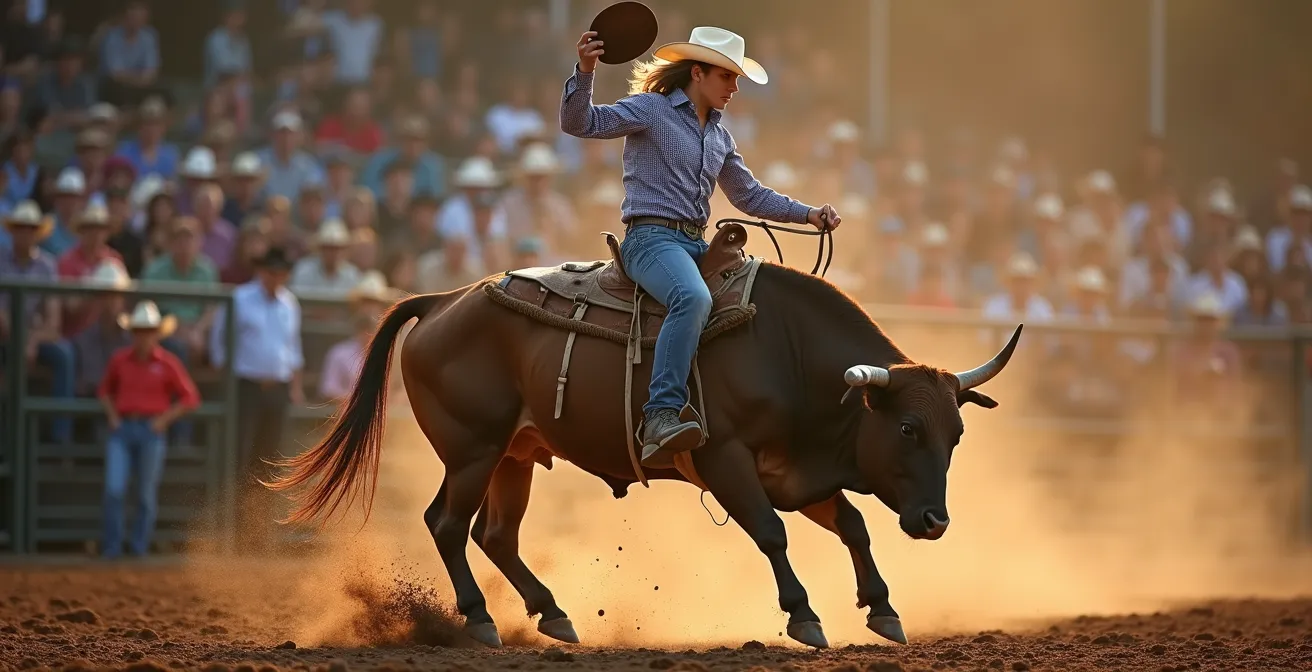
Timed events, on the other hand, showcase the precision skills of a working cowboy. Tie-down roping evolved directly from the need to catch and doctor a sick calf on the open range. Steer wrestling originated from a cowboy’s need to control a large animal for treatment. And barrel racing, often a crowd favorite, is a dazzling display of horsemanship, testing the bond and communication between horse and rider against the clock. Whether you’re at a huge event like the Ponoka Stampede or a local small-town rodeo, you’re watching a living history of the skills that built the West.
Key Takeaways
- Your choice is between comfort (guest ranch) and unfiltered reality (working ranch). Be honest about what your family can handle.
- Proper gear, especially denim jeans and boots with a heel, is for safety, not fashion. The Alberta foothills demand practical layers.
- Participation in high-risk cattle work is limited for guests due to insurance and safety. Expect to be an observer for the most intense action.
Highway 22 Guide: Why Choose the Cowboy Trail Over the QE2 Highway?
When you plan your trip, your GPS will likely tell you to take the Queen Elizabeth II Highway. It’s the fastest way to get from Calgary to points north or south. It’s also the most boring. If you want to actually experience ranch country, you need to get off the four-lane highway and onto Highway 22, also known as The Cowboy Trail. This historic 700 km route runs parallel to the Rocky Mountains, winding through the rolling foothills that are the heart and soul of Alberta’s ranching heritage.
The QE2 is about efficiency; the Cowboy Trail is about the experience. It’s a two-lane road that forces you to slow down and see the landscape. You’ll drive past sprawling ranches, through small towns with authentic western main streets, and find countless opportunities to pull over for a photo of the mountains rising dramatically from the plains. This is the road that connects you to the real Alberta, offering direct access to guest ranches, working ranches, and historic sites.
Driving this route is an activity in itself. You can stop at the Bar U Ranch National Historic Site, Canada’s only national park dedicated to ranching history. You can have an authentic steak in Longview or visit a distillery in Turner Valley. But be warned: this is open range country. You need to watch for deer, elk, and free-range cattle on the road. The Cowboy Trail isn’t just a way to get from A to B; it’s an essential part of the cowboy experience itself.
So, the decision is yours. You can choose the picture-perfect comfort of a guest ranch, or you can pay the “authenticity tax” for a taste of the real work. Neither is better than the other, but showing up with the right expectations is the only way to ensure your family’s cowboy dream becomes a cherished memory, not a cautionary tale. Now that you have an honest picture of what’s involved, you can make a choice that fits what your family truly wants and can handle.