
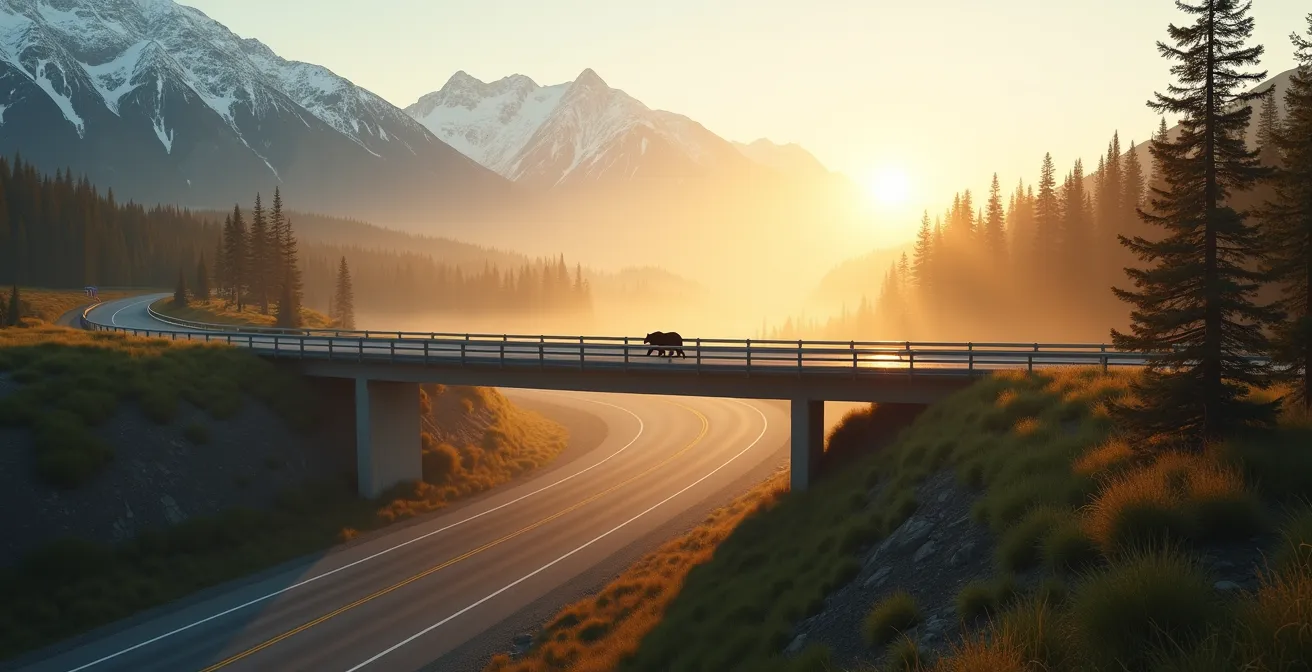
Spring trail closures in the Bow Valley are not an arbitrary inconvenience for hikers; they are a critical, science-based management tool. These closures are essential to relieve system-level pressure on wildlife funnelled into an ‘ecological pinch point’ by geography and infrastructure. Understanding this system of seasonal stressors, from elk calving to grizzly bear movement, transforms frustration into an informed appreciation for the delicate balance required to ensure wildlife survival in one of Canada’s busiest mountain landscapes.
Every spring, the same frustration sets in for hikers across Alberta’s Bow Valley. Just as the snow recedes and the trails call, “CLOSED” signs appear at the trailheads of cherished routes around Canmore and Banff. The common explanation is simple: “it’s for the bears.” While true, this statement barely scratches the surface of a complex and fascinating ecological drama. It often leads to resentment, with hikers feeling their access is unfairly restricted for a risk they feel capable of managing.
The reality is that these closures are not a simple reaction to waking predators. They are a precise, data-driven intervention within a highly stressed system. The Bow Valley is a unique ‘ecological pinch point’—a narrow funnel of usable land squeezed between steep mountains, a national railway, the Trans-Canada Highway, and bustling towns. For wildlife, this valley is not a vast wilderness; it is a tight and dangerous corridor. The seasonal closures are a deliberate strategy to reduce one key pressure—human recreation—at the most vulnerable time of year, allowing the entire ecosystem a moment to breathe.
But what if we could reframe this frustration into a deeper understanding? This article moves beyond the simple signs and into the science. We will not just say “stay out”; we will explain the biological imperatives that make your absence on these specific trails a matter of life and death for local wildlife populations. By understanding the function of highway overpasses, the hidden dangers of aggressive elk, and the immense pressure of infrastructure, you will see the landscape not just as a playground, but as a complex, interconnected system you are part of.
This guide unpacks the science behind the signs, transforming you from a frustrated hiker into an informed steward of this remarkable landscape.
To fully grasp the interconnected nature of this issue, the following sections will deconstruct the key components of wildlife management in the Bow Valley. From the engineering marvels crossing the highway to the subtle behaviours of its largest inhabitants, each piece of the puzzle is crucial.
Summary: Deconstructing Wildlife Management in the Bow Valley
- Why Are Your Favorite Trails Closed for “Wildlife Corridors” in Spring?
- Why Are There Fences and Bridges Over Highway 1 in Banff?
- Bridges for Bears: Do Animals Actually Use the Highway Crossings?
- The Bow Valley Pinch Point: Why is Canmore Ground Zero for Bear Encounters?
- Railways and Roads: How Infrastructure Cuts Off Animal Migration?
- Clear Cuts vs Views: Understanding the Visual Impact of Logging Near Parks
- May and June Danger: Why Are Mother Elk More Aggressive Than Bears?
- Grizzly vs Black Bear: How to Identify the Difference in Seconds?
Why Are Your Favorite Trails Closed for “Wildlife Corridors” in Spring?
A “wildlife corridor” is not just a patch of forest; it’s a lifeline. Think of it as a designated highway for animals, allowing them to move between essential habitats for food, mating, and seasonal migration. In the Bow Valley, these corridors are critically important valley-bottom areas—the very same flat, pleasant terrain where we love to build our towns and trails. When we hike, bike, or walk our dogs through these corridors, especially in spring, we become obstacles. Our presence and scent can displace sensitive species, forcing them into less ideal habitat or, worse, into dangerous proximity with roads and railways.
Spring is the season of greatest vulnerability. Animals like grizzly bears emerge from their dens lean and hungry, seeking the first green vegetation which often grows in the low-elevation corridors. At the same time, elk and deer are giving birth, and their newborns are extremely vulnerable. The seasonal stress on these animals is immense. The closures are a non-negotiable management action to give wildlife unimpeded access to these critical zones during this make-or-break period. It’s about preventing a cascade of negative effects: a displaced mother elk might abandon her calf, or a hungry bear pushed out of its natural foraging area may wander into town, creating a human-wildlife conflict that rarely ends well for the bear.
The effectiveness of this system-wide approach, which includes both trail closures and highway mitigation, is proven by hard data. The network of fences and crossings in Banff National Park has resulted in a more than 80% reduction in wildlife-vehicle collisions. These closures are not a punishment for recreationists; they are a fundamental component of a successful conservation strategy that keeps both people and animals safe.
Why Are There Fences and Bridges Over Highway 1 in Banff?
The high fences lining the Trans-Canada Highway through Banff National Park are not there to keep wildlife out of the park; they are there to funnel them toward safety. This fencing system works in concert with a series of engineered overpasses and underpasses. It is the most extensive and well-studied highway mitigation system in the world. The primary purpose is to maintain landscape connectivity—a term biologists use to describe the ability of animals to move freely across a landscape, which is essential for genetic diversity and population health. A highway without crossings is like a dam, fragmenting populations and isolating them on either side.
This isolation can lead to inbreeding and local extinctions. By providing safe passage, the overpasses and underpasses allow bears, wolves, elk, and other species to cross the highway barrier, find new mates, and access a wider range of territory. This ensures the long-term resilience of wildlife populations in the face of increasing development. The sheer volume of use is a testament to their success. Since monitoring began in 1996, Parks Canada’s research has documented over 200,000 crossings by large mammals.
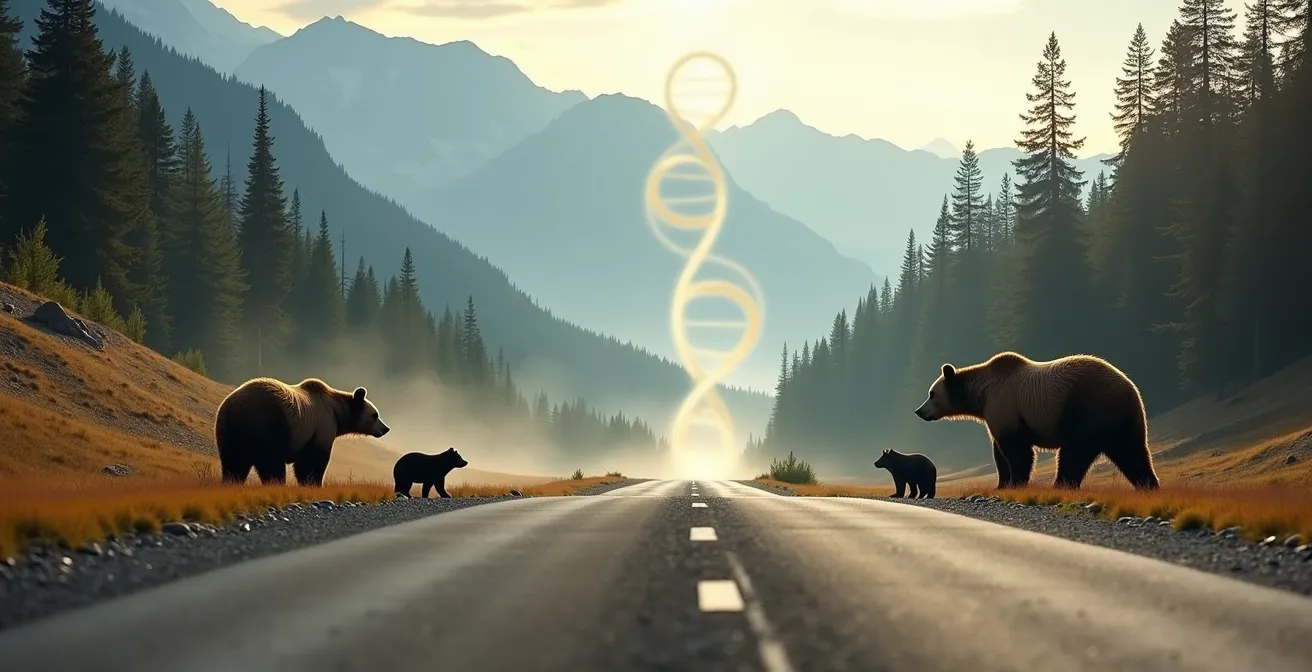
As the visualization suggests, these structures are more than just concrete and steel; they are bridges for genes, safeguarding the future of the species they serve. The investment is substantial, but the return is invaluable, preventing costly and tragic collisions while preserving the very wildlife that defines this iconic landscape.
The economic argument for these structures is as compelling as the ecological one, balancing initial costs against long-term savings and benefits.
| Investment | Cost | Benefits |
|---|---|---|
| Overpass Construction | $2-4 million each | 80%+ collision reduction |
| Underpass Construction | $200,000-400,000 | Species-specific safe passage |
| Annual Monitoring | Ongoing research costs | 200,000+ documented crossings |
Bridges for Bears: Do Animals Actually Use the Highway Crossings?
This is a common and fair question from skeptical observers. The answer, backed by decades of rigorous scientific monitoring, is an emphatic yes. Animals not only use the crossings, but they do so in staggering numbers and with surprising diversity. Remote cameras have documented a veritable Noah’s Ark of species utilizing the overpasses and underpasses, from the largest predators to the smallest mammals. This is not a guess; it is an observed and quantified fact.
The list of species includes grizzly bears, black bears, wolves, cougars, moose, elk, deer, wolverines, and even lynx. This widespread adoption proves that the structures are well-designed and properly located along natural travel routes. For many species, particularly grizzly bears, these crossings are vital. Research has shown that both male and female grizzlies use the overpasses to find mates on the other side of the highway, a critical behaviour for maintaining genetic diversity in a population that is provincially listed as threatened in Alberta. The structures are quite literally a bridge to the future for the species.
The international significance of this success cannot be overstated. As leading researcher Tony Clevenger stated in an interview with Canadian Geographic, it represents a benchmark for conservation worldwide. His words underscore the project’s importance:
This is Canada’s biggest conservation success story. It’s the largest highway mitigation complex in the world.
– Tony Clevenger, Canadian Geographic
This is not a hopeful experiment; it is a proven model that demonstrates how we can coexist with wildlife even in the face of major infrastructure. The evidence is clear: if you build it correctly, they will come.
The Bow Valley Pinch Point: Why is Canmore Ground Zero for Bear Encounters?
Canmore’s location is both its greatest asset and its most significant ecological challenge. The town sits squarely within the narrowest section of the Bow Valley, an area known as the “ecological pinch point.” Here, the valley floor, which serves as the primary movement corridor for all wildlife, is squeezed to a width of just a few hundred metres by steep mountains, the Bow River, the highway, and the railway. This geographical constraint funnels an enormous amount of wildlife through a very small, developed area, making human-wildlife encounters not just possible, but inevitable.
This is why Canmore is “ground zero” for bear activity. It’s not that there are necessarily more bears here; it’s that the bears have fewer options. Every piece of development—every house, every trail, every road—removes another piece of usable habitat and constricts the corridor further. For a grizzly bear needing to move between its feeding grounds in Kananaskis Country and its mating territories in Banff National Park, navigating the pinch point around Canmore is a perilous journey fraught with risk.
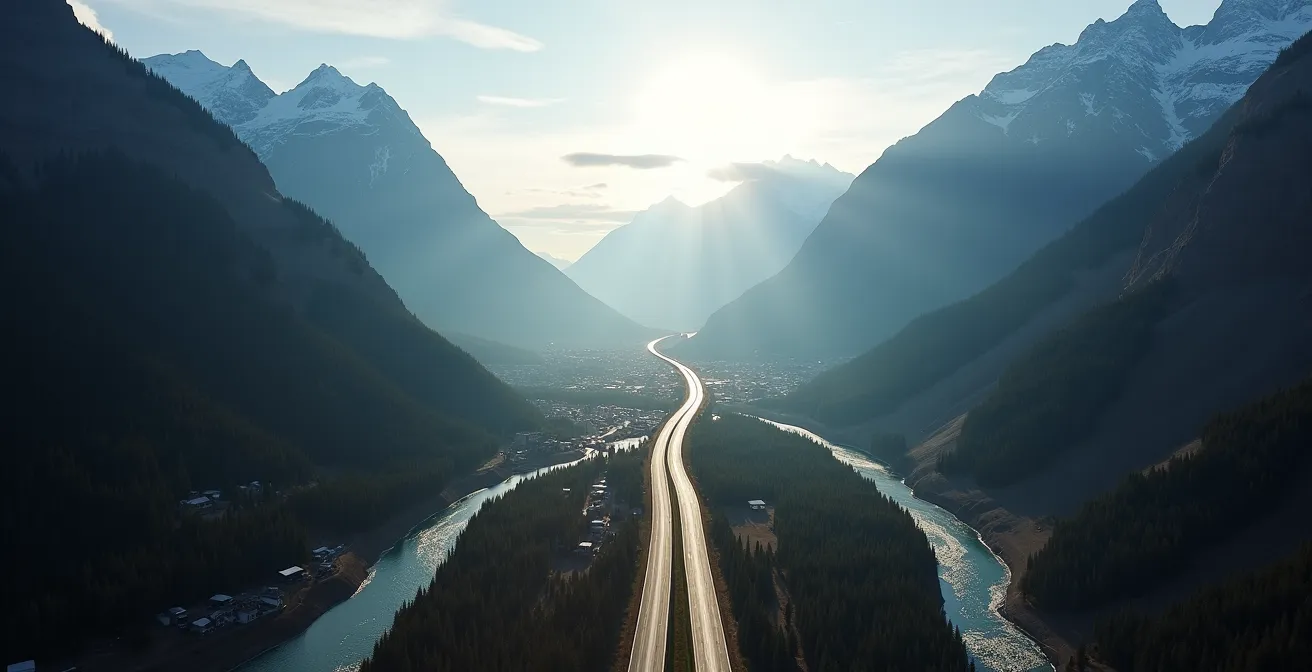
Recognizing this critical bottleneck, a new overpass was recently completed east of Canmore. The Bow Valley Gap Wildlife Overpass is the first of its kind in Canada to be built outside a national park, a direct response to the high number of collisions in the area. This specific location was notorious for incidents, averaging over 60 collisions per year involving elk, deer, and bears. This new structure is a modest but vital intervention designed to reconnect the fragmented landscape and relieve some of the system-level pressure at this crucial point.
Railways and Roads: How Infrastructure Cuts Off Animal Migration?
While highway overpasses are a visible solution, the Canadian Pacific Railway line presents a more insidious and complex threat to wildlife, particularly grizzly bears. The railway acts as a deadly double-edged sword: it is both a barrier to movement and a lethal attractant. Train strikes are a leading cause of grizzly bear mortality in the mountain parks. This infrastructure, fundamental to Canada’s economy, creates a permanent and dangerous fracture in the landscape.
The problem is one of a “behavioural sink.” A joint research initiative between Parks Canada and CP Rail revealed that bears are drawn to the tracks for two main reasons. First, the open canopy of the rail line allows for earlier growth of key food plants like dandelions and sweet-vetch. For a bear emerging from hibernation, this early spring buffet is irresistible. Second, spilled grain from rail cars offers a high-calorie, low-effort food source. As confirmed by the Parks Canada and CP Rail joint action plan, this combination of easy food and foraging opportunities creates a trap, luring bears to the very place they are most likely to be killed.
Case Study: The Railway as a Lethal Attractant
The multi-year research program by Parks Canada and Canadian Pacific identified that the railway line acts as a major ecological trap. Grizzly bears, driven by their powerful sense of smell and constant search for food, are drawn to the tracks. Spilled grain and carcasses of other animals killed by trains provide an easy meal, conditioning bears to see the railway as a foraging area. This learned behaviour significantly increases their risk of being struck by a train, turning a perceived benefit (easy food) into a major cause of mortality for the threatened grizzly population.
Unlike the highway, fencing the entire railway is often not feasible due to operational requirements. This makes finding solutions—such as reducing grain spillage, managing vegetation along the tracks, and creating alternative foraging habitats away from the line—a top conservation priority. Every time an animal is forced to navigate this gauntlet, its chances of survival decrease.
Clear Cuts vs Views: Understanding the Visual Impact of Logging Near Parks
The system-level pressure on wildlife doesn’t stop at the park boundary. Provincial lands adjacent to national parks, particularly in the Kananaskis region and beyond, are subject to forestry operations. While logging is a legitimate economic activity, the method and location can have profound impacts on landscape connectivity. Large-scale clear-cuts can create vast open areas that some species, like grizzly bears, are reluctant to cross, effectively creating another type of barrier. This can sever or degrade vital wildlife corridors that connect the park’s protected areas to the broader provincial landscape.
From a hiker’s perspective, the visual impact of a clear-cut against a park boundary can be jarring, seeming to contradict the conservation ethic of the region. However, from a biologist’s perspective, the primary concern is function, not aesthetics. The key is not to stop forestry, but to do it smarter. It’s about maintaining a “permeable landscape” where wildlife can still move through areas of human activity. This requires a shift from traditional clear-cutting to more nuanced approaches that prioritize the preservation of corridors.
Fortunately, there are proven forestry practices that can balance timber harvesting with conservation goals. These methods focus on maintaining forest cover and structure, ensuring that logged areas do not become permanent dead ends for wildlife. Implementing these strategies requires collaboration between provincial governments, federal agencies, and forestry companies, all working to manage the landscape as one interconnected system.
Your Action Plan: Advocating for Corridor-Friendly Forestry
- Variable Retention Harvesting: Support policies that require maintaining 30-50% of the forest cover within a cut-block to provide security for moving animals.
- Eco-Forestry Practices: Advocate for selective cutting methods that preserve the overall forest structure and connectivity, rather than clear-cutting.
- Buffer Zones: Demand the establishment of significant unlogged buffer strips along park boundaries and known wildlife corridors to protect these critical lifelines.
- Prescribed Burns: Encourage the use of controlled fire, a natural process, to create diverse habitat mosaics that benefit a wide range of species.
- Collaborative Planning: Participate in public consultations and support organizations that push for integrated land-use plans that prioritize wildlife movement across jurisdictions.
May and June Danger: Why Are Mother Elk More Aggressive Than Bears?
While grizzly and black bears command the most attention and fear, in May and June, a different animal often poses a more immediate and frequent threat in the Bow Valley: the cow (female) elk. During calving season, mother elk become fiercely protective of their newborns. Their defensive behaviour is not malicious; it is a powerful maternal instinct to protect their vulnerable offspring from any perceived threat, including humans, their dogs, and even passing cars.
Unlike bears, which often prefer to avoid confrontation, a protective mother elk will stand her ground and actively charge. Many residents and long-time visitors to Canmore and Banff have more unnerving stories about elk encounters than bear encounters. These elk often choose to give birth in seemingly safe urban environments—town parks, residential yards, and golf courses—to avoid predators like bears and wolves. This brings them into direct and unavoidable contact with people. An unsuspecting person walking their dog or a child playing near a hidden calf can trigger a dangerously aggressive response.
It is absolutely critical to be aware of the warning signs of an agitated cow elk: flattened ears, raised rump hair, teeth grinding, and staring intently are all precursors to a potential charge. They may perform a “bluff charge” first, but this should be taken as a final warning. The solution is simple: give them an enormous amount of space. If you see a lone cow elk between mid-May and early July, assume a calf is hidden nearby and change your route immediately. Never, ever get between a mother and her calf.
Key takeaways
- Trail closures are a scientific tool to reduce pressure on wildlife in the “ecological pinch point” of the Bow Valley during vulnerable seasons.
- Highway overpasses and fencing are a proven success, reducing collisions by over 80% and facilitating over 200,000 animal crossings.
- In spring, protective mother elk can be more aggressive and dangerous than bears; recognizing their warning signs is critical for safety.
Grizzly vs Black Bear: How to Identify the Difference in Seconds?
Correctly identifying a bear species is a critical skill for any backcountry user in Alberta. It’s not about colour; both species can range from blonde to black. The decision of how to react during a close encounter can depend on whether you are facing a grizzly or a black bear. Fortunately, there are three key features you can learn to spot in seconds, even from a distance.
The most reliable indicator is the shoulder hump. A grizzly bear has a prominent, muscular hump between its shoulders, which powers its digging ability. A black bear has no such hump; its highest point is its rump. Second, look at the face profile. A grizzly bear has a ‘dished’ or concave profile, making its face look broader. A black bear has a ‘Roman’ or straight nose profile, similar to a dog’s. Finally, observe the ears. Grizzly ears are typically smaller and more rounded, while black bear ears are larger and more pointed, appearing more prominent on their head.
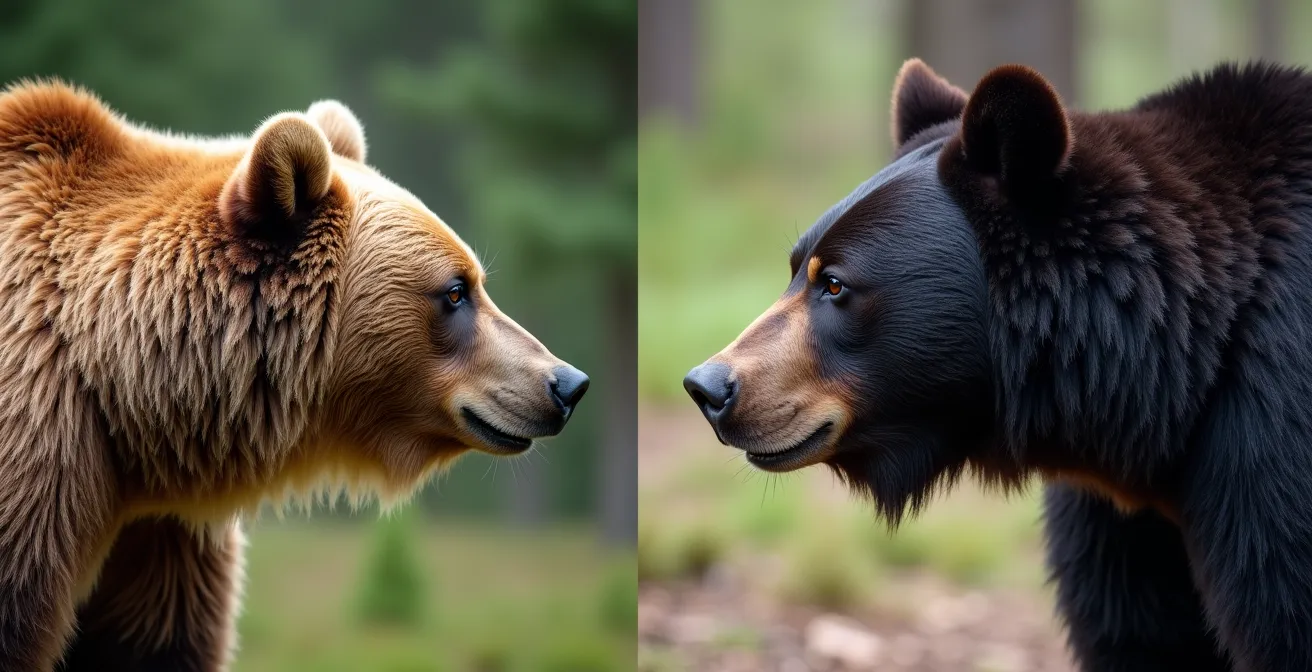
While both species are powerful and potentially dangerous, their typical defensive behaviours differ. Black bears are more likely to be treed or bluffed by aggressive human action. A defensive grizzly, on the other hand, is more likely to charge to neutralize a perceived threat. Knowing these differences is not just trivia; it’s essential safety knowledge. Always carry bear spray, know how to use it, and practice identifying these key features from photos and videos so your response becomes second nature.
By understanding the science, respecting the closures, and learning to identify the wildlife you share the landscape with, you transition from a simple user to a true steward of the Bow Valley. The next time you see a “CLOSED” sign, you won’t feel frustration; you will feel a sense of participation in one of Canada’s greatest conservation success stories. For a more practical application of these principles, the next logical step is to familiarize yourself with the official advisories and trail reports before every outing.
Frequently Asked Questions About Bow Valley Wildlife Safety
What are the warning signs of an agitated cow elk?
Key warning signs include flattened ears, raised hair on the rump, grinding their teeth, staring directly at you, and performing short bluff charges before a full attack. Treat any of these signs with extreme seriousness.
Where do elk typically calve in the Bow Valley?
Elk often choose seemingly protected urban and semi-urban areas to give birth, including town parks, golf courses like the Banff Springs Golf Course, grassy areas along the river, and even residential backyards and school fields.
How should you respond if confronted by an aggressive elk?
Do not turn your back or run. Maintain eye contact, make yourself look as large as possible, and slowly back away. Try to put a large object like a car or a substantial tree between you and the elk. If an attack is imminent, use your bear spray.