
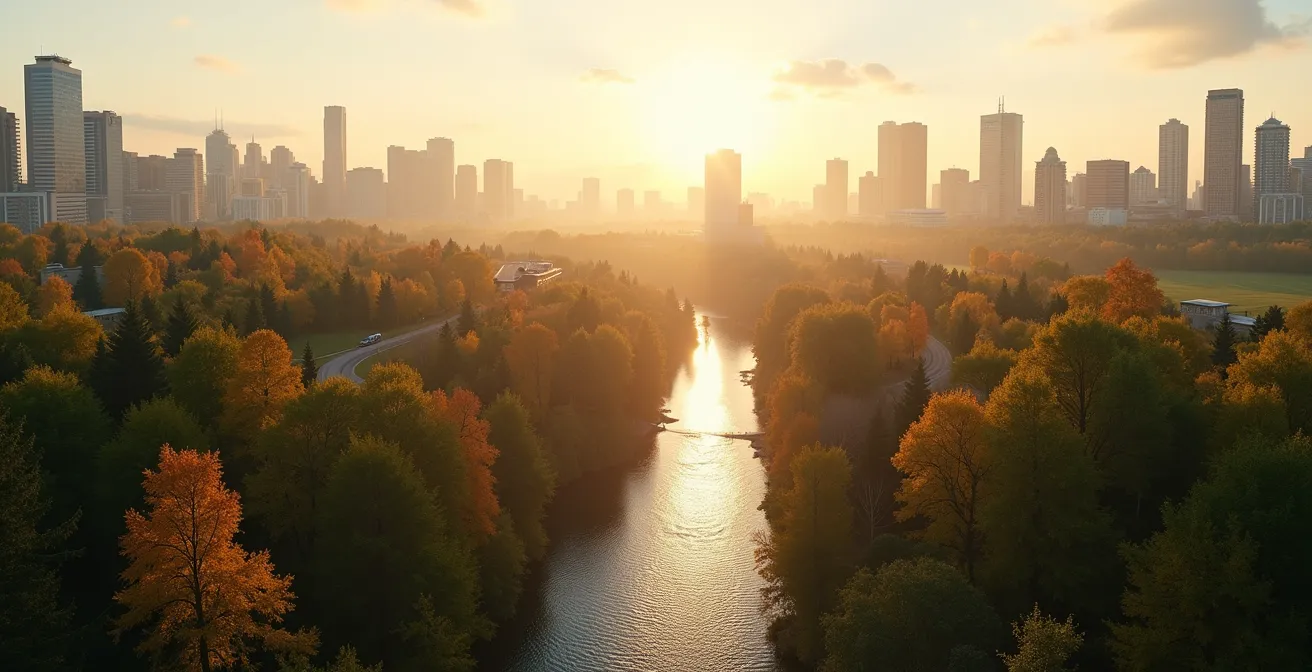
Edmonton is more than a list of attractions; it’s a living ecosystem where a northern spirit turns constraints like winter and isolation into celebrated cultural assets.
- The city’s soul is found not in curated experiences, but in grassroots festivals and a defiant embrace of its climate.
- Its food and drink scene is a direct evolution of its prairie agricultural roots, moving far beyond beef and barley.
Recommendation: To truly understand Edmonton, look for the connections between its vast urban nature, its innovative culture, and its deep-seated prairie pragmatism.
Many visitors arrive in Edmonton with a checklist. They’ve heard about West Edmonton Mall, a colossal monument to 80s optimism. They know of the North Saskatchewan River Valley, a ribbon of green so vast it dwarfs New York’s Central Park many times over. And they know it’s the capital of Alberta, a province built on oil and agriculture. But treating Edmonton as a series of disconnected landmarks is to miss the point entirely.
The real story of this city isn’t in the “what,” but in the “why.” Why does a city with famously cold winters have a thriving winter patio scene? How did a capital in the heart of “beef country” become a hotspot for vegan cuisine? The answer lies in a kind of resilient urbanism, a prairie pragmatism that is woven into the very fabric of the place. This is not a city that simply endures its northern reality; it’s a city that has harnessed it, turning potential constraints into its most defining and interesting features.
This guide moves beyond the checklist. We’ll explore Edmonton as a cohesive ecosystem, where the spirit of its festivals, the defiance of its winters, the ingenuity of its chefs, and the sheer scale of its nature are all deeply interconnected. Understanding these connections is the key to discovering the true, vibrant soul of Alberta’s capital.
To navigate this unique urban landscape, this article explores the defining cultural moments, the innovative local scenes, and the epic natural wonders that shape Edmonton’s character. Here is what we will cover.
Summary: A Guide to Edmonton’s Urban Ecosystem
- Fringe or Folk Fest: Which August Event Define’s Edmonton’s Soul?
- How to Embrace -20°C: The Secret to Enjoying Edmonton’s Winter Patios?
- Is the Mall Worth a Day or Should You Stick to Whytea Ave?
- Elk Island National Park: Can You Really See Bison 30 Minutes from Downtown?
- Beyond Beef: How Edmonton Became a Hotspot for Vegan and Fusion Cuisine?
- From Field to Glass: Which Breweries Use 100% Alberta Malt?
- Beets and Carrots: How Local Chefs Elevate Winter Cellar Vegetables?
- Is the 12-Hour Drive to Wood Buffalo National Park Worth the Effort?
Fringe or Folk Fest: Which August Event Define’s Edmonton’s Soul?
To understand Edmonton’s spirit, look no further than its August festivals. While the venerable Folk Fest draws massive names to its beautiful hillside stage, it’s the Edmonton International Fringe Theatre Festival that truly reveals the city’s scrappy, creative heart. It’s the largest and oldest event of its kind in North America, but its significance lies not in its size, but in its philosophy. It’s an unjuried, uncensored, and wildly democratic celebration of performance.
This embodies a core aspect of Edmonton’s identity: a belief in grassroots creation. It is a platform where anyone with a story can get a stage, reflecting a certain prairie pragmatism. As Fringe Theatre Edmonton itself puts it, this is a space for artists who “don’t want to wait for anyone else to give them permission.” The result is a chaotic, vibrant, and utterly authentic explosion of creativity that takes over the Old Strathcona neighbourhood. In 2024, the festival’s success was tangible, with data showing that over 127,000 tickets were sold, generating $1.3 million directly for the artists.
Fringe Festivals bring together people who want to create and don’t want to wait for anyone else to give them permission to share what they’ve got with an Audience. It’s a crucial place for growing and experimenting as an Artist.
– Fringe Theatre Edmonton, Edmonton International Fringe Theatre Festival
So, which defines the city’s soul? The Folk Fest represents Edmonton’s love for world-class community gathering, but the Fringe represents its inventive and independent spirit. To experience Edmonton, you must experience the raw energy of the Fringe.
How to Embrace -20°C: The Secret to Enjoying Edmonton’s Winter Patios?
The common narrative about Edmonton is its harsh winter. But the secret to enjoying it isn’t about survival; it’s about defiance. Nowhere is this more evident than in the city’s burgeoning winter patio scene. The idea of sitting outside for a drink when it’s -20°C might seem absurd, but here, it’s a celebration. This is the city’s resilient urbanism in action, a refusal to let the cold dictate social life.

This movement was pioneered by places like Café Bicyclette in the French Quarter, which established the first winter patio about five years ago. What started as a novelty has exploded into a city-wide phenomenon. A report by SnowSeekers noted that during the 2022-23 season, there were almost 20 locations hosting winter patios. These aren’t just a few chairs in the snow; they are thoughtfully designed spaces with domed-and-heated seating, roaring fire pits, and outdoor art, transforming the winter landscape into a cozy, communal space.
The secret, then, isn’t technology—it’s attitude. It’s about bundling up, gathering around a fire with friends, and enjoying the crisp air. It’s a conscious choice to engage with winter on your own terms. This cultural shift transforms the city’s biggest perceived liability into a unique and memorable asset, offering an experience you simply can’t find in warmer climates.
Is the Mall Worth a Day or Should You Stick to Whytea Ave?
The choice between West Edmonton Mall (WEM) and Whyte Avenue is a classic Edmonton dilemma, but it’s the wrong question. It’s not an either/or; it’s a study in contrasts that reveals the city’s layered identity. You should see both, but for entirely different reasons. Whyte Avenue, in the historic Old Strathcona district, is the city’s living, breathing pulse. It’s where you’ll find independent shops, local art galleries, theatres, and the core of the city’s nightlife and festival scene. It’s organic, historic, and constantly evolving.
West Edmonton Mall, on the other hand, should be viewed as a cultural artifact. It’s a fascinating, almost surreal monument to the Albertan oil-boom optimism of the 1980s. For a time the world’s largest mall, it’s an entirely self-contained universe with a waterpark, an amusement park, a hotel, and a full-size pirate ship. It represents a different kind of prairie ambition: if the landscape is flat and the winter is long, why not build an entire world indoors? To visit WEM is not just to shop; it’s to experience a unique piece of architectural and cultural history.
A comparison from local tourism resource Explore Edmonton helps clarify the choice. The mall is a weather-proof entertainment hub ideal for families, while Whyte Ave is the heart of local culture.
| Aspect | West Edmonton Mall | Whyte Avenue |
|---|---|---|
| Experience Type | Indoor entertainment megaplex | Urban street culture |
| Key Attractions | World’s largest mall, waterpark, amusement park | Independent shops, galleries, restaurants |
| Best For | Families, weather-independent activities | Local culture, nightlife, arts scene |
| Historical Context | 1980s oil-boom monument | Historic Old Strathcona district |
| Time Needed | Half to full day | Evening to full day |
Don’t choose between them. Experience the living culture of Whyte Ave, then visit the mall as you would a museum—a fascinating glimpse into the grand ambition of a different era.
Elk Island National Park: Can You Really See Bison 30 Minutes from Downtown?
Yes, absolutely. This is one of Edmonton’s most astounding and understated features. While many cities boast of urban parks, Edmonton offers something far more profound: a gateway to a major national park that is a crucial site for wildlife conservation. The fact that you can be in the heart of downtown and, just a 30-minute drive east, be in a place where herds of plains and wood bison roam free is a testament to the incredible proximity of wilderness in this part of Alberta.
Elk Island National Park is more than just a place to see bison. It’s a cornerstone of their survival story, having played a key role in bringing the species back from the brink of extinction. Today, it’s a protected sanctuary for bison, elk, moose, deer, and over 250 species of birds. It is also a designated Dark Sky Preserve, making it one of the best places in the region for stargazing and, if you’re lucky, catching a glimpse of the Northern Lights (Aurora Borealis).
The experience of driving through the park at dawn or dusk, watching a herd of these magnificent, shaggy beasts cross the road, is a quintessential Canadian moment. It serves as a powerful reminder of the vast, untamed landscape that exists just beyond the city’s edge. This isn’t a zoo; it’s an engineered wilderness, a carefully managed ecosystem where you can witness iconic megafauna in their natural habitat. The accessibility of such a profound natural experience is a core part of what makes Edmonton unique.
Beyond Beef: How Edmonton Became a Hotspot for Vegan and Fusion Cuisine?
The stereotype of Alberta cuisine is a thick steak on a plate. While Edmonton certainly honours its ranching heritage, the most exciting part of its modern food scene is how it has evolved far beyond that. The city has become a surprising hotspot for vegan, vegetarian, and innovative fusion cuisine, a movement born directly from the evolution of its agricultural roots. This isn’t a rejection of the prairie, but a re-imagining of it.

This culinary shift is fueled by a new generation of Albertan farmers who are diversifying beyond traditional cattle and wheat. They are cultivating everything from pulses and hemp to a wide array of specialty vegetables. This creates a direct farm-to-table connection that local chefs have enthusiastically embraced. Restaurants are building their menus around the innovative products coming from these local prairie suppliers, proving that “prairie cuisine” can be plant-forward and incredibly creative.
The result is a dynamic food landscape where you can find everything from vegan “donairs” (a local specialty) to high-end restaurants crafting exquisite dishes from humble root vegetables. This movement demonstrates a modern form of prairie pragmatism: using the land’s full potential to create something new and exciting. It shows a food culture that is confident enough to both respect its history and boldly innovate for the future.
From Field to Glass: Which Breweries Use 100% Alberta Malt?
Just as Edmonton’s food scene redefines prairie agriculture, its craft beer scene celebrates it. Alberta is a global powerhouse in barley production, and for years, most of this “liquid gold” was shipped away. Now, a proud and fiercely local craft brewing movement is keeping it at home, showcasing what they call the “terroir of the prairies.” This concept holds that the unique climate and soil of Alberta give its barley—and thus its beer—a distinct and high-quality flavour profile that cannot be replicated elsewhere.
A growing number of breweries are committing to using 100% Alberta-grown malt, creating a true “field to glass” experience. These brewers work closely with local maltsters like Red Shed and Origin Malting, who specialize in crafting unique malts from local barley varieties. This collaboration allows for incredible creativity, from crisp lagers that highlight the clean flavour of the grain to rich, complex stouts that showcase the depth of roasted malts. It’s a celebration of place, where every sip tells a story about the Albertan landscape.
For visitors, this offers a delicious way to connect with the region’s agricultural heart. Exploring these breweries is to taste the very essence of the prairies, transformed by local creativity and passion. It’s an authentic experience that goes far beyond a generic pint.
Your Action Plan: Exploring Edmonton’s Malt Trail
- Start at a brewery like Blind Enthusiasm or SYC Brewing that showcases Alberta malt in crisp, clean lagers to appreciate the base flavour.
- Visit a second location, such as Sea Change Brewing Co., known for richer ales and IPAs that highlight the malt’s versatility.
- Look for collaborative “All-Alberta” beers, which often use local hops and other prairie-grown adjuncts in addition to 100% local malt.
- Connect with the source by visiting a taproom that features malt from specific craft maltsters like Red Shed Malting or Origin Malting & Brewing.
- Sample seasonal releases from breweries like Alley Kat or Town Square, which often incorporate other prairie products like local fruit and honey.
Beets and Carrots: How Local Chefs Elevate Winter Cellar Vegetables?
If winter patios are Edmonton’s cultural response to the cold, its winter cuisine is the culinary one. The long, cold winters have historically forced a reliance on root cellar vegetables like beets, carrots, potatoes, and cabbage. But where this might suggest a bland diet, Edmonton’s chefs have turned this constraint into a catalyst for incredible innovation, a concept some call “innovation through constraint.”
As one local chef highlighted in Edify Edmonton magazine explained, “The long winters force chefs into innovation. We’re not just roasting anymore – we’re fermenting, pickling, dehydrating, creating vegetable charcuterie that celebrates the constraint.” This approach is a modern reinterpretation of the preservation techniques brought to Alberta by early Ukrainian and German settlers. It’s a fusion of modern gastronomy with traditional survival skills, turning the humble beet into something complex and extraordinary.
The crucial link in this process is the Old Strathcona Farmers’ Market, one of the oldest and best in the country. Here, chefs source heirloom root vegetable varieties directly from farmers, gaining access to flavours and textures unavailable in supermarkets. This connection allows them to transform the bounty of the fall harvest into dazzling dishes that sing with flavour all winter long. It’s a perfect example of Northern Terroir, where the limitations of the climate and the bounty of the soil combine to create a truly unique and delicious culinary identity.
Key Takeaways
- Edmonton’s true identity is revealed in its grassroots, “permissionless” culture, perfectly embodied by the Fringe Festival.
- The city doesn’t just endure winter; it actively embraces it with a defiant and celebratory winter patio culture.
- The local food and drink scene is a direct and innovative evolution of its prairie agricultural roots, celebrating local terroir beyond the stereotype of beef.
Is the 12-Hour Drive to Wood Buffalo National Park Worth the Effort?
After experiencing the accessible wilderness of Elk Island, the question of Wood Buffalo National Park looms large. Is a 12-hour drive north really worth it? For the adventurous traveller seeking to understand the true scale of Northern Alberta, the answer is an unequivocal yes. This journey is not a bug; it’s a feature. As local tourism experts suggest, it should be viewed as a “pilgrimage into one of the world’s last great wildernesses.” The value isn’t just in the destination, but in witnessing the immense, humbling scale of the boreal forest and prairie landscape unfolding before you.
And the destination is unparalleled. Wood Buffalo is Canada’s largest national park and a UNESCO World Heritage Site, protecting the world’s largest free-roaming herd of wood bison. It’s a land of epic proportions, home to the Peace-Athabasca Delta (one of the largest freshwater deltas on Earth) and the last remaining natural nesting grounds of the endangered whooping crane. It is also one of the world’s largest Dark Sky Preserves, offering a view of the cosmos—and the aurora—that is simply unimaginable from a city.
Making this journey provides the ultimate perspective on Edmonton. It repositions the city not as an isolated northern outpost, but as the proud gateway to a vast, wild, and globally significant territory. The drive contextualizes everything you’ve experienced: the prairie pragmatism, the resilient spirit, and the deep connection to the land. It is the final, epic chapter in the story of Alberta’s capital.
To truly experience this unique urban ecosystem, the next step is to plan your own exploration, looking for the connections that make Edmonton one of Canada’s most misunderstood and rewarding destinations.