
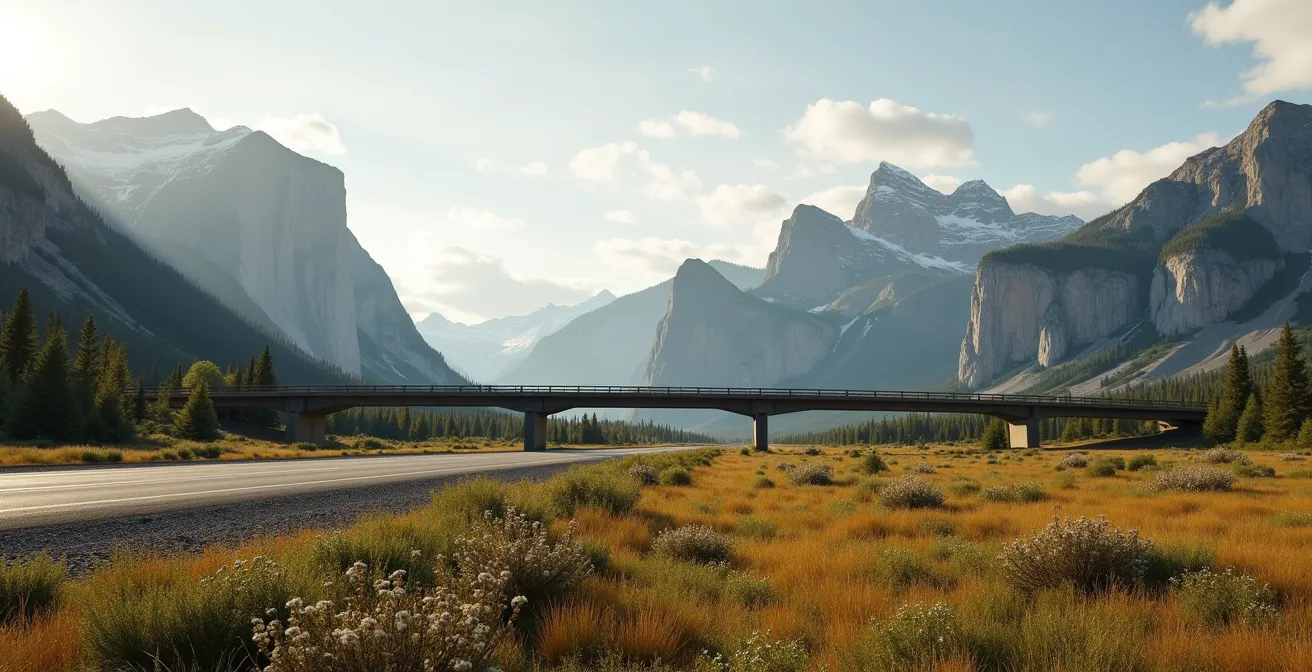
The question isn’t what you can take, but why you must leave everything as you found it; understanding the legal and ecological framework is the only way to avoid severe penalties.
- Infringing on park rules isn’t just “breaking a rule,” it’s a violation of federal law under the Canada National Parks Act, with consequences including court appearances and fines up to $25,000.
- Activities like feeding a ground squirrel or picking a flower directly contribute to wildlife habituation and ecological disruption, often with fatal outcomes for the animals.
Recommendation: Shift your mindset from a passive tourist to an active steward. Instead of collecting objects, contribute to conservation by participating in citizen science projects like iNaturalist or reporting findings to Park staff.
Every year, visitors arrive in Alberta’s National Parks, captivated by the raw beauty of the Rocky Mountains. The temptation is understandable: a uniquely shaped rock from a riverbed in Jasper, a vibrant wildflower from a meadow near Lake Louise, or a shed antler found along a trail in Banff. These seem like harmless, natural souvenirs. This assumption is incorrect and, more importantly, illegal. The core principle governing these protected areas is not a simple suggestion; it is a legal mandate under the Canada National Parks Act. The question is not “what can I get away with?” but “what is the legal and ecological consequence of my action?”
Many guides will give you the standard “Leave No Trace” advice. While well-intentioned, this often fails to convey the gravity of the situation. This is not a matter of etiquette; it is a matter of law and ecological integrity. Flying a drone isn’t just discouraged; it can lead to a court-ordered fine of $25,000. Feeding a ground squirrel isn’t just “a bad idea”; it is an act that habituates wildlife, often resulting in that animal’s destruction for public safety. Picking a flower isn’t a small transgression; it removes a vital food source and disrupts a fragile alpine ecosystem.
This guide moves beyond platitudes. As a conservation officer, my duty is to enforce these regulations, but also to explain the critical reasoning behind them. The true key to a respectful and fulfilling visit is not to memorize a list of prohibitions, but to understand the interconnected system you are entering. This is a framework for proactive stewardship, not passive tourism. We will dissect the “why” behind the most common violations, from trail closures to backcountry sanitation, so you can transform from a potential liability into a conscious guardian of these irreplaceable landscapes.
This article provides a detailed breakdown of the regulations you must adhere to within Alberta’s National Parks. The following summary outlines the key areas we will cover, from wildlife interactions and backcountry protocols to the proper handling of historical artifacts, ensuring your visit is both memorable and lawful.
Summary: A Guide to Alberta’s National Park Regulations
- Why Are Your Favorite Trails Closed for “Wildlife Corridors” in Spring?
- Is Flying a Drone in Banff Worth the $25,000 Fine Risk?
- How to Dig a Cathole: The Sanitary Rules for Backcountry Toilet Needs
- Why Does Feeding a Ground Squirrel Effectively Kill It?
- How Can Tourists Participate in Citizen Science Projects During Their Stay?
- Pick It Up vs Leave It Lie: What to Do If You See a Fossil?
- Bridges for Bears: Do Animals Actually Use the Highway Crossings?
- Zero Waste Travel: How to Visit Alberta’s Parks Without Leaving Trash?
Why Are Your Favorite Trails Closed for “Wildlife Corridors” in Spring?
Each spring, a common frustration for hikers is finding a favorite trail in the Bow Valley temporarily closed. These are not arbitrary decisions. They are legally mandated actions to protect critical wildlife corridors. A wildlife corridor is a habitat linkage that connects larger areas of wildlife habitat, allowing animals to move, feed, and mate. When these corridors are fragmented by human activity, the entire ecosystem suffers. In the spring, animals like grizzly bears emerging from hibernation and elk cows with their new calves are at their most vulnerable. They need undisturbed space to feed and move safely.
The constant pressure of hikers, bikers, and even off-leash dogs creates a “barrier effect” that animals perceive as a threat, similar to a highway. They will avoid these areas, restricting their access to essential food sources and isolating populations. Research shows the stark reality: in the Bow Valley, wildlife connectivity has decreased by 25% for wolves and 21% for grizzly bears compared to pre-development times. The University of Calgary’s Canmore Corridor Project confirms this, finding that high-density human trail use has a more significant negative impact on large carnivores than even major infrastructure.
These closures are a direct application of Parks Canada’s mandate to maintain ecological integrity. Respecting them is not optional; it is a legal requirement. Ignoring a posted closure can result in fines and a court appearance. The protection of these corridors is fundamental to the long-term survival of iconic species in the Rocky Mountains. Your compliance is a direct contribution to their conservation.
Is Flying a Drone in Banff Worth the $25,000 Fine Risk?
The desire to capture a stunning aerial shot of Moraine Lake or the Columbia Icefield is strong, but using a Remotely Piloted Aircraft System (RPAS), or drone, to do so in a National Park is strictly prohibited. The regulation is absolute: all drone flights, for any purpose, are illegal within the boundaries of all National Parks in Canada. This is not a local bylaw; it is a federal offence under the Canada National Parks Act. The consequences are severe, with maximum penalties that can exceed $25,000 upon conviction.
The legal reasoning is based on two primary factors: wildlife disturbance and visitor experience. To a wild animal, a drone is an unknown, noisy aerial predator. It can induce significant stress, causing birds to abandon their nests, mountain goats to flee across dangerous terrain, or bears to alter their feeding patterns. This stress consumes critical energy reserves, which can be fatal. Secondly, the parks are designated as places for peace and natural quiet. The buzzing sound of a drone shatters this experience for all other visitors, detracting from the sense of wilderness that the parks are meant to preserve.
Fortunately, obtaining “drone-like” shots is possible through legal means. The park’s topography offers numerous viewpoints that provide breathtaking aerial perspectives. Accessing these designated locations is the only lawful way to capture the grandeur of the landscape from above.
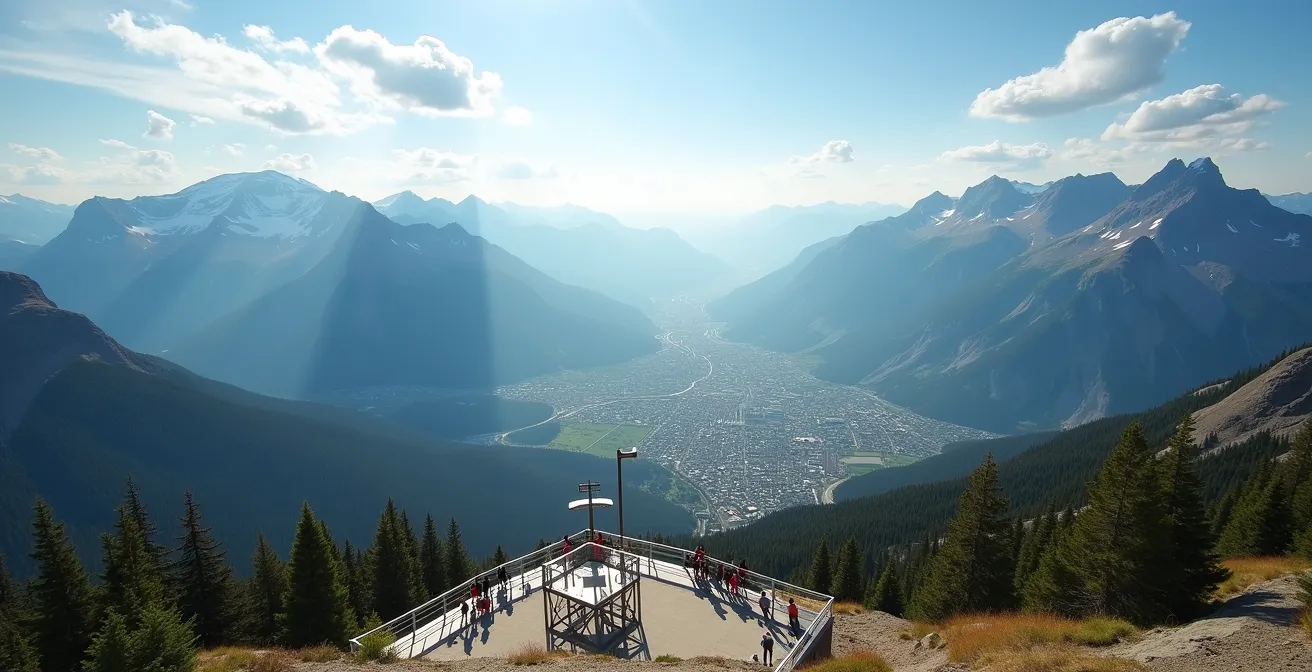
The view from the Sulphur Mountain summit, for example, provides a sweeping panorama of the Bow Valley that rivals any drone footage. The following table outlines several excellent, legal alternatives to achieve those coveted aerial-style photographs while respecting park regulations.
| Location | Elevation Gain | View Type | Best For |
|---|---|---|---|
| Sulphur Mountain Gondola Top | 700m (via gondola) | 360° panoramic | Bow Valley overview |
| Wilcox Pass | 335m | Columbia Icefield vista | Glacier perspectives |
| Parker Ridge | 250m | Saskatchewan Glacier | Alpine landscapes |
| Peyto Lake Viewpoint | 240m | Turquoise lake aerial | Classic ‘drone-like’ shot |
How to Dig a Cathole: The Sanitary Rules for Backcountry Toilet Needs
Proper disposal of human waste in the backcountry is a non-negotiable aspect of responsible park use. It is a matter of public health, environmental protection, and respect for other visitors. The alpine and subalpine environments of Alberta’s parks have thin soil and cold temperatures, which significantly slow down decomposition. Improperly disposed waste can contaminate water sources for years, spread disease to both humans and wildlife, and create an unpleasant experience for others.
The primary reason for these strict rules is the protection of watersheds. As an analysis on park ecosystems highlights, the headwaters of major rivers like the Bow and North Saskatchewan originate within these parks, supplying drinking water to millions of Albertans in cities like Calgary and Edmonton. Contamination at high elevations can have a cascading impact on water quality for hundreds of kilometers downstream. Therefore, following the prescribed method for digging a “cathole” is a critical public health duty.
The procedure is specific and designed for the unique conditions of the Rocky Mountains. Simply burying waste is not enough; the location and method are key to minimizing impact. You must be a minimum of 70 meters (230 feet, or about 70 large steps) away from any water source, trail, or campsite. This distance is a crucial buffer to prevent contamination. The soil in the Rockies is often compacted and rocky, requiring a sturdy aluminum trowel, not a flimsy plastic one, to dig to the required depth.
The protocol involves more than just digging and covering. Mixing the waste with soil using a stick actively introduces microbes and accelerates decomposition, a vital step in this cold climate. Finally, the site must be thoroughly disguised to return it to a natural state and prevent animals from digging it up. Adherence to this protocol is a mark of an experienced and respectful backcountry user.
Why Does Feeding a Ground Squirrel Effectively Kill It?
As Parks Canada regulations explicitly state, it is illegal to feed, entice, or disturb any wildlife in a national park. This rule is absolute and applies to all animals, from a grizzly bear down to the smallest Columbian ground squirrel or cheeky whiskey jack. While offering a piece of a granola bar may seem like a harmless or even kind gesture, it is an act with potentially fatal consequences for the animal. This process is known as food-conditioning and habituation.
A wild animal that learns to associate humans with food loses its natural fear and foraging behaviours. This leads to several dangerous outcomes. First, the animal becomes dependent on high-calorie, low-nutrient junk food, which harms its health. Second, and more critically, it becomes bold and aggressive in seeking out human food. A squirrel or raven that harasses visitors at a picnic site becomes a nuisance. A bear that learns to raid campsites or garbage bins becomes a direct threat to public safety. Once an animal, especially a large predator, is deemed a public safety risk due to habituation, Parks Canada’s only option is often to destroy it. A fed bear is a dead bear.
The act of feeding a single ground squirrel contributes to this deadly cycle. It teaches that animal, and others who observe it, that humans are a reliable food source. This knowledge is passed on, creating a generation of habituated wildlife. Your single, seemingly innocent act is a link in a chain that can lead directly to an animal’s death. The only responsible and legal action is to keep all food and garbage secured and to never offer anything to a wild animal, no matter how small or “cute” it may appear.

Observing wildlife from a safe distance as it forages for its natural food is the only way to ensure both your safety and the animal’s survival. Your visit should have no impact on their behaviour.
How Can Tourists Participate in Citizen Science Projects During Their Stay?
Understanding and adhering to park regulations is the baseline for responsible tourism. However, visitors can elevate their role from passive observer to active contributor through citizen science. These programs allow the general public to participate in scientific research and data collection, providing invaluable information to Parks Canada biologists and land managers. Your observations, when properly recorded, can directly inform conservation decisions, from trail management to species monitoring.
Participating is easier than ever thanks to modern technology. Many projects utilize smartphone apps that allow you to document your findings with photos and GPS coordinates. This transforms a simple hike into a data-gathering expedition. By documenting the plants and animals you see, you help create a more complete picture of the park’s biodiversity. Reporting sightings of key species in wildlife corridors helps managers assess the effectiveness of closures, while documenting invasive plant species can guide removal efforts. This is a tangible way to give back to the parks you enjoy.
Engaging in citizen science provides a deeper, more meaningful connection to the landscape. It shifts the focus from simply “seeing” nature to actively understanding it. Here are several official and sanctioned ways tourists can contribute to conservation science during their visit to Alberta’s parks:
- Download the iNaturalist app and join projects like the “Parks Canada BioBlitz.” Every photo of a plant, insect, or animal you upload with a location becomes a data point for researchers.
- Report significant wildlife sightings, especially of large carnivores near trails or roadways, to the 24/7 Parks Canada Dispatch line. This information is critical for managing human-wildlife conflict.
- Submit trail condition reports through apps like AllTrails. Information on washouts, fallen trees, or damaged infrastructure helps maintenance crews prioritize work.
- Participate in annual bird counts. If your visit coincides with migration seasons (typically May and September), look for organized events to help track bird populations.
– Document and report invasive species. If you can identify non-native plants like oxeye daisy or scentless chamomile, recording their location with GPS coordinates for park staff helps target control efforts.
Pick It Up vs Leave It Lie: What to Do If You See a Fossil?
Alberta is world-renowned for its paleontological resources, and the Rocky Mountains are no exception. It is not uncommon for hikers to stumble upon fossils, from small ammonites in shale to the distinct patterns of ancient corals in limestone. The immediate instinct may be to pick it up as a remarkable souvenir. This action is illegal. The Provincial Parks Act and the Canada National Parks Act are unequivocal:
It is illegal to remove, deface, injure or destroy plants, fossils and rocks.
– Alberta Parks, Provincial Parks Regulations
A fossil’s scientific value is intrinsically linked to its context. The type of rock it is in, its precise location, and its orientation tell paleontologists a story about the ancient environment. Removing a fossil from its location erases that story forever, rendering it little more than a paperweight. An illegally collected fossil is a piece of stolen heritage and lost scientific data. Even moving it can compromise the integrity of a potential dig site.
However, discovering a fossil does not mean you should simply ignore it. You have a unique opportunity to contribute to science. The correct and lawful response is to “leave it lie” and become a citizen scientist by reporting your find. By documenting its location, you allow professionals from institutions like the Royal Tyrrell Museum to assess its significance and, if warranted, excavate it properly. A fossil left in place and reported has the potential to advance our understanding of life on Earth. One taken home is a permanent loss to everyone.
Your Action Plan for a Fossil Discovery
- Do not touch or move the fossil: Its location and position are the most critical pieces of data.
- Take photos: Capture images from multiple angles and distances, including a wide shot to show the surrounding area. Place a common object like a coin or a key beside it for scale.
- Record exact GPS coordinates: Use your smartphone or GPS device to get a precise location. Take a screenshot of the map if possible.
- Note nearby landmarks: Write down descriptions of trail markers, unique rock formations, or river bends to help staff relocate the site.
- Report your find immediately: Contact the nearest Parks Canada Visitor Centre or call the park’s 24/7 dispatch line with all the information you have gathered. For significant finds, you can also email photos and coordinates directly to the Royal Tyrrell Museum.
Bridges for Bears: Do Animals Actually Use the Highway Crossings?
The wildlife overpasses and underpasses arching over and tunnelling under the Trans-Canada Highway in Banff National Park are iconic symbols of conservation in Alberta. Initially, these structures, costing millions of dollars, were met with public skepticism. Many believed that animals would never use these artificial bridges. Decades of rigorous scientific monitoring have proven the critics wrong and provided a world-leading model for mitigating human-wildlife conflict.
Research led by scientists like Dr. Tony Clevenger has used remote cameras, track pads, and GPS-collared animals to definitively show that animals do, in fact, use the crossings. The data is compelling. A long-term study detailed in an article by Canadian Geographic reveals that while some species like deer and elk adapted almost immediately, more wary predators like grizzly bears and wolves took several years to trust and incorporate the structures into their regular travel routes. The key was designing the overpasses with natural vegetation and soil, making them appear as a seamless part of the landscape.
The results are not just an academic success; they have tangible public safety and economic benefits. The combination of highway fencing that funnels animals towards the crossings has produced a remarkable 96% reduction in collisions with elk and deer. This has saved countless animal lives and prevented numerous serious and fatal accidents for motorists. Wildlife-vehicle collisions are not only tragic but also incredibly expensive. These preventative measures demonstrate that investing in ecological connectivity is also a sound economic investment for the province.
Key Takeaways
- All natural and historical objects—including rocks, fossils, flowers, and antlers—are protected by federal law and must not be removed.
- Human actions like feeding wildlife or flying drones have severe legal penalties and directly harm the park’s ecological integrity.
- Responsible backcountry practice, especially proper waste disposal, is a legal requirement to protect the water supply for millions of Albertans.
Zero Waste Travel: How to Visit Alberta’s Parks Without Leaving Trash?
The principle of “Leave No Trace” finds its ultimate expression in the concept of zero-waste travel. While park regulations mandate that you “pack it in, pack it out,” a proactive approach to waste reduction can minimize your impact even further. Every piece of single-use packaging brought into a park has the potential to become litter, which can harm wildlife and pollute the environment. The goal is to plan your trip so you leave behind nothing but footprints.
This begins before you even enter the park gates. The majority of waste generated by visitors comes from food packaging. By preparing in advance, you can almost eliminate this source of trash. This means removing items from their commercial packaging and transferring them to reusable containers at home. Shopping at bulk food stores in gateway communities like Calgary or Canmore allows you to purchase snacks, grains, and other supplies without any single-use plastic. This mindset extends beyond food to all consumables, including maps and water bottles.
Adopting a zero-waste approach is not just an environmental statement; it is also a practical measure. Bear-proof garbage bins are available but can fill up quickly during peak season. Having your own system for managing waste ensures you are never in a position where you might be tempted to leave something behind. It simplifies your campsite and reduces the risk of attracting wildlife. Here is a practical guide to preparing for a zero-waste park visit:
- Shop at bulk stores in Calgary or Canmore to stock up on snacks, coffee, and dry goods in your own reusable bags and containers.
- Repackage everything: Transfer all food from cardboard boxes and plastic bags into reusable silicone bags or hard-sided containers before you leave home.
- Bring collapsible water bottles and a water filter: Refill from taps at designated stations or treat water from natural sources instead of buying bottled water.
- Pack a “picnic kit” with reusable utensils, cloth napkins, and reusable food wraps (like beeswax wraps) to avoid disposable items.
- Download park maps digitally onto your phone to eliminate the need for paper maps.
- Designate a large, sealable bag as your “master” trash bag to carry out any unavoidable waste, such as produce stickers or wrappers that can’t fit in a bear-proof bin.
Your visit to Alberta’s National Parks is an opportunity to connect with a globally significant landscape. Adherence to these regulations is not about limiting your experience; it is about ensuring this experience remains possible for future generations and that the wildlife within these boundaries can thrive. By understanding the legal and ecological framework, you become an essential partner in its protection.