
In summary:
- Accessing Moraine Lake is now a logistics puzzle; your choice of shuttle impacts your entire day’s itinerary and budget.
- The Parks Canada shuttle is the most economical but requires winning a high-demand booking lottery, with 60% of tickets released just 48 hours in advance.
- Commercial shuttles and Roam Transit offer more predictability at a higher cost, with some providing exclusive sunrise access.
- For a less stressful experience, consider visiting equally stunning, crowd-free alternatives like Bow Lake or Chephren Lake.
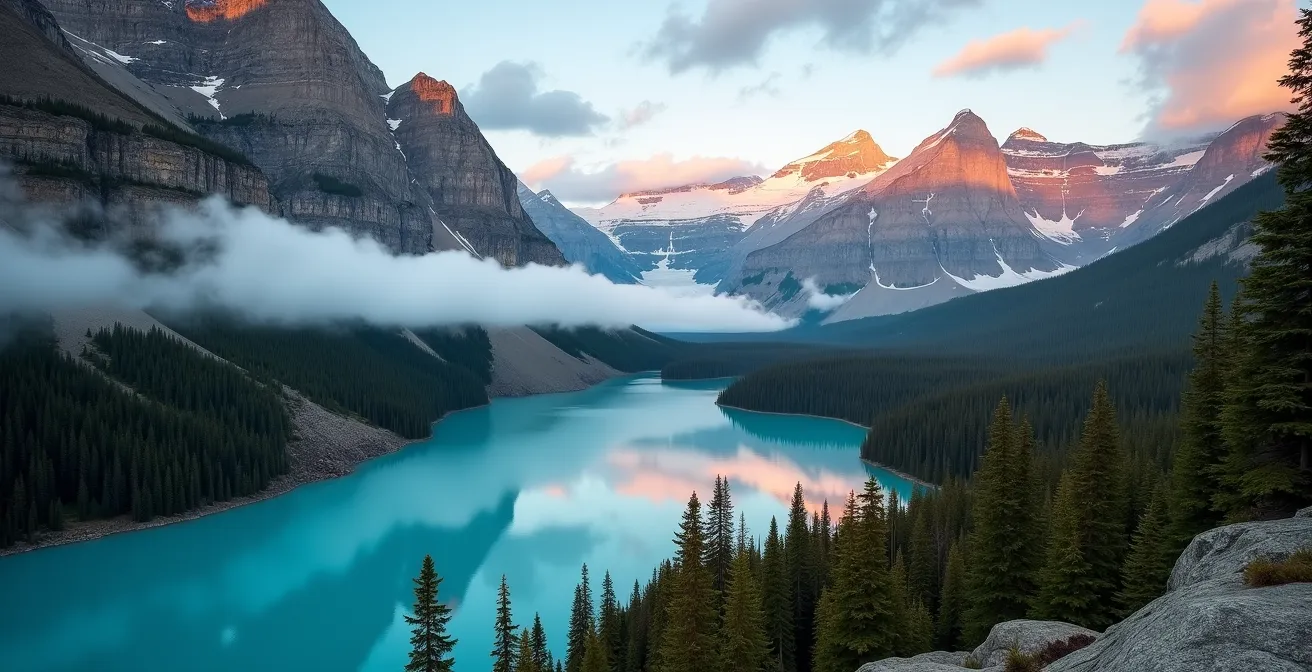
The 2023 decision by Parks Canada to close Moraine Lake Road to private vehicles has fundamentally changed how travelers experience Banff’s most iconic view. The era of pre-dawn drives to fight for a parking spot is over. While many guides simply list the new shuttle options, they often miss the critical point: choosing how to get to Moraine Lake is no longer a simple transport decision. It is a strategic choice with significant trade-offs in cost, time, and flexibility that will dictate the shape of your entire day, if not your whole trip.
The new system is a logistics puzzle. Do you gamble on the cheap-but-elusive Parks Canada shuttle, or invest in a pricier commercial service for guaranteed access? Is a sunrise photo worth the premium cost and extreme early start? The key to a successful visit is not just knowing your options, but understanding the opportunity cost of each one. This guide moves beyond a simple list of services. It provides a strategic framework for making the best decision based on your budget, your travel style, and your overall Banff itinerary.
We will analyze the reliability of different shuttle systems, explain the unique crowd dynamics of peak season, lay out a tactical plan for early morning access, and evaluate the viability of hiking in. We’ll also cover crucial accessibility information and explore rewarding alternatives for those who wish to bypass the complexity altogether. Ultimately, you will be equipped to solve the Moraine Lake puzzle.
text
This article breaks down the essential strategies for accessing Moraine Lake. The following summary outlines the key logistical challenges and solutions you need to consider for your visit.
Summary: A Strategic Breakdown of Moraine Lake Access
- Roam Transit vs Private Commercial Bus: Which Moraine Lake Shuttle is Reliable?
- Why is Moraine Lake in September More Crowded Than in July?
- How to Get to Moraine Lake at 5 AM Without Driving?
- Paradise Valley Trail: Is Hiking into Moraine Lake a Viable Option?
- Stairs or Path: Is the Best View of Moraine Lake Wheelchair Accessible?
- Parks Canada Shuttle: When Exactly Are the “Last Minute” Tickets Released?
- Chephren or Bow Lake: Where to Find Turquoise Water Without the Crowds?
- Sentinel Pass: Is the Switchback Slog Worth the View of Ten Peaks?
Roam Transit vs Private Commercial Bus: Which Moraine Lake Shuttle is Reliable?
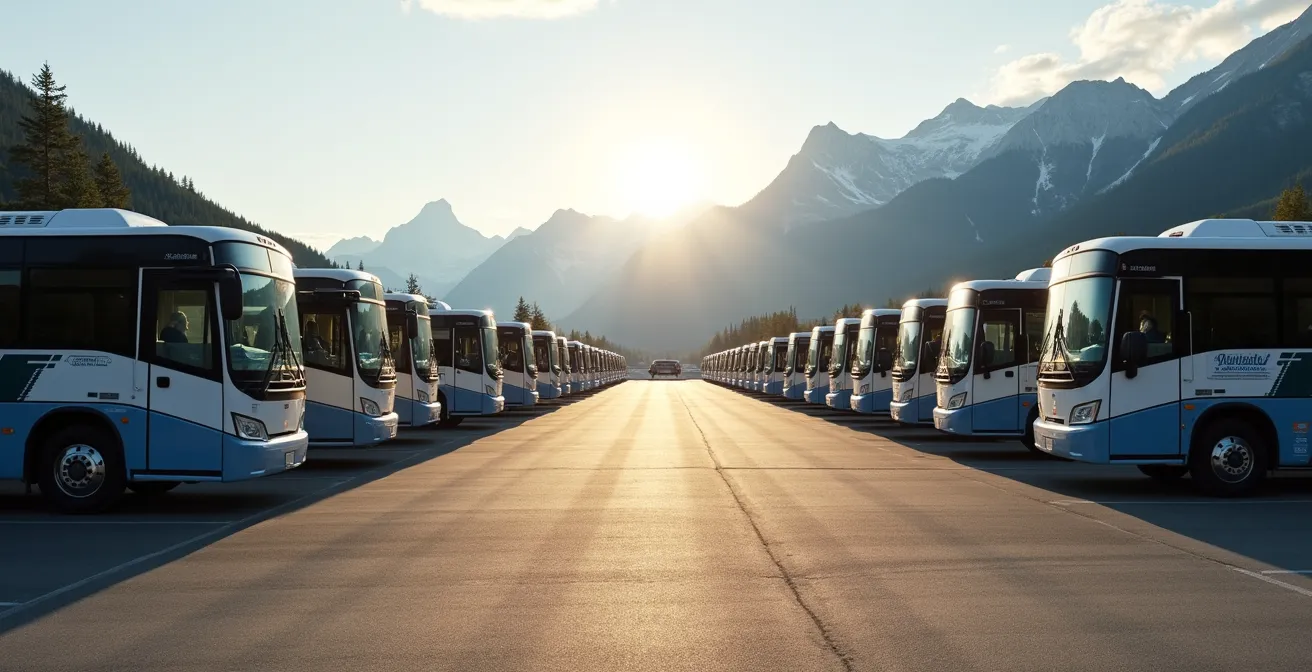
Choosing your shuttle is the most critical decision in your Moraine Lake plan. The primary options—Parks Canada, Roam Transit, and private commercial operators—present a clear trade-off between cost and convenience. From a transport planning perspective, reliability is not just about the bus showing up; it’s about schedule predictability and the level of “friction” involved in the booking and transfer process. Private commercial buses, while the most expensive, offer the lowest friction with direct routes and flexible booking, including guaranteed sunrise spots. They integrate easily into a tight schedule.
The Parks Canada shuttle is the most budget-friendly but comes with the highest booking friction. Success requires navigating a competitive reservation system. Roam Transit, particularly with the “Lake Louise Connector Hack,” offers a middle ground. By purchasing a Roam Super Pass, you can take the public bus to Lake Louise and then use the included Parks Canada Lake Connector. This requires a transfer but provides more certainty than a last-minute Parks Canada booking. Your choice depends on your tolerance for planning and your day’s opportunity cost: saving money with Parks Canada may cost you time and certainty, while a private bus buys you peace of mind.
The following table, based on an analysis of 2025 operator data, breaks down the core differences. Note that “Reliability” here includes factors like booking ease and schedule adherence.
| Service | Price (CAD) | Departure Location | Schedule Flexibility | Reliability Score |
|---|---|---|---|---|
| Parks Canada Shuttle | $8 adult/$4 senior | Lake Louise Park & Ride | Every 20 mins | High (Government-run) |
| Roam Transit Super Pass | $30 all-day | Banff/Canmore | Fixed schedule | Medium-High |
| Moraine Lake Bus Company | $45-65 | Lake Louise Village | Multiple daily + sunrise | High (Local operator) |
| Fairview Limousine | $50-80 | Lake Louise hotels | Flexible booking | High (Pet-friendly) |
Why is Moraine Lake in September More Crowded Than in July?
It’s a common misconception that September offers a quieter shoulder-season experience at Moraine Lake. In reality, the two-to-three-week “larch season” in mid-to-late September creates a visitor demand that can exceed even peak summer holidays. The reason is a fundamental shift in the visitor’s objective. While July tourists are there for the iconic “Twenty Dollar View” from the Rockpile, September visitors are primarily dedicated hikers with a singular goal: the Larch Valley and Sentinel Pass trails. This creates a different kind of crowding.
Instead of congestion at the main viewpoint, you’ll find bottlenecks on the trails themselves. This focused demand for a specific hiking experience puts immense pressure on the shuttle system. As the Larch Season Crowd Displacement Analysis notes, social media channels in Alberta provide real-time updates on foliage colors, triggering massive, targeted spikes in visitation. Parks Canada’s reservation system reveals that to manage this, 60% of shuttle tickets are released 48 hours before departure, creating a frantic booking environment. So, while July is busy with general tourism, September is intensely crowded with a highly motivated, goal-oriented demographic, making it feel even more competitive to access the area.
How to Get to Moraine Lake at 5 AM Without Driving?
Accessing Moraine Lake for sunrise, typically around 6 AM in summer, is the ultimate logistical challenge under the new rules. It requires booking a seat on one of the few commercial shuttles offering “Alpine Start” or sunrise services, as the standard Parks Canada and Roam Transit schedules begin later. This is a premium experience with a corresponding price tag. According to 2025 shuttle operator pricing, you can expect to pay $80-$150 per person for private sunrise shuttles, a stark contrast to the standard daytime fare. This is a clear example of paying for exclusivity and timing.
Achieving this goal requires precise reverse-chronological planning. It is not simply about waking up early; it is a mission with multiple time-sensitive steps. The following timeline is a practical framework for a 6:15 AM sunrise, assuming a departure from the Lake Louise area. If staying in Banff, add at least 45-60 minutes of travel time.
- 6:15 AM: Sunrise begins over the Valley of the Ten Peaks.
- 6:00 AM: Be positioned at the Rockpile viewpoint with your camera ready.
- 5:45 AM: Arrive at the Moraine Lake parking area and begin the short walk to the viewpoint.
- 5:15 AM: Board your pre-booked commercial sunrise shuttle.
- 4:45 AM: Check-in at your shuttle’s designated departure point.
- 4:30 AM: Leave your Banff or Lake Louise accommodation.
- 3:45 AM: Wake up and prepare for your early departure.
This level of coordination is the price of admission for witnessing the dawn light hit the Ten Peaks. It’s a significant investment of both money and sleep, and you must decide if that experience-per-dollar aligns with your travel priorities.
Paradise Valley Trail: Is Hiking into Moraine Lake a Viable Option?
For the fit and adventurous, the idea of bypassing the shuttle system by hiking the 20km Paradise Valley Trail from a separate trailhead to Moraine Lake is tempting. From a purely financial standpoint, it’s free. However, from a strategic itinerary planning view, this option has an extremely high opportunity cost. The 6-8 hour trek is a full-day commitment, consuming a significant portion of your limited time in Banff National Park. This means forgoing other iconic experiences like Johnston Canyon, the Banff Gondola, or exploring the Icefields Parkway.
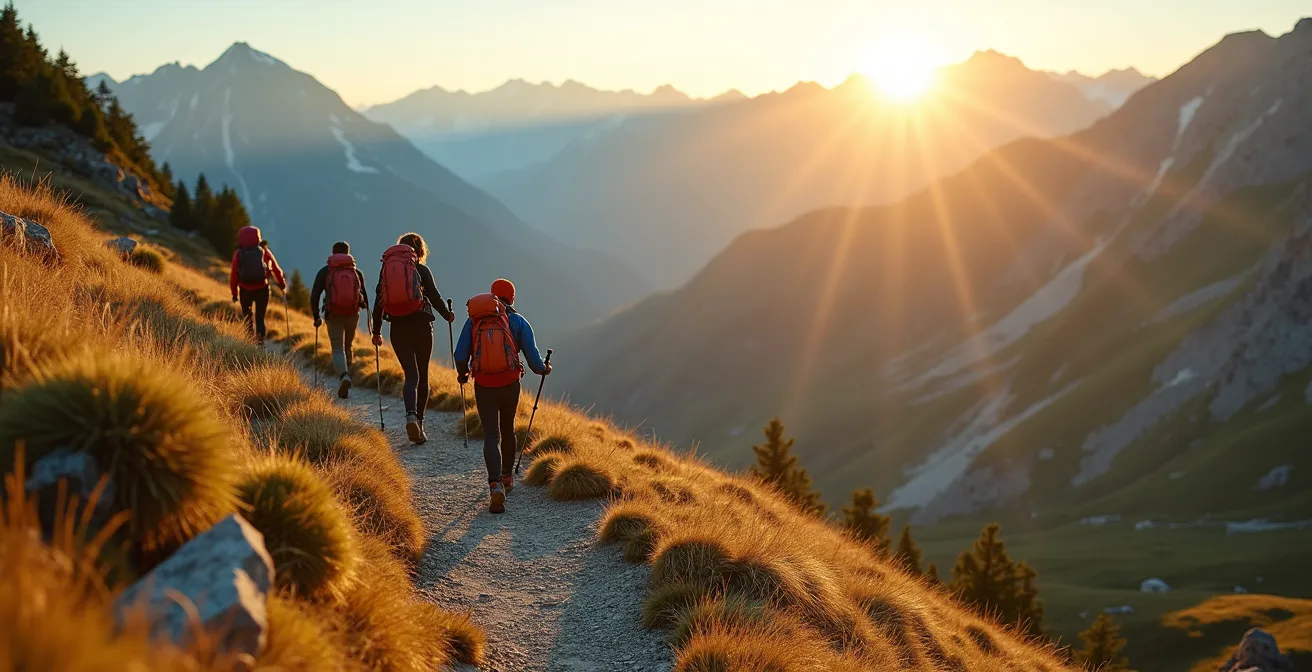
Furthermore, this is not a casual walk. The trail traverses a primary grizzly bear corridor, and Parks Canada frequently implements a mandatory “tight group of 4” hiking restriction for safety. This means you cannot legally hike the trail solo or in a small group during这些 periods. The logistics of coordinating a group, carrying sufficient supplies (minimum 3L of water and bear spray), and starting early enough to finish in daylight make this a serious undertaking. When weighing a full day of strenuous, logistically-complex hiking against an $8 shuttle ride, the shuttle presents a far better value proposition for the vast majority of visitors.
While the hike is a spectacular backcountry experience in its own right, it should be viewed as a primary objective, not a “hack” to see Moraine Lake. For most travelers, it is not a viable or efficient alternative to the shuttle system.
Stairs or Path: Is the Best View of Moraine Lake Wheelchair Accessible?
This is a critical question of accessibility, and the answer is twofold. The most famous, elevated viewpoint of Moraine Lake, seen in countless photographs, is from the top of the Rockpile Trail. This short but steep trail is comprised of uneven stone stairs and is definitively not wheelchair accessible. A Parks Canada accessibility audit confirms that 0% of the Rockpile trail is accessible for individuals with mobility challenges.
However, this does not mean Moraine Lake is inaccessible. The lakeshore path, which begins near the parking lot and runs along the edge of the water, is a completely different experience. This paved, flat trail is 100% wheelchair accessible and offers a beautiful, intimate, ground-level perspective of the turquoise water and the Valley of the Ten Peaks. It is ideal for capturing reflections and experiencing the grandeur of the scene without any climbing. The main washroom facilities near the shuttle drop-off area also meet accessibility standards.
For visitors seeking that iconic, elevated turquoise lake view from an accessible platform, Parks Canada has invested in an excellent alternative. The redesigned Peyto Lake viewpoint, located further up the Icefields Parkway, now features a fully accessible, gently sloped boardwalk leading to a viewing platform. It offers a similarly breathtaking panoramic view of a glacial-fed lake and is a fantastic, stress-free option for visitors with mobility concerns who want that classic Banff vista.
Parks Canada Shuttle: When Exactly Are the “Last Minute” Tickets Released?
Securing a seat on the Parks Canada shuttle is the most cost-effective way to visit Moraine Lake, but it’s also a high-stakes game of speed and strategy. The key is understanding the ticket release schedule. Parks Canada’s official reservation system shows that a portion of the season’s tickets (typically 40%) are released in a block during the spring, usually in April. These often sell out within minutes for popular dates.

The majority of seats, however, are held back. The critical moment is exactly at 8:00 AM Mountain Time (MT), two days (48 hours) prior to your desired date of visit. At this time, the remaining 40% of the shuttle inventory for that day is released to the public. This is your main opportunity. Success depends on being prepared. This isn’t a casual booking; it’s a race against thousands of other hopefuls. Having your account created, payment information saved, and a clear idea of your preferred time slots is non-negotiable.
The following strategy maximizes your chances in this competitive environment:
- Create a Parks Canada account and save your payment information the day before.
- Log in at 7:55 AM MT, two days before your desired visit.
- Have multiple browser tabs open to the reservation page.
- At exactly 8:00 AM MT, refresh all tabs simultaneously.
- Target afternoon slots (after 3 PM) first, as they tend to have slightly lower demand than morning slots.
- If your initial attempt fails, continue refreshing your browser from 8:01 to 8:20 AM. Many tickets are temporarily held in users’ carts and are released back into the pool if the transaction isn’t completed.
This process requires persistence. If online booking fails, calling the reservation line immediately can sometimes yield results, but the 8:00 AM online release is the primary method.
Chephren or Bow Lake: Where to Find Turquoise Water Without the Crowds?
Part of a successful Banff strategy is knowing when to pivot. If the Moraine Lake logistics puzzle seems too complex or stressful, there are several outstanding alternatives that offer the same brilliant turquoise water without the intense crowds or rigid booking systems. The vibrant color of these lakes is due to “rock flour”—fine glacial silt suspended in the water that refracts sunlight. This effect is most pronounced under direct, high-angle sun, which is why timing can still be a factor, even at quieter lakes.
The Icefields Parkway, just north of Lake Louise, is home to several accessible gems. Bow Lake is a roadside marvel, requiring only a short 50-meter walk from the parking lot to its shore. It’s a popular stop, but its large size disperses visitors effectively. For those willing to exert a little more effort, Chephren Lake is a hiker’s reward. A moderate 4km hike leads to a secluded lake that offers a profound sense of wilderness and solitude. Further on, Hector Lake provides even more isolation for those willing to do a quick scramble and a creek crossing. These options represent a different kind of “experience-per-dollar” where the currency is a bit of physical effort rather than money or booking-related stress.
This table compares the effort profile for some of the best alternatives to Moraine Lake, helping you choose based on your desired activity level.
| Lake | Effort Level | Distance from Road | Best Viewing Time | Crowd Level |
|---|---|---|---|---|
| Bow Lake | Roadside Marvel | 50 meters | Mid-day (high sun angle) | Moderate |
| Chephren Lake | Hiker’s Reward | 4km moderate hike | Afternoon | Low |
| Hector Lake | Quick Scramble | 1km with creek ford | Mid-day | Very Low |
| Lake O’Hara | Ultimate Exclusive | Bus lottery required | All day | Controlled (quota) |
Key Takeaways
- The Moraine Lake vehicle ban makes shuttle booking the most critical part of your trip planning; your choice dictates cost, time, and flexibility.
- For budget travelers, the Parks Canada shuttle is cheapest but requires navigating a highly competitive booking window 48 hours in advance.
- For hikers, be aware that “larch season” in September creates intense, trail-specific crowding that can surpass peak summer visitor numbers.
Sentinel Pass: Is the Switchback Slog Worth the View of Ten Peaks?
Once you have solved the logistics of getting to Moraine Lake, the next question is how to best experience it. The hike to Larch Valley and onwards to Sentinel Pass is the area’s premier trek, but its worthiness depends entirely on your hiking profile and expectations. The 11.6km round trip to the pass involves a significant 792m of elevation gain, culminating in a series of steep, exposed switchbacks on loose scree. It is not a casual stroll.
A more effective way to evaluate the hike is by persona. For the Casual Hiker or family, the answer is no; the slog to the pass is not necessary. The hike to the golden Larch Valley meadows (approx. 2.4km one-way) is a spectacular destination in itself, offering breathtaking views and, in autumn, a world-class display of colour. For the Avid Hiker, the answer is an unequivocal yes. Reaching the 2,611m pass is a bucket-list achievement, providing an epic, top-of-the-world vista looking down into Paradise Valley on the other side. For the Photographer, the climb is justified by the unique, elevated composition of Larch Valley and the Minnestimma Lakes, but it’s a physically demanding price to pay for a single perspective.
Your Safety Checklist for Sentinel Pass
- Avalanche Risk: Check the Parks Canada trail report for current avalanche conditions, especially in early summer or fall.
- Start Time: Begin your hike before 8 AM to avoid common afternoon thunderstorms and allow ample time.
- Traction: Bring microspikes for icy sections, which can persist into July and return in September.
- Hydration: Pack a minimum of 2-3 liters of water per person; there are no reliable water sources past the Minnestimma Lakes.
- Footwear & Gear: Wear proper hiking boots with ankle support. The scree section is unstable and not suitable for trail runners. Download an offline map as there is no cell service.
Ultimately, the Sentinel Pass switchbacks are a challenging final push. The decision to attempt them should be based on a realistic assessment of your fitness, equipment, and what you truly want from your Moraine Lake experience.