
In summary:
- Master the “Pancake Breakfast System” to eat for free by using dedicated apps and knowing which spots to hit first.
- Understand the rodeo by learning the difference between high-action Roughstock events and skill-based Timed Events.
- Recognize that “weird” midway food is a calculated marketing tradition, and know which classic eats are truly worthwhile.
- Book accommodations months in advance or use a local’s strategy involving university residences and commuter towns.
- Navigate the cultural landscape by mastering cowboy hat etiquette and understanding its symbolic importance.
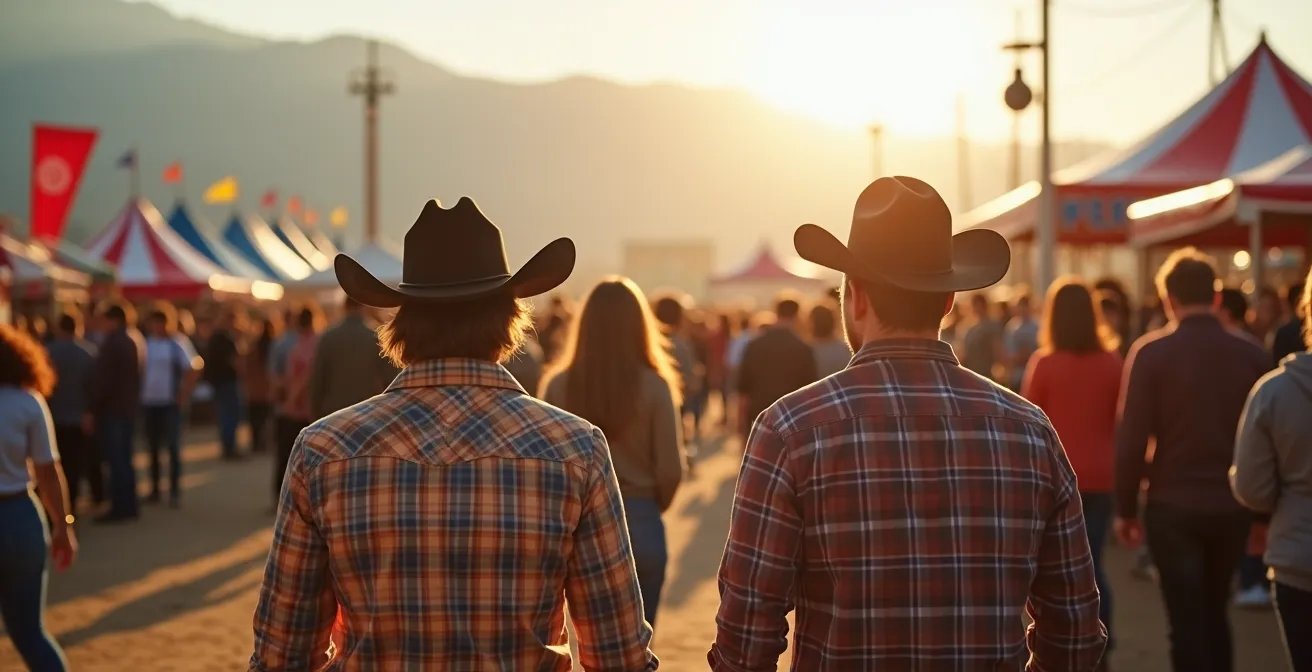
The first time you step onto the Stampede grounds, the sheer scale of it hits you like a wall of sound, smells, and energy. Ten days of denim, dust, and dizzying crowds can feel less like a party and more like a final exam you didn’t study for. For first-time visitors, the instinct is to grab a program and wander aimlessly, overwhelmed by the chaos. The common advice—”wear a cowboy hat,” “see the rodeo,” “try the midway food”—is a starting point, but it’s the advice of a tourist, not a veteran.
This generic approach misses the point entirely. It treats the Stampede as a simple checklist of attractions rather than a complex, living ecosystem with its own unwritten rules, economic forces, and cultural rhythms. You’ll see the sights, but you won’t truly *experience* the event. You’ll end up overpaying, waiting in the wrong lines, and missing the authentic moments that make the “Greatest Outdoor Show on Earth” legendary.
But what if the key wasn’t just to endure the Stampede, but to master it? The secret is to stop seeing chaos and start seeing systems. This guide is your local’s playbook, designed to transform you from a bewildered visitor into a strategic navigator. We’re going to pull back the curtain on the hidden mechanics of everything from free breakfasts to rodeo strategy, giving you the insider knowledge to not just survive, but to conquer the ten most exhilarating days of the year in Alberta.
This guide breaks down the essential strategies you need to master. From navigating the food to understanding the culture, you’ll find everything you need to plan your ultimate Stampede experience in the sections below.
Table of Contents: How to Master the Stampede
- Pancake Breakfasts: How to Eat for Free Every Morning of Stampede?
- Roughstock vs Timed Events: What is Actually Happening in the Arena?
- Scorpions or Crickets: Why Do People Eat Weird Food at Stampede?
- Why You Need to Book Stampede Hotels 6 Months in Advance?
- Hat Etiquette: When Should You Take Your Cowboy Hat Off?
- Branding or Round-Up: Which Season Offers the Most Action?
- Working Ranch vs Guest Ranch: Which Experience Matches Your “Yellowstone” Dream?
- Working Ranch vs Luxury Resort: Which Cowboy Experience Fits Your Skills?
Pancake Breakfasts: How to Eat for Free Every Morning of Stampede?
The Stampede pancake breakfast isn’t just a free meal; it’s a city-wide ritual and your first strategic challenge. For ten straight days, Calgary runs on a system of community-funded flapjacks, and mastering this system is the mark of a true Stampede pro. While tourists wander aimlessly hoping to stumble upon a grill, locals have a plan. The goal is not just to eat, but to eat efficiently and experience the different atmospheres, from corporate networking events to family-friendly community gatherings.
Your strategy begins the night before. Locals like Sarah, a Calgarian who has lived next to the grounds for 15 years, know that a well-planned breakfast route is key. You’ll want to download a dedicated free breakfast app to see real-time locations and times. The most reliable starting point is always Fluor Rope Square downtown, which offers a guaranteed breakfast alongside live music and Indigenous performances. From there, monitor social media hashtags like #stampedebreakfast for pop-up events hosted by businesses and community groups.
A veteran’s pro-tip is to segment your targets. Hit the corporate-sponsored breakfasts on weekdays between 7:30 and 8:00 AM. The crowds are smaller, the lines are shorter, and it’s a prime opportunity for networking. Save the larger community breakfasts for the weekends, when the atmosphere is more festive and family-oriented. By treating the pancake trail as a daily mission, you tap into the true spirit of Calgary’s hospitality and save a significant amount of money that’s better spent on the grounds.
Roughstock vs Timed Events: What is Actually Happening in the Arena?
Stepping into the Grandstand arena for the first time can be an assault on the senses. To a newcomer, the rodeo looks like pure, unadulterated chaos. But beneath the dust and the roar of the crowd is a highly structured competition with two distinct categories of events: Roughstock and Timed Events. Understanding the difference is the key to appreciating the incredible skill on display. It’s a contest of raw power versus technical precision, and with $1.5 million in prize money on the line, it is one of the richest rodeos in the world.
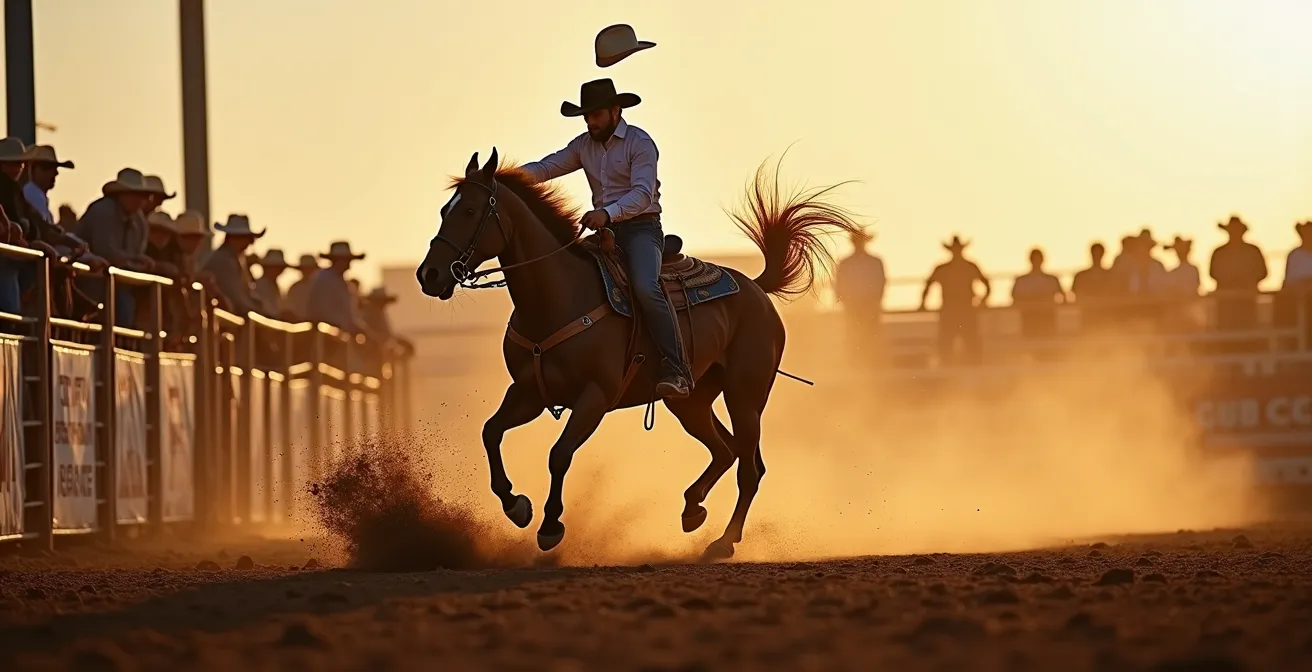
Roughstock events are the heart-stopping spectacles you came to see: Saddle Bronc, Bull Riding, and Bareback. Here, the goal is simple: a cowboy must stay on a wildly bucking animal for eight seconds, using only one hand. Points are awarded for both the rider’s control and the animal’s power. Listen for the term “covering,” which means the rider successfully made the eight-second whistle. These events are a pure test of grit and balance.
Timed events, on the other hand, are a race against the clock. This includes Barrel Racing, Tie-Down Roping, Steer Wrestling, and Breakaway Roping. Here, it’s about flawless execution and the seamless partnership between horse and rider. These events showcase incredible athleticism and precision, where a tenth of a second can be the difference between winning “day money” and going home empty-handed. For a local connection, keep an eye out for athletes with a legacy, like the Pozzobon family in bull riding. The competition culminates on Showdown Sunday, where the highest prize purses create the most intense and unforgettable action.
Scorpions or Crickets: Why Do People Eat Weird Food at Stampede?
Every year, headlines buzz with the bizarre culinary creations of the Stampede Midway: scorpion pizza, mac ‘n’ cheese soft serve, deep-fried pickle Oreos. For a first-timer, it seems like a strange, stomach-churning tradition. But the truth is, this “weird food” phenomenon is not an organic cultural tradition; it’s a brilliantly executed marketing system. The annual reveal of new midway foods has become a calculated PR strategy that generates massive media attention and online buzz, drawing people to the grounds out of sheer curiosity.
This strategy transforms novelty food from a simple snack into a shareable, Instagrammable experience. It’s a rite of passage for many attendees to try the year’s most talked-about item, whether it’s good or not. However, the Stampede veteran knows how to separate the fleeting fads from the timeless classics. While the novelty items are great for a photo, the real soul of Stampede food lies in the tried-and-true favorites that have been served for decades.
To navigate the midway like a pro, you need a food strategy. Focus your appetite on the classics that locals swear by. These are the items that deliver consistent quality and a true taste of the Stampede. This table breaks down what’s a must-try versus what’s mostly for the ‘gram.
| Classic Local Favorites | Location | Instagram Novelties | Worth It? |
|---|---|---|---|
| Tom Thumb Mini Donuts | Multiple midway locations | Scorpion Pizza | Photo only |
| Beef-on-a-bun | Near Grandstand | Deep-fried Pickle Oreos | Surprisingly good |
| Classic Corn Dogs | Throughout grounds | Mac n’Cheese Soft Serve | Skip it |
Why You Need to Book Stampede Hotels 6 Months in Advance?
The number one mistake first-time Stampede visitors make is underestimating the accommodation crunch. Hotels in Calgary don’t just get expensive during Stampede; they become a scarce and precious commodity. Prices can triple or quadruple, and rooms within a reasonable distance of the grounds are often fully booked six months to a year in advance. This isn’t just price gouging; it’s a simple, brutal equation of supply and demand. Over a million people descend on a city of 1.3 million, and there simply aren’t enough hotel rooms to go around.
Relying on a last-minute hotel booking is a recipe for disaster. But if you find yourself in that situation, you need to think like a local and deploy a survival strategy. The key is to look beyond traditional hotels. One of the best-kept secrets is renting empty dorm rooms from the University of Calgary or SAIT. These are clean, safe, significantly cheaper, and well-connected to the C-Train line, which runs 24/7 during Stampede.
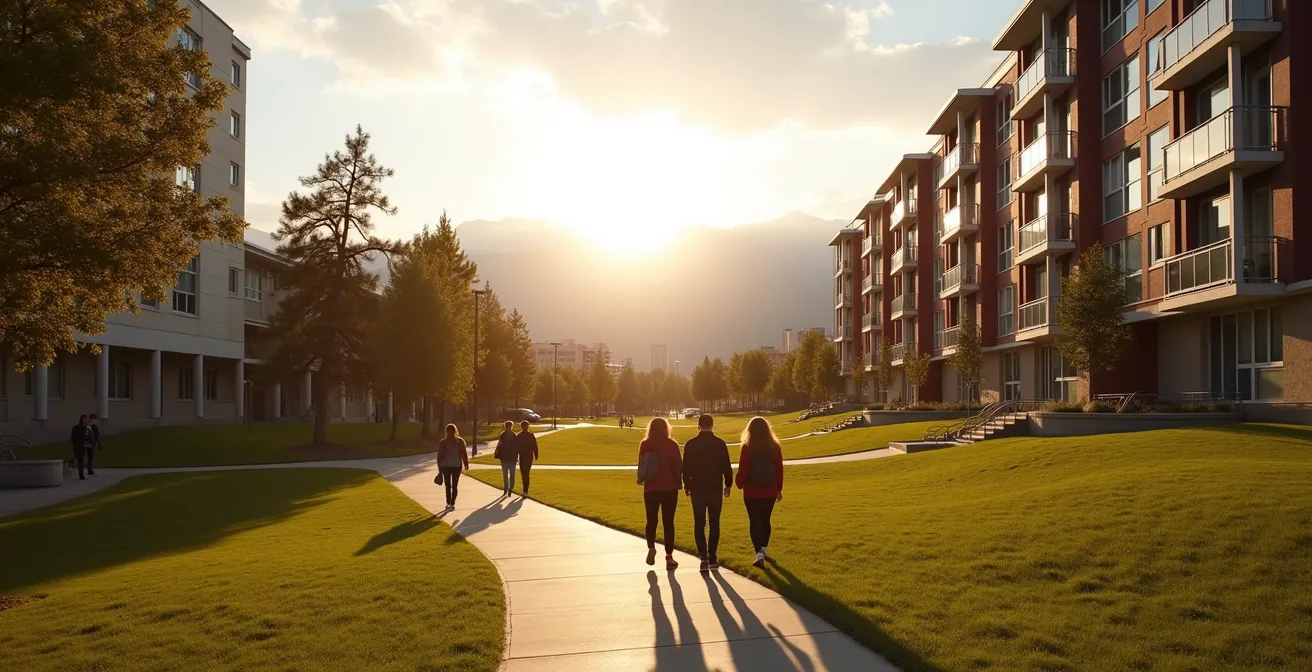
Another pro move is to expand your search to surrounding commuter towns. Places like Airdrie (20 minutes north), Cochrane (30 minutes west), and Okotoks (20 minutes south) offer much more reasonable prices. While it means a short commute, it can save you hundreds of dollars. For the truly desperate, monitoring Kijiji or Facebook Marketplace for last-minute sublets from Calgarians leaving town for the ten days can unearth some hidden gems. This strategic approach to accommodation is essential for a budget-friendly Stampede experience.
Hat Etiquette: When Should You Take Your Cowboy Hat Off?
Putting on a cowboy hat for the Stampede is more than just playing dress-up; it’s participating in a cultural tradition. But with that comes a set of unwritten rules—a “cultural rhythm” that separates the insiders from the tourists. The Calgary White Hat itself is a world-renowned symbol of hospitality, a tradition cemented by iconic local hatters like Smithbilt, who have been shaping them for over 100 years. Knowing when to wear your hat and when to take it off is a sign of respect that locals will notice and appreciate.
The rules are a blend of western tradition and common courtesy. Generally, you keep your hat on outdoors, in public buildings like lobbies or airports, and at casual venues like a bar or the Stampede grounds. However, there are key moments when removing it is mandatory. Think of it as a sign of respect similar to removing a baseball cap.
The most important rule is to remove your hat during the singing of the national anthem, which happens daily at the rodeo and evening show. It should also come off when you enter a private space, like a corporate hospitality tent or someone’s home, and during any form of prayer or invocation. Finally, it’s a sign of respect to remove it when being introduced to an elder. Mastering these subtle cues shows you’re not just wearing a costume, but truly embracing the western spirit.
Your 5-Point Hat Etiquette Audit
- Anthems and Invocations: Do you remember to remove your hat for O Canada or any opening prayer?
- Indoor vs. Outdoor: Do you have a clear rule for when to take it off when moving inside a private or formal setting?
- Introductions: Are you prepared to remove your hat when being introduced to an elder or dignitary?
- Greetings: Do you know the difference between a respectful “tip” of the hat outdoors and a full removal indoors?
- Dining Rules: Do you distinguish between a casual outdoor food stall (hat on) and a formal indoor restaurant (hat off)?
Branding or Round-Up: Which Season Offers the Most Action?
The ten days of the Calgary Stampede are the spectacular public face of Alberta’s western heritage, a massive cultural and economic engine. In fact, a 2019 report found the event accounts for a staggering $282.5 million in economic impact for the province. It’s a dazzling showcase of skill, entertainment, and community spirit. But it is just that—a showcase. The real, year-round action that the Stampede celebrates takes place far from the midway lights, on the sprawling ranches of the Alberta foothills.
For those whose interest in cowboy culture is sparked by the Stampede, the natural next question is: what does this look like in the real world? The life of a working ranch is dictated by the seasons, not a ten-day festival. The two busiest and most action-packed times are branding season in the late spring and the fall round-up. Branding is an intense, hands-on period where new calves are roped, vaccinated, and marked. It’s dusty, fast-paced work that requires teamwork and skilled horsemanship.
The fall round-up, or “gather,” is a different kind of action. It involves scouring vast pastures, often over several days, to bring the cattle down from their summer grazing lands before the snow flies. It’s a test of endurance and navigation, a quieter but equally demanding part of the ranching cycle. While the Stampede offers the thrill of competition in a controlled arena, these working seasons offer an authentic, un-glamorized look at the hard work and dedication that underpins the entire culture.
Working Ranch vs Guest Ranch: Which Experience Matches Your “Yellowstone” Dream?
After a few days at the Stampede, many visitors are captivated by the cowboy lifestyle and start chasing their own “Yellowstone” fantasy. The good news is that Alberta’s ranch country offers a spectrum of experiences to live out that dream. The crucial first step is to decide what kind of experience you want by understanding the difference between a working ranch and a guest ranch. This choice will determine whether your adventure is more about authentic grit or rustic luxury.
A working ranch vacation means you are an active, albeit temporary, part of the crew. You’ll stay in a bunkhouse, eat with the family, and participate in daily chores, whether it’s mending fences, moving cattle, or helping during branding season. This is the most authentic experience, ideal for those with some riding skill who want to get their hands dirty. Look for these ranches near traditional ranching towns like Longview, about 45 minutes south of Calgary.
A guest ranch, on the other hand, is designed for tourism. It offers the aesthetic and activities of a ranch—horseback riding, western-style meals, scenic views—but with the comforts of a resort. Many offer lessons, guided trail rides, and other activities like fly-fishing or hiking. This is the perfect option for beginners or families who want a taste of the lifestyle without the intense physical labor. For the ultimate combination of scenery and adventure, organizations like Banff Trail Riders offer everything from hourly rides to multi-day backcountry trips, celebrating a century of guiding visitors through the Rockies.
Key Takeaways
- Mastering the Stampede requires understanding its hidden systems, not just visiting its attractions.
- Strategic planning for free pancake breakfasts, rodeo viewing, and accommodation can save you time and money.
- Authentic cultural engagement comes from respecting traditions like hat etiquette and distinguishing them from marketing fads like novelty foods.
Working Ranch vs Luxury Resort: Which Cowboy Experience Fits Your Skills?
Choosing the right post-Stampede ranch experience ultimately comes down to an honest assessment of your skills and expectations. A luxury resort ranch is the safest and most accessible entry point for anyone who has never been on a horse. They provide well-trained, gentle horses and guided trail rides in a controlled environment, ensuring a safe and enjoyable introduction to the western lifestyle. These resorts, often found in the stunning Alberta Foothills, also blend riding with other high-end amenities like spa services and farm-to-table culinary programs, offering a taste of cowboy culture wrapped in comfort.
Conversely, a working ranch is for those who crave authenticity and have at least basic riding proficiency. These are not tourist operations; they are functioning agricultural businesses. You will be expected to handle a horse competently and contribute to real cattle work. It’s a deeply rewarding but physically demanding experience that offers an unfiltered glimpse into the life the Stampede celebrates. The best way to find these ranches is by exploring towns along Highway 22, Alberta’s famous “Cowboy Trail.”
Ultimately, both options provide a valid and memorable way to connect with Alberta’s western heritage. The choice isn’t about which is “better,” but which is the right fit for you. By matching the experience to your skill level and desired level of grit, you ensure your “Yellowstone” dream becomes a fantastic memory rather than a painful misadventure.
Now you have the local’s playbook. You have the strategies and the insider knowledge to move beyond the surface-level chaos. It’s time to stop being a passive spectator and start being an active participant. Dive in, embrace the “Yahoo!”, and conquer the ten greatest days of summer like a true Albertan.
Frequently Asked Questions About the Calgary Stampede Experience
I’ve never been on a horse – which ranch type is safer?
Luxury resort ranches offer beginner-friendly guided rides with well-trained horses, while working ranches expect basic riding skills for cattle work
What non-riding ranch activities exist in Alberta?
Modern Alberta ranches offer fly-fishing on the Bow River, guided hikes in the Badlands, and farm-to-table culinary programs
How do I find ranches along the famous Cowboy Trail?
Highway 22 (Cowboy Trail) runs north-south through Alberta’s ranching country – search for guest ranches in towns like Longview, Turner Valley, and Pincher Creek