
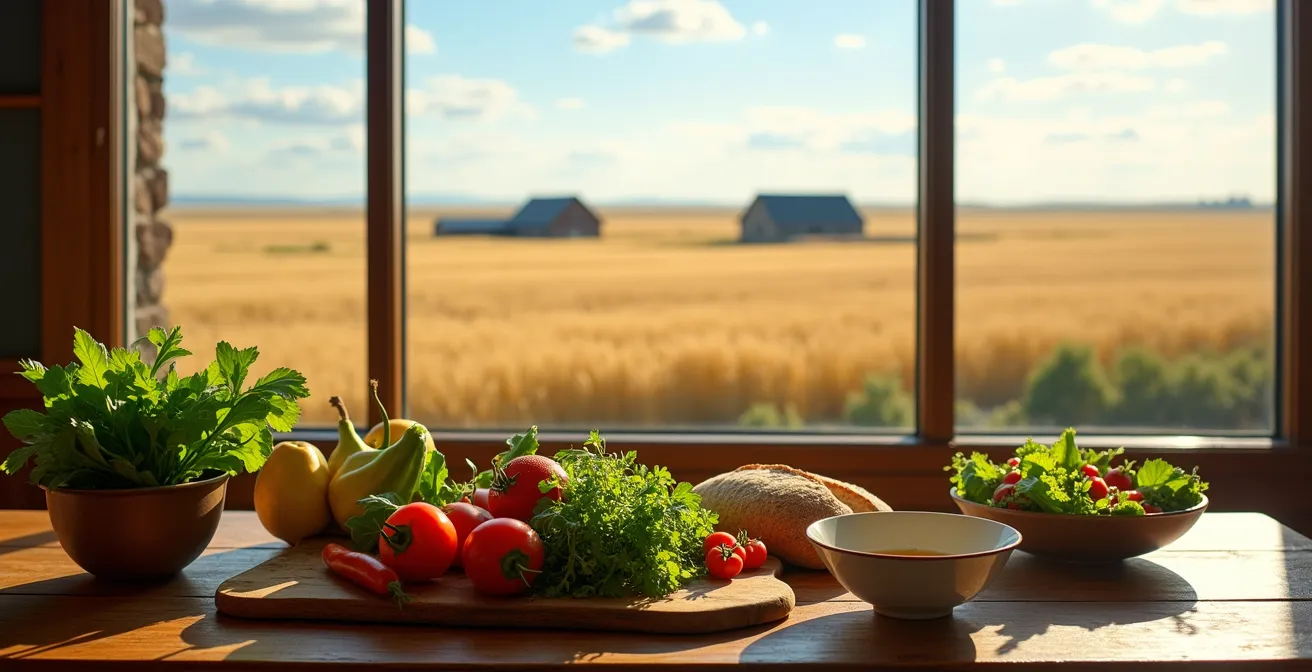
The term “farm-to-table” in Alberta is mostly a marketing slogan; true locality is proven by seasonal limits and transparent supply chains, not by menu claims.
- Authentic menus are defined by what’s missing (e.g., fresh tomatoes in May) as much as what’s present.
- Verification involves interrogating sources, from farmers’ market rules (“Make It, Bake It, Grow It”) to beef certifications beyond the simple AAA grade.
Recommendation: Shift from a passive diner to a food auditor: question the provenance of key ingredients like honey, malt, and meat before you trust the “local” label.
The words “local” and “farm-to-table” are sprinkled across menus in Calgary and Edmonton like finishing salt. They evoke images of sun-drenched fields and wholesome, honest food. But for the discerning foodie, these terms have become a source of skepticism. This practice of “local-washing”—using vague sourcing claims to create a veneer of authenticity—is rampant. How can you, a diner who genuinely cares about provenance, separate the marketing narrative from the logistical reality of eating locally in Alberta? It’s less about trusting the menu and more about becoming a food traceability auditor.
The common advice is to look for rustic decor or ask a server if the food is local. This is insufficient. A truly local restaurant’s identity is inextricably tied to the province’s distinct climate, agricultural strengths, and even its cultural history. It’s about understanding why you can’t get a decent local tomato in spring, why a rural menu is loaded with pierogies, and what certifications on beef mean more than the grade itself. The real key isn’t finding restaurants that claim to be local, but learning to identify the ones that operate within the real, unglamorous constraints and opportunities of the Albertan landscape.
This guide abandons feel-good platitudes. Instead, it provides a critical framework for interrogating a restaurant’s claims. We will explore the seasonal red flags, the rules that govern our best farmers’ markets, how elite chefs transform humble winter vegetables, and what makes products like Alberta honey and beef truly world-class. You will learn to read a menu not for what it says, but for what it proves through its very structure and limitations.
The following sections break down the essential audit points for any diner serious about finding authentic local food in Alberta. This is your guide to navigating the landscape with a critical eye and an appreciative palate.
Summary: Uncovering Alberta’s Authentic Food Scene
- Why Can’t You Get Fresh Local Tomatoes in Alberta in May?
- Strathcona or Downtown: Which Farmers Market Requires the “Make It, Bake It, Grow It” Rule?
- Beets and Carrots: How Local Chefs Elevate Winter Cellar Vegetables?
- Why is Alberta Honey Considered Some of the Best in the World?
- From Field to Glass: Which Breweries Use 100% Alberta Malt?
- Ukrainians in Alberta: Why Are Pierogies a Staple on Rural Menus?
- Why You Can’t Get a Table in Banff at 7 PM Without a Reservation?
- AAA vs Prime: How to Choose the Best Steak at an Alberta Butcher?
Why Can’t You Get Fresh Local Tomatoes in Alberta in May?
The first and most crucial test for any self-proclaimed “farm-to-table” restaurant in Alberta is the seasonality audit. Our province has a short, intense growing season. A menu that ignores this reality is the biggest red flag. A beautiful, ripe, field-grown tomato served in May is not a sign of culinary excellence; it’s evidence of a long-haul truck from Mexico or California. An authentic local restaurant doesn’t fight the climate—it builds its entire identity around it. This means a spring menu should feature asparagus, rhubarb, and early greens, while the height of summer brings those coveted tomatoes and corn.
This acceptance of seasonal limitations is a mark of integrity. A chef who proudly serves root vegetables in April is being more honest than one serving “fresh” berry coulis. The menu should feel alive, shifting not just four times a year, but subtly from week to week as the harvest dictates. Transparency is key. As one food policy investigation noted, a restaurant’s willingness to be explicit about its sources is a powerful indicator of trust. In an analysis from the NYC Food Policy center, an expert observed that restaurants that invest in detailed menu descriptions build more credibility.
Any restaurant willing to authenticate itself by spending a little more money on verbiage or pictures should be trusted more.
– Morris, NYC Food Policy Investigation
Look for this “verbiage.” Does the menu just say “seasonal vegetables,” or does it specify “Broxburn Farm asparagus” or “Gull Valley greenhouse tomatoes”? Specificity is the antidote to local-washing. The absence of a summer vegetable in spring isn’t a failure; it’s proof of concept. The most authentic farm-to-table restaurants are defined as much by what they *don’t* have as by what they do.
Strathcona or Downtown: Which Farmers Market Requires the “Make It, Bake It, Grow It” Rule?
To understand a restaurant’s sourcing, you must first understand the landscape of its suppliers. In Alberta, not all farmers’ markets are created equal. They exist on a spectrum from curated local hubs to simple retail floors for resellers. The key differentiator is the underlying governance. An “Alberta Approved Farmers’ Market” designation means at least 80% of vendors must sell products they have made, baked, or grown themselves. However, some markets go even further, enforcing a strict 100% rule.
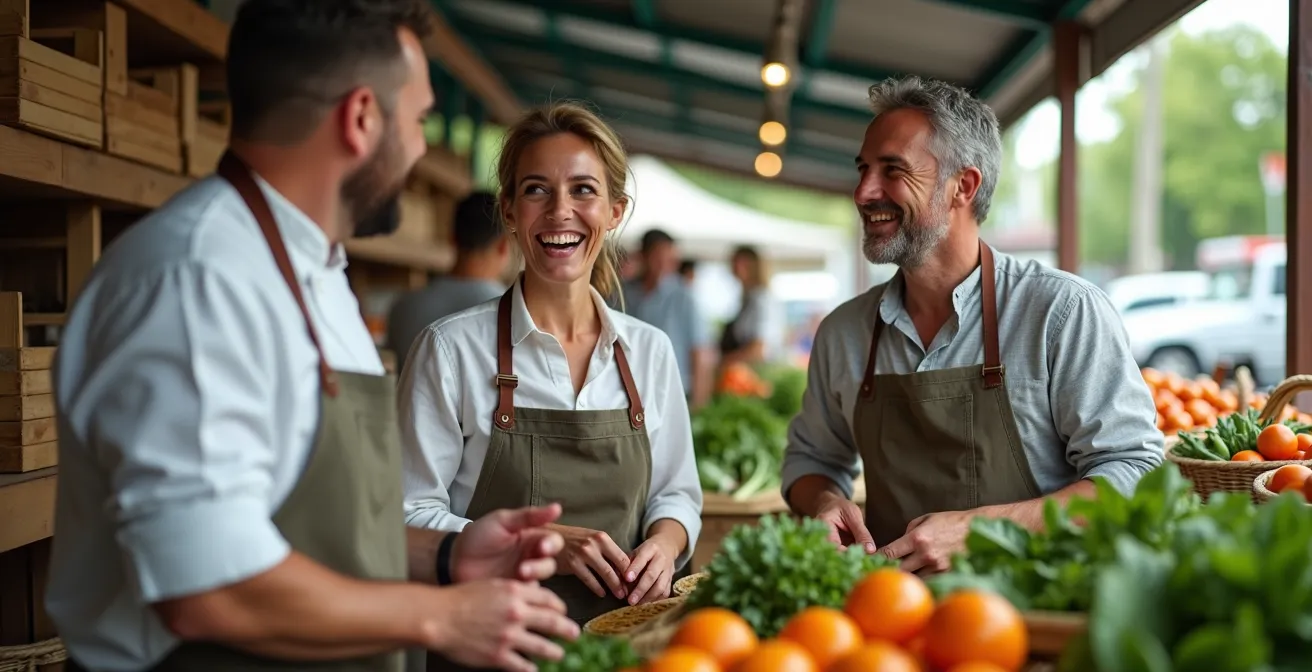
The gold standard in Edmonton is the Strathcona Market, which operates under a strict “make it, bake it, grow it” policy. This guarantees that the person you’re buying from is the producer. In Calgary, markets like the Calgary Farmers’ Market also prioritize local producers but may operate under the 80/20 provincial guideline, allowing a small percentage of resellers. For a food auditor, this distinction is critical. A chef who says they “shop at the farmers’ market” is making a vague claim. A chef who says they have a direct relationship with a specific vendor at Strathcona is providing verifiable proof of local sourcing.
This leads to the next level of inquiry: asking restaurant staff about their suppliers. A knowledgeable server at a true farm-to-table establishment should be able to name the farms that supply their proteins and produce without hesitation. Vague answers like “we source locally” are a sign of poor staff training or, worse, a weak supply chain. The conversation between a chef and a farmer is the heart of the farm-to-table movement; your conversation with the server is your window into that relationship.
Your Audit Checklist: Vetting Local Provenance
- Farm Names: Look for specific farm names on the menu, not just “locally sourced.”
- Staff Knowledge: Ask your server where the chicken or carrots come from. A detailed answer is a green flag.
- Seasonal Flux: Check if the menu changes frequently to reflect Alberta’s harvest cycles. Out-of-season produce is a major red flag.
- Digital Transparency: Investigate the restaurant’s website or social media. Do they feature their farm partners?
- Out-of-Season Test: If you see fresh field tomatoes or berries on the menu in the middle of winter, the “local” claim is questionable.
Beets and Carrots: How Local Chefs Elevate Winter Cellar Vegetables?
Alberta’s long winters present a challenge that separates the true local artisans from the pretenders. When fresh produce is scarce, a restaurant’s creativity with storage crops—beets, carrots, potatoes, parsnips, and squash—becomes the ultimate expression of its commitment to place. A chef who can make a beet taste revelatory in February is demonstrating a deeper level of skill and local attunement than one who simply imports asparagus from Peru.
Techniques like fermenting, pickling, and dehydrating become essential tools, not just for preservation but for creating complex, layered flavours. You might see fermented carrots that bring a bright acidity to a rich dish, or smoked potatoes that add depth to a winter soup. This is where culinary innovation meets agricultural reality. Look for menus that celebrate the humble root vegetable, transforming it into the star of the plate through charring, roasting, and creative preservation methods.
This philosophy of whole-geography and whole-season cooking is perfectly embodied by restaurants that build direct, deep partnerships with farms, going beyond a simple buyer-seller relationship. They work together to plan crops and utilize everything the land provides.
Case Study: RGE RD’s Hyper-Local Partnership
A prime example of this ethos is Edmonton’s RGE RD (Range Road). Chef Blair Lebsack and his team have a deep partnership with Nature’s Green Acres farm. They don’t just buy from the farm; they grow vegetables on the property and source their meat directly from the same location. This culminates in long-table dinners where ingredients are harvested just steps from the table. Furthermore, their famous “Questionable Bits” menu showcases a commitment to whole-animal butchery, ensuring nothing from their locally-raised animals goes to waste. This model is the antithesis of local-washing, representing a fully integrated, transparent, and deeply Albertan approach to dining.
When you see a menu that creatively champions winter vegetables or mentions nose-to-tail butchery, you’re looking at a restaurant that truly understands what it means to cook in and of this province. They aren’t just enduring winter; they are celebrating it.
Why is Alberta Honey Considered Some of the Best in the World?
While beef gets the headlines, Alberta’s honey is an unsung hero of its agricultural scene and a key indicator for a food auditor’s checklist. Alberta is one of the largest honey-producing provinces in Canada, and the quality is globally recognized. The reason lies in our unique geography and climate: long summer days with extended daylight hours allow bees to forage for longer periods, and vast fields of clover and alfalfa produce a honey that is characteristically light in colour and mildly sweet.
When a restaurant menu specifies “Alberta honey,” it’s a good start. When it names the apiary—”Fallentimber Meadery honey” or “Drizzle honey”—it’s an even better sign of a deliberate sourcing decision. This level of detail shows the chef understands that not all honey is the same. The terroir of honey is very real; a batch from the canola fields near Lethbridge will taste different from one produced in the wildflower meadows of the foothills.
As an auditor, you should look for honey not just as a sweetener in tea but as a key ingredient. Is it used to glaze root vegetables? Is it the base for a vinaigrette? Is it featured on a cheese board? A chef who appreciates the nuances of local honey will find ways to showcase its specific flavour profile. Some restaurants and meaderies, like Fallentimber, even offer tastings, allowing you to experience the diverse spectrum of flavours derived from different floral sources across the province.
So, the next time you see honey on a menu, ask about its origin. An establishment that can tell you the story behind its honey is one that likely applies the same rigor to the rest of its pantry. It’s a small detail that speaks volumes about a larger sourcing philosophy.
From Field to Glass: Which Breweries Use 100% Alberta Malt?
The “farm-to-table” ethos extends beyond the plate to the pint glass. Alberta is a global powerhouse in barley production, with our high-quality grain being sought after by brewers worldwide. It stands to reason that a truly local restaurant or pub would prioritize beer made with 100% Alberta malt. This is the next frontier of local sourcing and a fantastic question for your food auditor toolkit: “Is your beer made with local malt?”
While many craft breweries across the province use Alberta barley, some have made it a core part of their identity. Companies like Red Shed Malting near Red Deer have created a direct link between farmers and brewers, allowing for single-origin and terroir-driven beers. When a brewery can tell you the exact farm where their barley was grown, they are operating at the highest level of farm-to-glass principles. Look for breweries that explicitly mention their partnerships with local maltsters like Canada Malting (with its major plant in Calgary), Rahr Malting, or smaller craft operations.
On a restaurant menu, this translates to a beer list that champions these hyper-local breweries. A thoughtful beverage program won’t just list a dozen generic IPAs; it will curate a selection that tells a story about the local grain economy. It might feature a seasonal beer made with a unique barley varietal or highlight a brewery known for its exclusive use of Alberta ingredients. This demonstrates a commitment that goes beyond simply having a few local taps; it shows a deep understanding of the entire agricultural supply chain, from the field to the fermenter.
So, challenge the beverage list with the same scrutiny as the food menu. A truly Albertan establishment will be just as proud of the provenance of its beer as it is of its beef.
Ukrainians in Alberta: Why Are Pierogies a Staple on Rural Menus?
True local cuisine is more than just a collection of ingredients grown nearby; it’s an expression of the history and culture of the people who live on the land. In Alberta, you cannot separate the food from the immense influence of Ukrainian settlement. The waves of immigrants who arrived in the late 19th and early 20th centuries were given blocks of land, particularly in the east-central part of the province. They brought with them their agricultural knowledge and their resilient food traditions.
This is why the pierogi is not just a dish in Alberta; it’s a piece of our cultural terroir. Finding handmade pierogies, cabbage rolls (holubtsi), or kubasa on a menu, especially in rural restaurants from Vegreville to Mundare, is a profound connection to our local identity. These dishes were born of necessity, using simple, readily available ingredients from the prairie farm: potatoes, flour, cheese, and onions. They are the original Alberta farm-to-table food, perfected over generations in farmhouse kitchens.
When a restaurant, whether it’s a small-town diner or an upscale urban eatery, features thoughtfully prepared Ukrainian food, it’s paying homage to a foundational pillar of Alberta’s culinary heritage. It shows a respect for history that goes beyond trendy marketing. For a food auditor, seeing a well-made pierogi on a menu can be as strong an indicator of local authenticity as a named-farm steak. It signifies that the establishment understands that “local” is about people and history, not just geography.
Don’t dismiss these humble staples. They represent a direct, unbroken line from the province’s earliest agricultural communities to the modern dinner plate. They are a delicious testament to the resilience and ingenuity that defines Alberta’s spirit.
Key Takeaways
- True farm-to-table is proven by adherence to Alberta’s strict seasonality, not by marketing claims.
- Verification is an active process: question staff, check for specific farm names, and understand market rules like “Make It, Bake It, Grow It.”
- Authenticity extends beyond the plate to the glass (local malt) and to the history of the region (cultural staples like pierogies).
Why You Can’t Get a Table in Banff at 7 PM Without a Reservation?
The audit of a restaurant’s authenticity sometimes involves factors beyond the food itself. The context of its location plays a massive role, and nowhere is this more apparent than in Banff. Securing a dinner reservation at a desirable time in Banff, particularly during peak summer or ski season, is a competitive sport. This isn’t just because the restaurants are good; it’s a simple and unyielding equation of high demand and severely limited supply.
Banff is a townsite within a national park. This imposes strict geographical and developmental constraints. Unlike Calgary or Edmonton, which can sprawl outwards, Banff cannot grow. The number of commercial spaces, and therefore restaurants, is finite. This limited real estate is met with a massive influx of global tourists, all wanting to dine during the prime 6 PM to 8 PM window. The result is a pressure-cooker environment for restaurant availability.
Furthermore, operating in a national park brings logistical challenges for sourcing. While some Banff restaurants make a commendable effort to partner with farms in the Bow Valley or southern Alberta, the sheer volume required to serve thousands of tourists daily means supply chains are often stretched. This is a crucial piece of context for the food auditor. While you should still apply the same standards of scrutiny, you must also temper expectations with the reality of the location. A restaurant in Banff that manages to maintain strong, transparent local sourcing despite these hurdles is achieving something truly remarkable.
So, when you’re planning a trip, the inability to get a last-minute table isn’t a sign of exclusionary snobbery. It’s a fundamental market reality. The pro tip is simple and absolute: book well in advance, sometimes weeks or even months ahead for top-tier places, or be prepared to dine at 5 PM or 9:30 PM.
AAA vs Prime: How to Choose the Best Steak at an Alberta Butcher?
No discussion of Alberta food is complete without tackling its most famous export: beef. When choosing a steak, most people are conditioned to look for the grade: AAA or, if you’re lucky, Prime. These grades, determined by the level of marbling, are certainly indicators of quality and flavour. However, for a true food auditor, the grade is only the beginning of the story. The more important questions revolve around provenance, practices, and traceability.
Beyond the grade, you should be looking for programs that verify sustainable and ethical farming practices. A key designation in Canada is VBP+ (Verified Beef Production Plus). This program audits farms on animal care, biosecurity, and environmental stewardship. While not yet ubiquitous, a 2024 report from Agriculture Canada noted that about one in five beef animals in Alberta have been raised on a VBP+ Certified farm. A butcher or restaurant that can specify their beef comes from a VBP+ operation is providing a layer of assurance that goes far beyond marbling.
Furthermore, look for claims like “grass-fed,” “dry-aged,” or single-ranch sourced. A high-end butcher should be able to tell you not just the grade, but the name of the ranch where the animal was raised. This is the pinnacle of traceability. When you see a steak on a menu from “Benchmark Angus” or “Brant Lake Wagyu,” you are seeing a product with a clear, verifiable identity. This specificity is infinitely more valuable than a generic “AAA Alberta Steak.”
Your role as an auditor is to ask these deeper questions. Move past the simple AAA vs. Prime debate and inquire about the ranch, the feed, and any certifications. This shifts the conversation from a simple commodity to a specific, high-quality agricultural product with a story. That is the true taste of Alberta beef.
Now equipped with this critical framework, your next dining experience in Calgary or Edmonton can become an investigation. By asking informed questions and looking for evidence of true seasonal and cultural connection, you can confidently find the restaurants that are genuinely celebrating the best of what Alberta has to offer.