
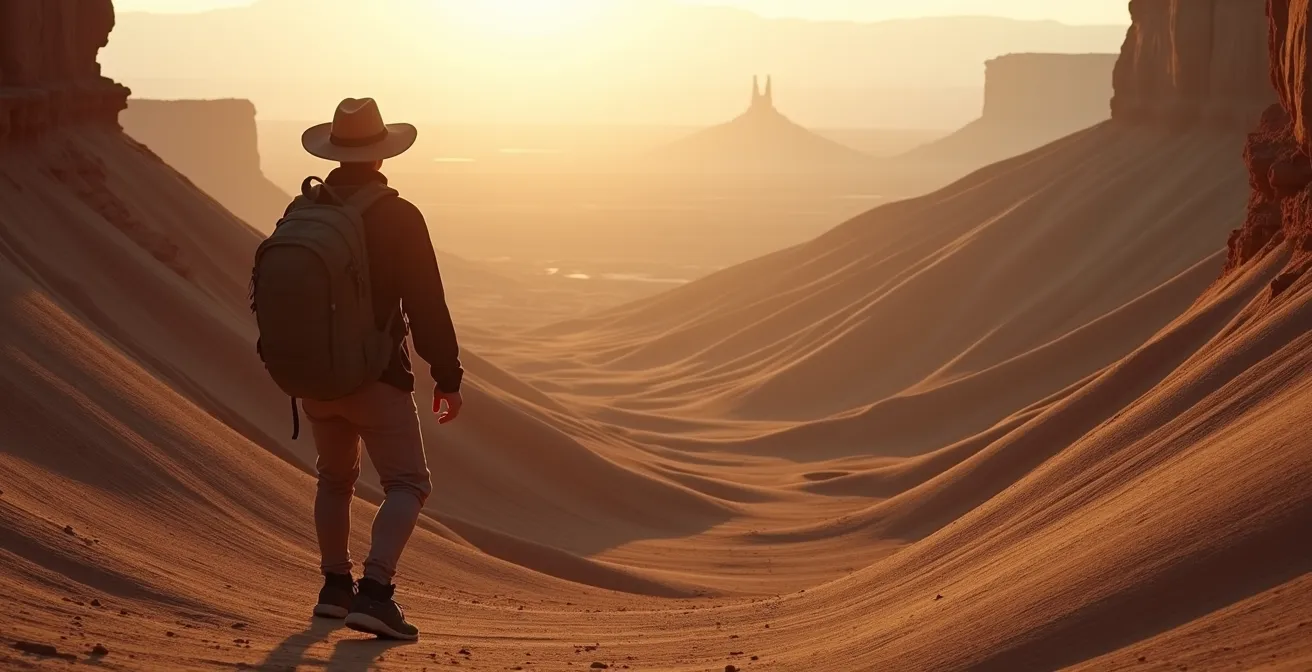
To survive a July hike in the Alberta Badlands, you must shift your mindset from a casual hiker to that of a paramedic preparing for a medical scenario.
- Heat safety is not just about drinking water; it’s a system of proactive thermoregulation, electrolyte management, and environmental threat mitigation.
- Your gear, from your water bladder to your campsite choice, is medical equipment designed to prevent a cascade of system failure in your body.
Recommendation: Before your hike, build a personal hydration and gear protocol based on a clinical understanding of your body’s limits, not just generic trail advice.
The stark, lunar beauty of the Alberta Badlands in July is a powerful lure for any hiker. The sun beats down, sculpting long shadows from the hoodoos and baking the bentonite clay. But from a paramedic’s perspective, this landscape isn’t a postcard; it’s a high-risk environment. The question isn’t just “how to enjoy the hike,” but “how to prevent a medical emergency.” Many hikers think they’re prepared with a bottle of water and a hat, following the usual advice. They focus on what to see, not on the physiological strain their body will endure.
The ambient temperature is only one part of the equation. The real danger lies in the compounding factors: the complete lack of shade on most trails and the intense radiant heat reflecting off the pale, dry ground. This combination can overwhelm your body’s ability to cool itself—its thermoregulation system—far more quickly than you might expect. Common advice often misses the critical details: the importance of electrolyte balance, the necessity of a pre-hike hydration strategy, and how to correctly interpret your body’s earliest warning signs before you reach a point of crisis.
But what if the key to safety wasn’t simply reacting to thirst, but proactively managing your internal environment like a patient’s chart? This guide is built on that clinical premise. We will move beyond the platitudes to build a robust, system-based approach to heat safety. We will analyze everything from your campsite choice as your first line of defense to the specific gear needed to maintain electrolyte homeostasis, all through the lens of preventing a medical emergency. This article will deconstruct the environmental threats and provide you with the protocols to not only survive but truly experience the Badlands with confidence.
This guide provides a structured, health-focused plan for navigating the unique challenges of the Badlands. Below is a summary of the critical systems and knowledge areas we will cover to ensure your expedition is safe and memorable.
Summary: A Paramedic’s Heat Safety Protocol for the Badlands
- Dinosaur Provincial Park Camping: Why You Need to Book the “Comfort Camping” Early?
- Why Climbing on Badlands Slopes is Dangerous and Illegal?
- Look but Don’t Touch: The Rules of Finding Bones in the Park?
- Canoeing the Badlands: How to Paddle the Red Deer River Safely?
- Horseshoe Canyon at Sunset: Where to Stand for the Best Shadow Depth?
- Water Bladder vs Bottles: How to Carry 3 Litres per Person on Hikes?
- Tropical Alberta: What Was the Temperature Here 75 Million Years Ago?
- How Are Hoodoos Formed and Why Are They Disappearing?
Dinosaur Provincial Park Camping: Why You Need to Book the “Comfort Camping” Early?
Your heat safety plan doesn’t begin at the trailhead; it begins with securing the right shelter. In the extreme heat of a Badlands July, your campsite is your primary medical station—a place for recovery and core temperature regulation. Standard tent camping offers minimal protection from the relentless daytime heat and can remain uncomfortably warm long after sunset, impeding your body’s ability to recover overnight. This lack of recovery significantly increases your risk of heat-related illness the following day. The stakes are high; a recent analysis showed that 2021 Alberta heat events resulted in healthcare costs of CA$3.2 million, a stark reminder of the real consequences of underestimating the heat.
This is why securing a “Comfort Camping” unit at Dinosaur Provincial Park is a critical first step. These walled tents or cabins, often equipped with a solid roof, beds, and electricity for a fan or small A/C unit, are not a luxury—they are a crucial piece of safety equipment. They provide a guaranteed refuge from the midday sun and a cool environment for restorative sleep. These sites are extremely limited and are often booked months in advance, typically when reservations open in January or February. Treating this booking process with urgency is the first and most important part of your proactive heat mitigation strategy.
If you fail to secure a comfort site, your immediate backup plan should be a hotel or motel in a nearby town like Brooks, approximately a 30-minute drive away. While less convenient, it guarantees you a safe, cool recovery zone. Relying on finding a shaded standard campsite is a dangerous gamble, as shade is scarce and moves throughout the day. Prioritizing a secure, cool shelter is the foundation upon which all other safety protocols are built.
Why Climbing on Badlands Slopes is Dangerous and Illegal?
From a clinical standpoint, every decision on the trail should be viewed through a risk-assessment lens. Venturing off designated paths in the Badlands introduces two interconnected threats: environmental instability and medical emergency escalation. The terrain itself, composed largely of bentonite clay, is a primary hazard. This material is deceptively unstable. When dry, it can crumble unexpectedly underfoot. When wet, even from a brief, sudden thunderstorm, it transforms into an incredibly slick, greasy surface with almost no traction.
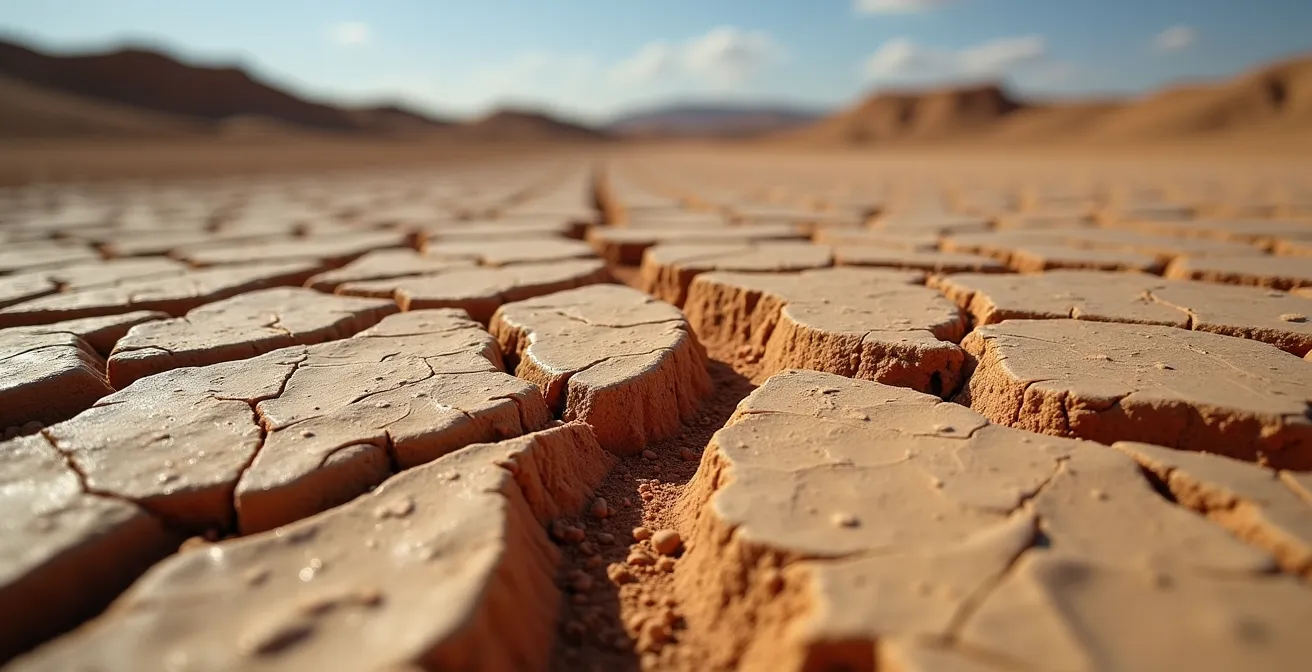
As noted in official park guidelines, Dinosaur Provincial Park’s unique landscape is extremely susceptible to erosion, and this fragility has direct safety implications. A simple slip and fall on these slopes can easily result in a sprained ankle, a fracture, or a concussion. In a hospital, this is a manageable injury. In the middle of the Badlands, miles from the trailhead with no cell service, it becomes a life-threatening crisis. An immobilized hiker is a stationary target for the sun. Your exposure time multiplies, and the risk of severe heat exhaustion or heat stroke increases exponentially. This is why Park Rangers strictly enforce the Provincial Parks Act, issuing fines for leaving trails—it’s not just about preservation, it’s about preventing rescues.
The question of hiking alone in the Badlands is therefore a serious one. An injury that would be an inconvenience for a group can become fatal for a solo hiker. Your safety system must include staying on marked, stable trails to minimize the risk of traumatic injury, which in this environment, is a direct pathway to a heat-related medical emergency. The terrain and the heat are a dangerous combination that must be respected.
Look but Don’t Touch: The Rules of Finding Bones in the Park?
The thrill of discovering a fossil fragment in the wild is a core part of the Badlands experience. However, how you react in that moment is a test of your procedural discipline—a key trait for backcountry safety. From a preservation standpoint, the rules are clear: a fossil’s scientific value is intrinsically linked to its context within the surrounding rock layers. Removing it, or even moving it, destroys irreplaceable data about the dinosaur’s life and environment. But from a health and safety perspective, there’s another layer of risk: distraction and extended exposure.
A fascinating find can lead to “tunnel vision,” where a hiker loses track of time, hydration status, and their body’s warning signals. Spending an extra 30-60 minutes investigating a fossil under the peak July sun, without shade, can be the trigger that pushes you from being stable to suffering from heat exhaustion. Professionals who excavate fossils do so with extensive planning, proper gear, and team support. A hiker has none of these. Therefore, adhering to the park’s strict protocol is not only a legal and ethical obligation but also a critical safety procedure. It provides a clear, efficient, and safe way to handle a discovery without jeopardizing your well-being.
Treating a find with clinical detachment is key. Your mission is to document and report, not to investigate. By following a pre-defined set of steps, you minimize your time spent stationary and exposed, ensuring the excitement of discovery doesn’t lead to a medical emergency.
Your Action Plan: Reporting a Fossil Find Safely
- Do not touch the fossil. Your primary goal is to leave the scene exactly as you found it for scientific integrity and to minimize your time on site.
- Photograph for scale. Place a common object like a water bottle or hiking pole next to the fossil (without touching it) and take a clear photo.
- Pin your location. Use your phone’s GPS or a dedicated GPS device to get the exact coordinates. Take a screenshot of the map pin.
- Report immediately. As soon as you return to the Visitor Centre, show the staff your photo and GPS coordinates. Do not delay.
- Join a guided tour for legal discovery. The safest way to experience fossil hunting is through official Fossil Prospecting Hikes led by park experts.
Canoeing the Badlands: How to Paddle the Red Deer River Safely?
Taking to the Red Deer River offers a magnificent and unique perspective of the Badlands’ scale, but it introduces a different set of environmental threats. While you are surrounded by water, the risk of dehydration and heat-related illness is paradoxically higher in some ways. The water’s surface acts as a giant mirror, reflecting and amplifying the sun’s radiation onto you. This intense reflected heat, combined with the direct overhead sun, can rapidly accelerate the onset of hyperthermia. Furthermore, the cool breeze off the water can mask the initial symptoms of overheating, creating a false sense of security while your body is losing critical fluids and electrolytes through sweat.
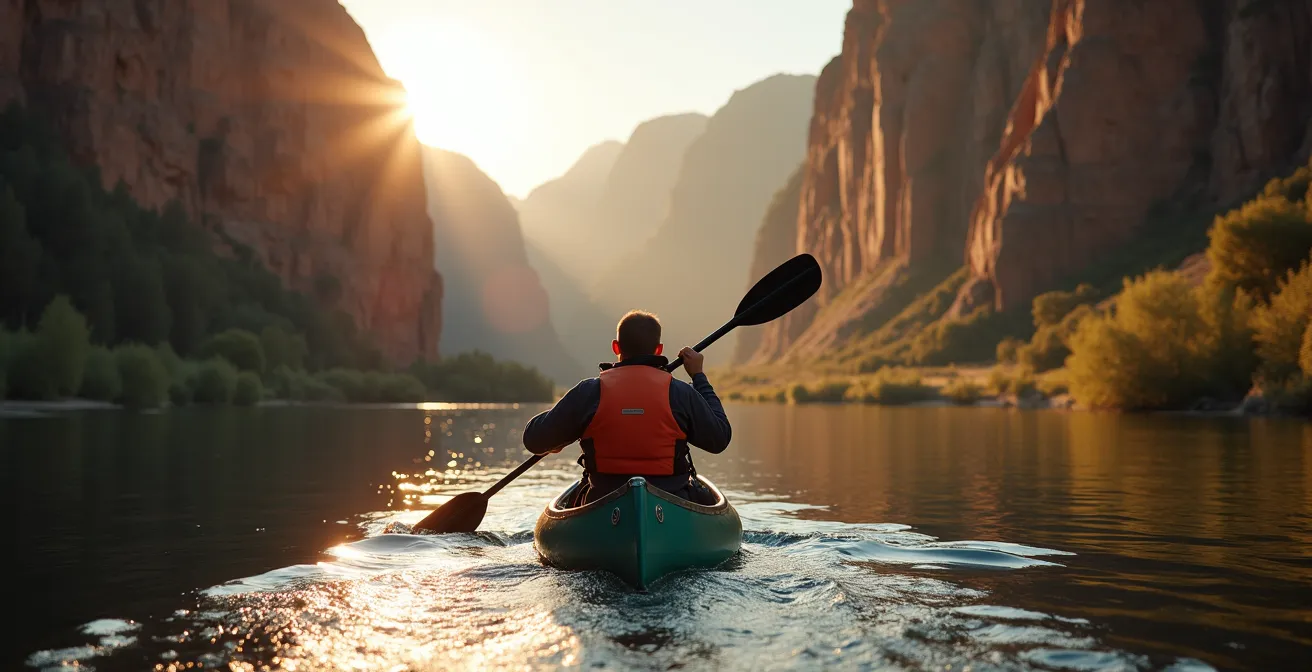
Safe paddling on the Red Deer requires a specific safety protocol. Water levels can fluctuate dramatically, creating hidden sandbars or fast currents. Sudden prairie thunderstorms can roll in with little warning, bringing high winds and lightning—a severe danger on open water. Cell service is patchy at best along most of the river corridor, meaning you are your own first responder. Before setting out, always check the river conditions with Alberta Parks staff and have a reliable, off-grid communication device like a satellite messenger.
Your hydration and cooling system must be adapted for the water. Wear lightweight, full-coverage UPF-rated clothing, a wide-brimmed hat that can be secured against the wind, and polarized sunglasses to cut the glare. Continuously sip from a hydration bladder and make a point to regularly douse your hat and neck gaiter in river water to leverage evaporative cooling. A short 2-3 hour trip from Patricia to the park boundary can be deceiving; the environmental exposure during that time is significant and requires the same level of preparation as a long hike.
Horseshoe Canyon at Sunset: Where to Stand for the Best Shadow Depth?
Even a seemingly low-intensity activity like sunset photography requires a heat-safety mindset in the Badlands. The “golden hour” may offer beautiful light, but the hour or two preceding it can still be dangerously hot. The objective is to capture stunning images, but the primary mission is to do so without compromising your health. This means approaching your photo session with a plan that minimizes unnecessary sun exposure and physical exertion.
Horseshoe Canyon’s geology, with its contrasting layers of light-colored sandstone and darker siltstone and coal seams, creates incredible texture and shadow play at sunrise and sunset. However, that same light-colored rock is highly reflective, contributing to your overall heat load. Your strategy should be to arrive well before sunset, but to scout for your position efficiently. Instead of wandering aimlessly along the rim, use the main west rim viewing platform as your starting point for panoramic views. A short walk north from the main lot often reveals less-crowded viewpoints with equally dramatic perspectives.
Once you’ve chosen your spot, set up your tripod and gear, and then find a patch of shade—if any exists—or use a reflective umbrella to create your own while you wait. The critical time for shadow depth often begins about 45 minutes before the sun dips below the horizon. Waiting in the full sun for 90 minutes is an unnecessary risk. Manage your time and exposure with the same discipline you would on a long hike. Use a lens hood not just for flare, but as a reminder of the sun’s intensity. Think of your time management as part of your personal protective equipment, preserving your energy and hydration for the walk back to your vehicle in the twilight.
Water Bladder vs Bottles: How to Carry 3 Litres per Person on Hikes?
In a clinical setting, we don’t just tell a patient to “drink more”; we prescribe a specific fluid type, volume, and rate of delivery. Your approach to hydration in the Badlands must be this precise. The generic “carry plenty of water” advice is dangerously inadequate. For a July hike, the non-negotiable minimum is 3 litres of water per person, and for longer or more strenuous hikes, 4 litres is a safer benchmark. The consequences of failing to meet this are severe; during Alberta’s 2021 extreme heat, there were an estimated 1,020 ambulatory care visits for heat-related illnesses, many of which were preventable.
The debate between a water bladder and bottles isn’t about preference; it’s about optimizing your hydration system. A bladder encourages constant, small sips, which is the most effective way for your body to absorb fluid and maintain electrolyte homeostasis. It prevents the “guzzle and slosh” cycle of bottles, which can be less efficient. However, bottles have a key advantage: they allow for easy mixing of electrolyte powders and offer a psychological boost, as you can clearly see how much fluid you have left. A wide-mouth Nalgene-style bottle can also be frozen partially overnight, providing a source of cold water to help manage your core temperature.
The optimal solution for the Badlands is a hybrid system. This provides redundancy and combines the benefits of both. A 2-litre bladder serves as your primary source for continuous sipping, while a 1-litre bottle is reserved for electrolyte mixes or as a cold-water backup. This system ensures you are not only replacing lost fluid but also the critical salts (sodium, potassium) lost through sweat, which are essential for nerve and muscle function.
| System | Capacity | Best For | Heat Management |
|---|---|---|---|
| 2L Bladder | 2 litres | Constant sipping | Insulated tube prevents warming |
| 1L Wide-mouth bottle | 1 litre | Electrolyte mixing | Can be frozen overnight |
| Hybrid system | 3 litres total | Extended hikes 60-90min+ | Cold water availability all day |
Tropical Alberta: What Was the Temperature Here 75 Million Years Ago?
To fully grasp the danger of the modern Badlands, it’s useful to understand what it once was. The fossils beneath your feet tell a story of a dramatically different world. As one travel guide aptly puts it:
75 million years ago, southern Alberta was a subtropical paradise of towering redwoods and giant ferns.
– Must Do Canada Travel Guide, The Best Travel Guide to the Alberta Badlands
This was a coastal plain bordering the Bearpaw Sea, an inland ocean that covered much of central North America. The climate was warm, humid, and lush, similar to modern-day northern Florida or Georgia. The environment supported a staggering diversity of life, including over 50 dinosaur species, from massive carnivores to tiny, feathered creatures. The evidence is not just in the bones, but in the fossilized leaves, pollen, and even the dark coal seams visible in the canyon walls—the compressed remains of ancient peat swamps.
This stark contrast between the past and present serves a critical safety purpose. It highlights that the current environment—arid, exposed, and subject to extreme temperature swings—is a relatively recent geological development. The animals that lived here were adapted to a humid world; we are not adapted to the dry, intense heat of today’s landscape. Acknowledging this deep-time context reinforces the fact that you are a visitor in an alien environment. It should instill a sense of profound respect and caution. The ground you walk on was once a swamp; now it is a desert. Your body is not designed for this, and your preparation must compensate for that physiological mismatch.
Key Takeaways
- Heat safety in the Badlands is a medical discipline, not a casual hobby. Your preparation must be systematic and proactive.
- Your gear, from your campsite to your water bottle, is life-support equipment. Choose and use it with clinical precision.
- The environment itself is an active threat matrix; respect trail closures, geological fragility, and the compounding risks of radiant heat and dehydration.
How Are Hoodoos Formed and Why Are They Disappearing?
The iconic hoodoos of the Alberta Badlands are masterpieces of erosion, but they are also geological hourglasses, marking time as they slowly disappear. Understanding their fragile structure is the final piece of your environmental threat matrix. A hoodoo is a composite structure: a pillar of soft sandstone or shale protected by a harder, more resistant capstone. For millennia, wind and water have scoured away the softer rock, leaving these surreal formations standing.
These structures are part of the Horseshoe Canyon Formation, a geological layer up to 230 metres thick. The process of their formation is incredibly slow, but their destruction can be rapid. The same forces of erosion are constantly at work, and the capstone will eventually fall, leaving the soft pillar to quickly weather away. This natural process, however, is being dramatically accelerated by human interference. Every person who touches, leans on, or climbs a hoodoo contributes to its demise. The oils from your skin can alter the rock’s ability to handle moisture, and the physical pressure can dislodge the capstone or fracture the pillar.
From a safety perspective, this fragility is a direct warning. The ground around hoodoos is often littered with debris from their slow collapse, making for unstable footing. The very existence of a hoodoo is proof that the surrounding landscape is soft and actively eroding. This reinforces the paramount rule of the Badlands: stay on designated trails. The metal walkways and viewing platforms installed by Alberta Parks are not just for visitor convenience; they are a critical intervention to protect both the fragile geology and the visitors themselves. Viewing the hoodoos as ephemeral, delicate structures that demand respect is a mindset that directly translates to safer hiking practices. They are a visual reminder that you are in a place where the ground itself is not guaranteed to be stable.
Your journey through the Alberta Badlands is a journey into a place of profound beauty and significant risk. By adopting the systematic, proactive, and health-focused mindset of a paramedic, you are not diminishing the adventure. You are enhancing it. You are replacing anxiety with preparedness, and recklessness with respect. This allows you to engage with the landscape on a deeper level, confident in your ability to manage the environmental threats. True enjoyment comes not from ignoring the risks, but from mastering them. Begin your preparation today by building your personal heat-safety protocol, and ensure your memories of the Badlands are of its majesty, not of a medical emergency.