
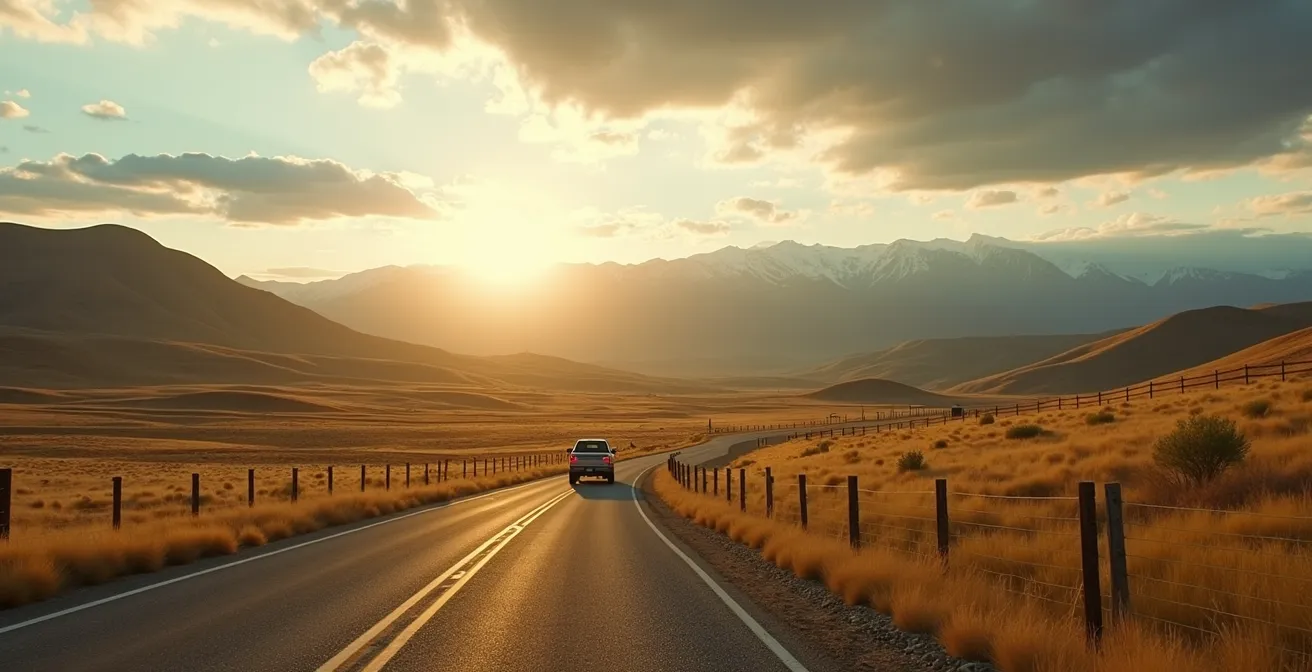
Choosing Highway 22 isn’t a detour; it’s a decision to experience an Alberta that the Queen Elizabeth II Highway completely bypasses.
- The Cowboy Trail transforms a simple drive into a journey through the province’s living history, from its ranching roots to its oil-boom legacy.
- Every stop offers an opportunity for authentic encounters, whether tasting generations-old recipes or learning to read the story of the land in its fences.
Recommendation: If you value meaningful experiences over pure efficiency and want to create lasting memories, embrace the slower pace of the Cowboy Trail.
In Alberta, every road trip north or south eventually presents a fundamental choice: the efficient, multi-lane speed of the Queen Elizabeth II Highway, or the meandering, two-lane embrace of Highway 22, the legendary Cowboy Trail. For many, the decision is a simple calculation of time. The QE2 is a means to an end, a straight line designed to get you from A to B as quickly as possible. It’s practical, predictable, and utterly forgettable. Common wisdom suggests taking the scenic route is a nice alternative if you have time to spare, a pleasant drive through rolling foothills.
But what if this framing is entirely wrong? What if the choice isn’t about speed versus scenery, but about transit versus transformation? The true value of the Cowboy Trail lies not just in its beautiful vistas, but in its ability to connect you to a “slow time”—a pace of life governed by seasons, stories, and genuine human connection. It’s a journey through Alberta’s cultural topography, where the past isn’t confined to museums but is a living, breathing part of the landscape, the businesses, and the people you’ll meet.
This guide abandons the idea of the Cowboy Trail as a simple alternative. Instead, we present it as the primary experience. We’ll explore how each stop—from a humble jerky shop to a vast historic ranch—acts as a portal into the soul of the modern West. You will discover not just what to see, but how to see it, turning your drive into a rich, immersive encounter with Alberta’s living history. Get ready to understand why the longest route is often the most rewarding one.
This article will guide you through the essential experiences that define the Cowboy Trail, revealing the stories hidden in plain sight. From authentic tastes to unforgettable landscapes, you’ll have everything you need to choose your own adventure.
Summary: Your Guide to Alberta’s Cowboy Trail
- Longview Jerky: Is the Lineup Worth the Wait?
- Bar U Ranch: How to Experience National Historic Site Life?
- Hell’s Half Acre: What Happened at the Turner Valley Gas Plant?
- Antiques and Art: Where to Find Hidden Gems in Bragg Creek?
- Chinook Winds: How to Handle Strong Crosswinds on Highway 22?
- Why Are There So Many Fences Along Highway 22?
- Lacombe or Nanton: Which Small Towns Are Worth a 1-Hour Detour?
- Working Ranch vs Luxury Resort: Which Cowboy Experience Fits Your Skills?
Longview Jerky: Is the Lineup Worth the Wait?
The first sign you’re on a different kind of highway is often the lineup outside the Longview Jerky Shop. To the uninitiated, it might seem absurd to wait for dried meat. But that lineup isn’t just for a snack; it’s a pilgrimage. This simple act of patience is your first immersion into the “slow time” of the Cowboy Trail. The jerky here is a tangible taste of a culture built on cattle ranching. This isn’t an anonymous, mass-produced product; it’s the result of a third-generation family recipe that has become part of local folklore.
This tradition is rooted in the vastness of Alberta’s beef heritage, which is supported by over 18,000 beef cattle producers across the province. The Longview Jerky Shop, established in 1978, is a direct link to this legacy. It’s a place where quality is measured in decades, not quarters. The stories even say that Clint Eastwood, while filming the quintessential western *Unforgiven* nearby, became a fan and had jerky special-ordered to the set. When you stand in that line, you’re not just waiting to buy food; you’re participating in a 40-year-old tradition and tasting the authentic flavour of the foothills.
So, is the lineup worth it? Absolutely. It’s your first lesson in what the Cowboy Trail offers: that the most valuable experiences often require you to slow down, wait, and savour the moment. It’s a delicious introduction to the concept of terroir, not for wine, but for a way of life.
Bar U Ranch: How to Experience National Historic Site Life?
Moving from a taste of the culture to a full immersion, the Bar U Ranch National Historic Site is not a museum with artifacts behind glass; it is a portal to the “living history” of Alberta’s ranching heyday. This sprawling 160,000-acre property was once one of the most important ranching operations in the world, and today, it invites you to step directly into that past. Forget passive observation; experiencing Bar U means getting your hands metaphorically dusty and connecting with the skills that built the West.
The experience is about active participation. You can learn from costumed interpreters who carry on the traditions of the ranch, from the precise art of saddling a horse to the techniques of open-fire cooking in a genuine chuck wagon. Touring the property via a Percheron-pulled wagon isn’t just a ride; it’s a journey back to the 1880s “beef bonanza” that shaped Alberta’s economy and identity. This is where the abstract history of the West becomes a tangible, sensory experience. It’s one thing to read about cowboys; it’s another to stand where they worked and learn the rhythms of their daily lives.
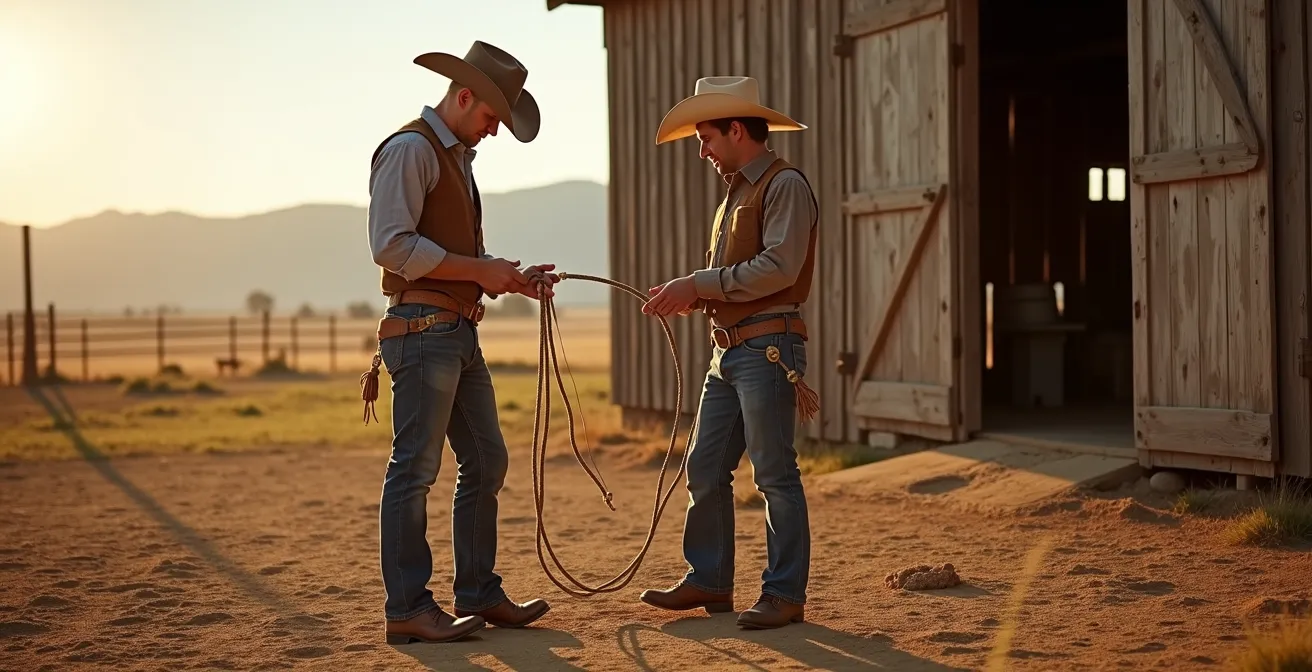
As the image suggests, the spirit of Bar U is found in the transfer of knowledge. It’s a place that honours the grit, skill, and community of ranch life. It’s an essential stop for anyone who wants to understand that the “cowboy” in Cowboy Trail is more than a marketing term; it’s a direct reference to a foundational chapter of Canadian history that continues to echo through the foothills today.
Hell’s Half Acre: What Happened at the Turner Valley Gas Plant?
The cultural topography of the Cowboy Trail is not limited to ranching. Just a short drive from the pastoral scenes of Bar U, the landscape tells a different, more industrial story. The Turner Valley Gas Plant, once known as “Hell’s Half Acre” for the brilliant flares that lit up the night sky, represents the other foundational pillar of Alberta’s identity: oil and gas. Visiting this National and Provincial Historic Site is crucial to understanding the complex history of the province, where black gold and black cattle have often existed side-by-side.
The plant’s significance is monumental. Turner Valley’s historic significance dates back to 1914, when the Dingman No. 1 well struck wet natural gas, heralding the first major petroleum discovery in Alberta. This wasn’t just a local event; it was the spark that ignited an energy industry and forever altered the province’s economic trajectory. The site’s nickname came from the constant burning of excess gas, a powerful symbol of the untamed, sometimes wasteful, energy of the early boom years. Today, the preserved plant offers a fascinating look at the technology and ambition that drove this era.
Walking through the quiet processing facilities, you can almost feel the ghosts of an industry that was loud, dangerous, and world-changing. As the FRVAdventure Guide so aptly puts it in *The Alberta Cowboy Trail Guide for RVers*:
The find changed Alberta and its economy forever.
– FRVAdventure Guide, The Alberta Cowboy Trail Guide for RVers
This stop provides a vital contrast, showing that the story of the Cowboy Trail is one of both pastoral romanticism and industrial might. It adds a layer of complexity to your journey, reminding you that the quiet beauty of the foothills was also the cradle of an energy superpower.
Antiques and Art: Where to Find Hidden Gems in Bragg Creek?
After immersing yourself in the grand narratives of ranching and oil, the charming hamlet of Bragg Creek invites you to discover history on a more intimate scale. The antique and art shops here are not mere stores; they are curated collections of the region’s past, offering you a chance to hold a piece of the Cowboy Trail’s story in your hands. But finding a true “hidden gem” requires more than just a good eye; it requires knowing what to look for. This is where the traveler becomes a detective, learning to read the object’s provenance.
Instead of passively browsing, you can actively hunt for authenticity. A genuine prairie antique tells a story. Look for brand marks on leather goods, as these are the signatures of the ranches where they were used. Examine pottery for the specific maker’s marks and clay types unique to the Alberta region. True hand-forged metalwork has a character and imperfection that mass production can’t replicate. The key is to engage with the shopkeepers and ask about an item’s history. A legitimate dealer can often trace an object’s life back through generations of Albertans.
This active search transforms shopping from a commercial transaction into a cultural investigation. You’re not just buying a thing; you’re acquiring an artifact with a soul, a direct link to the people who lived and worked this land. To help you on your quest, here is a practical guide to identifying those special finds.
Your Guide to Spotting Authentic Prairie Treasures
- Examine Brand Marks: Look for brand marks on leather items. An authentic ranch brand can tell you the history of its ownership and origin.
- Check Pottery Details: Check pottery for local maker’s marks and the specific types of clay used in the Alberta region, which differ from those elsewhere.
- Identify Wood Species: Examine wood furniture for prairie hardwood species like Manitoba maple, a clue to its local craftsmanship.
- Verify Metalwork: Look for the unique characteristics of hand-forged metalwork, which stands in contrast to the uniformity of modern mass production.
- Ask About Provenance: Always ask the dealer about the item’s history. Legitimate sellers should be able to help trace an item’s story within Alberta.
Chinook Winds: How to Handle Strong Crosswinds on Highway 22?
The Cowboy Trail experience isn’t just shaped by history and culture, but by the raw, powerful forces of nature. Chief among them is the legendary Chinook wind. More than just a breeze, the Chinook is a dramatic weather phenomenon that defines life in the foothills. It’s a warm, dry, downslope wind that can roar off the Rocky Mountains with incredible force, especially in the sections near Cochrane. For the traveler, this isn’t an inconvenience; it’s an integral part of the authentic regional experience, demanding respect and awareness.
The Chinook’s effects are startling. Known by the local Stoney Nakoda First Nation as the “snow-eater,” it’s famous for its ability to sublimate snow and ice, often without melting it first. The famous Chinook ‘Snow-Eater’ phenomenon can cause temperature to rise 20°C in minutes, turning a frigid winter day into a balmy one in the blink of an eye. But this warmth comes with a price: powerful crosswinds that can catch drivers by surprise. Handling them is a skill, a way of showing respect for the local environment.
Whether you’re on a motorcycle, in an RV, or even on a bicycle, understanding how to navigate these winds is essential. It means reducing speed, avoiding sudden steering corrections, and knowing when to take a break. Pay attention to the wind sock indicators along the highway; they are the land’s way of speaking to you. Successfully navigating a strong Chinook gust is a rite of passage, a moment where you are no longer a passive tourist but an active participant in the wild landscape. It’s a reminder that this drive is a true adventure, not just a scenic tour.
Why Are There So Many Fences Along Highway 22?
As you drive the Cowboy Trail, the landscape is constantly framed by fences. They stretch for miles, a seemingly endless latticework of wood and wire. It’s easy to see them as simple barriers, mundane parts of the scenery. But in the world of “slow travel,” curiosity turns the mundane into the meaningful. Asking “why are there so many fences?” opens up a deep story about the land and how it’s used. Each type of fence is a chapter in the story of Alberta’s cultural topography, a silent narrator of what—or who—it is designed to contain or protect.
The classic 4-strand barbed wire fence is the signature of cattle country, a tool essential for managing the massive ranches that define the region. But look closer, and you’ll see variations. A taller fence with a smooth bottom wire is likely a wildlife-friendly fence, designed to allow animals like pronghorn and deer to pass under safely. A tighter mesh pattern signals a page-wire sheep fence, while a towering, heavily reinforced structure is a bison fence, strong enough to contain North America’s largest land animal. The fences are a functional language written on the land.
These barriers are not just for separation; they are for coexistence. They manage the delicate balance between multi-million dollar cattle operations, vital wildlife corridors, and the safety of travelers on the highway. Understanding them transforms your view from a passive one to an analytical one. You begin to read the landscape, not just look at it. The following table breaks down this visual language.
This detailed guide to the visual language of the fences, based on information from TheCowboyTrail.com, can help you decipher the stories told by the landscape.
| Fence Type | Height | Purpose | Visual Characteristics |
|---|---|---|---|
| 4-strand barbed wire | 4 feet | Cattle containment | Horizontal wires, wooden posts every 16 feet |
| Wildlife-friendly fence | 5-6 feet | Allows wildlife passage | Smooth top/bottom wires, higher clearance |
| Page-wire sheep fence | 3-4 feet | Small livestock | Tight mesh pattern, closer post spacing |
| Bison fence | 6-8 feet | Large game containment | Heavy posts, reinforced construction |
Lacombe or Nanton: Which Small Towns Are Worth a 1-Hour Detour?
The main route of the Cowboy Trail is rich with experiences, but some of its greatest treasures require a short detour. The small towns that dot the periphery are not just rest stops; they are concentrated pockets of prairie heritage, each with its own distinct character. Two excellent examples are Nanton and Lacombe. While both offer a wonderful glimpse into Alberta’s past, they appeal to different kinds of travelers. Choosing between them depends on what kind of story you want to uncover.
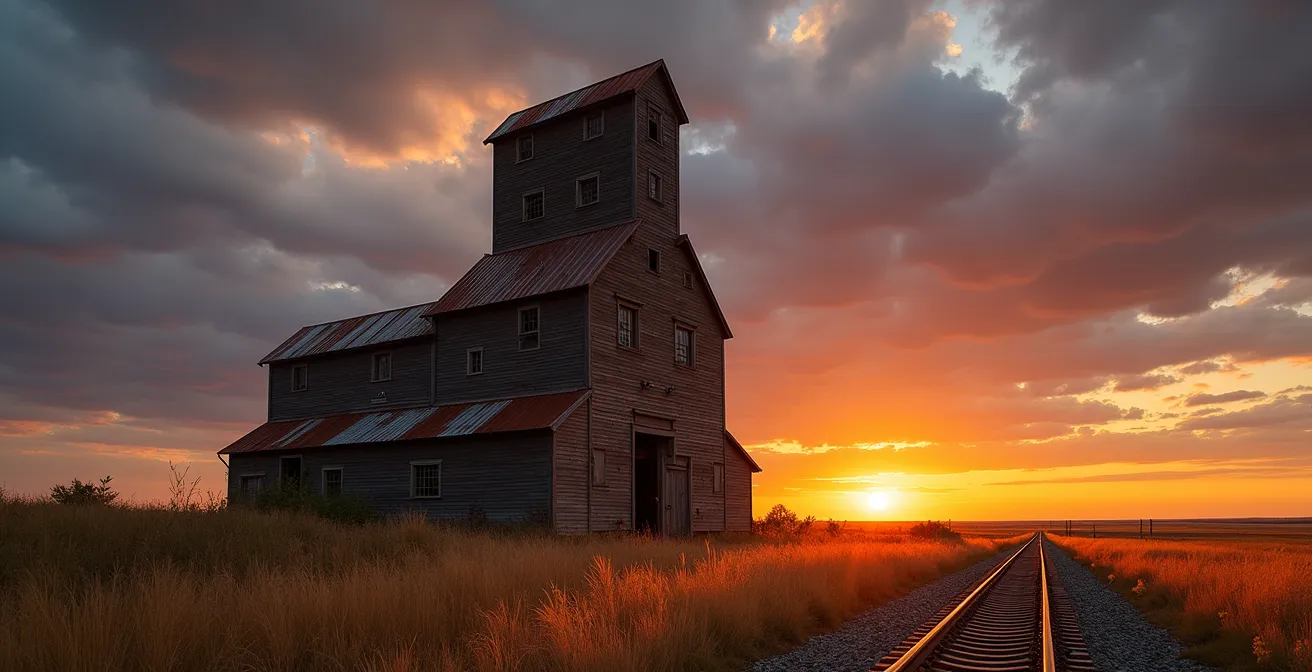
Nanton is a town steeped in 20th-century nostalgia. Its main street is famous for its antique shops, and the skyline is dominated by iconic, preserved grain elevators—monuments to Alberta’s agricultural might. It’s also home to the Bomber Command Museum of Canada, a must-see for aviation history buffs. Nanton feels like a trip back to your grandparents’ era, a place of tangible history and cozy, generations-old bakeries. It’s the perfect stop for those who love history you can touch.
Lacombe, on the other hand, celebrates its heritage through architecture and art. Known as Alberta’s “Mural Capital,” its historic downtown features stunning Edwardian buildings and vibrant murals depicting local history. It’s a town for architecture enthusiasts and art lovers, a place where the community’s story is painted on its walls. The choice between Nanton and Lacombe is a perfect example of how the Cowboy Trail allows you to curate your own adventure based on personal interests. The following comparison, with insights from TodoCanada.ca, can help you decide.
| Feature | Nanton | Lacombe |
|---|---|---|
| Primary Heritage Focus | Nostalgic 20th century – Bomber Command Museum | Architectural – Edwardian buildings |
| Main Attractions | Antique shops, preserved grain elevators | Mural Capital murals, historic downtown |
| Best For | Aviation history buffs, antique collectors | Architecture enthusiasts, art lovers |
| Hidden Gem | Generations-old local bakery | Weekly farmers’ market community gathering |
Key takeaways
- The Cowboy Trail is an experience in “slow travel,” prioritizing authentic connection over speed.
- Each stop, from a jerky shop to a historic site, is a portal into Alberta’s living history of ranching and energy.
- The journey requires engagement, whether it’s learning to handle Chinook winds or identifying genuine prairie antiques.
Working Ranch vs Luxury Resort: Which Cowboy Experience Fits Your Skills?
For the ultimate immersion in the Cowboy Trail’s ethos, you might be tempted to go beyond just visiting and actually stay. This final choice is perhaps the most defining of your journey: do you seek the “dust” of a real working ranch or the “decadence” of a luxury guest resort? Both offer a “cowboy experience,” but they are worlds apart. The right choice depends entirely on an honest self-assessment of your skills, comfort level, and desire for authenticity.
A working ranch stay is not a vacation in the traditional sense. It’s an invitation to participate in the real, unglamorous work of ranching life. This means early mornings, long hours in the saddle checking cattle, and mending fences. The reward is not pampering, but a genuine connection to the land, the animals, and the culture. As you’ll find at the small town rodeos along Highway 22, this is a world where you can “taste the dirt sitting right next to the action and get to know the cowboys and cowgirls up close.” A working ranch is for those who crave unfiltered reality and are fit enough to handle its demands.
Luxury guest ranches, by contrast, offer a curated, comfortable version of the cowboy life. You’ll still enjoy horseback riding through stunning scenery, but it will be followed by a gourmet meal and a night in a private suite. The experiences are designed for enjoyment, not labour. There is no right or wrong answer here. The key is to match the experience to your expectations. Are you looking to test your limits and find authentic encounters, or are you seeking relaxation with a western theme? Answering this question honestly is the final step in crafting your perfect Cowboy Trail journey.
Ultimately, the choice between the QE2 and the Cowboy Trail is a choice about the kind of memories you want to make. One route saves you time; the other gives you stories. By embracing the slower pace and engaging with the living history around you, your road trip transforms from a simple drive into a meaningful journey you’ll talk about for years to come. Start planning your adventure today and discover the authentic Alberta that awaits.