
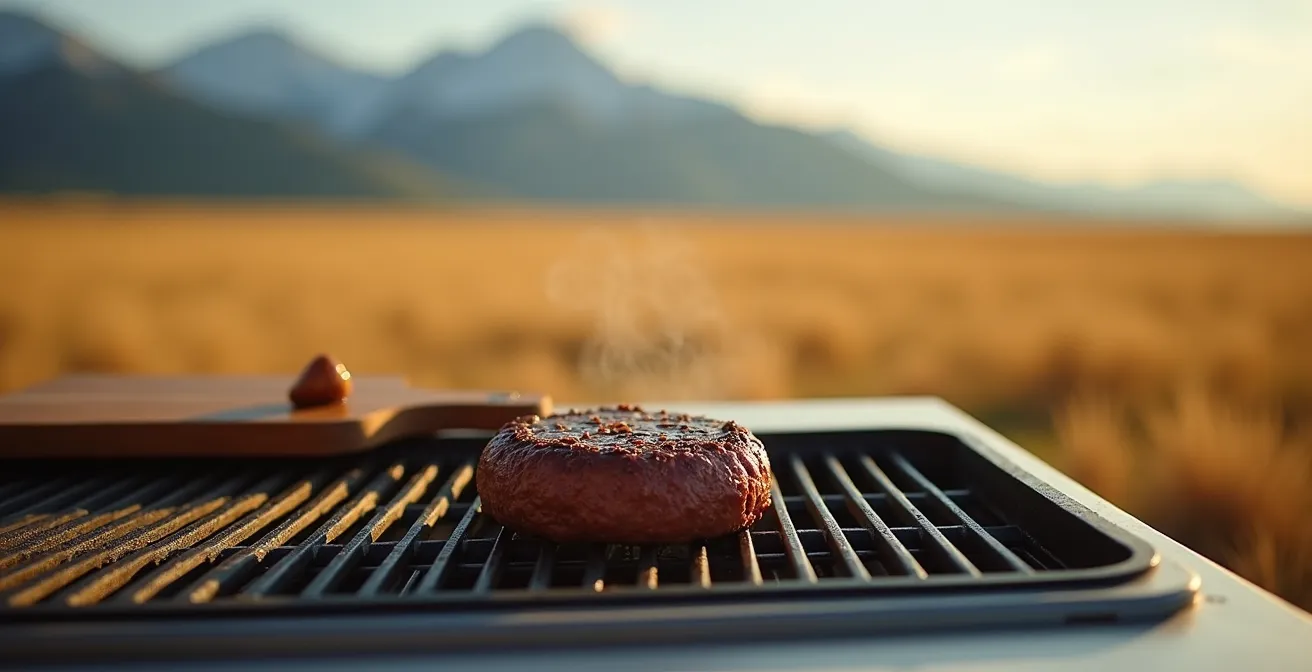
The fear of cooking a dry, tough bison burger is common, but the solution isn’t just about cooking time. The secret lies in understanding the science of lean protein. This guide moves beyond simple warnings and teaches you specific chef techniques to manage heat and master moisture retention, ensuring your Alberta bison burger is perfectly juicy and flavourful from the first bite to the last.
You’ve brought home a beautiful package of Alberta bison, inspired by the promise of a rich, clean flavour and incredible health benefits. But a nagging fear holds you back: the horror stories of dry, crumbly, flavourless burgers. For many first-time home cooks, bison feels like a high-stakes game where one wrong move means ruining an expensive piece of meat. You’ve likely heard the standard advice—”don’t overcook it”—a warning that feels more like a threat than helpful guidance. This common platitude fails to explain the *why* behind bison’s unique cooking properties.
The truth is, bison isn’t just “lean beef.” It’s a fundamentally different type of meat with less fat, a unique protein structure, and a distinct connection to the Alberta prairies it was raised on. Treating it like a standard beef patty is the surest path to disappointment. The key isn’t to fear the heat, but to understand and respect the meat’s composition. It requires a shift in mindset from simply avoiding dryness to actively promoting and retaining moisture through precise techniques.
But what if the secret to a perfect bison burger wasn’t about what you *don’t* do, but about what you *do*? What if you could master the science of moisture retention and protein coagulation? This guide will equip you with that knowledge. We will explore everything from the nutritional science that makes bison a heart-healthy choice to the specific, practical steps for sourcing and cooking it in Alberta. You will learn not just how to cook a bison burger, but how to honour the ingredient and deliver an exceptional culinary experience that reflects its prairie terroir.
This comprehensive guide will walk you through everything you need to know to cook bison with confidence. Explore the topics below to master this exceptional Albertan ingredient.
Summary: A Chef’s Complete Guide to Cooking Alberta Bison
- Iron and Fat: Why is Bison Recommended for Heart Health?
- The Original Energy Bar: How Was Pemmican Made and Used?
- Where to Buy Bison Meat in Calgary to Cook at Your Airbnb?
- Gamey or Sweet: What Does Bison Actually Taste Like?
- Why is Bison More Expensive Than Beef in the Supermarket?
- Wood Bison vs Plains Bison: What Makes the Northern Giants Unique?
- Barley Fed: Why Does Alberta Beef Taste Different Than Texas Beef?
- Is the 12-Hour Drive to Wood Buffalo National Park Worth the Effort?
Iron and Fat: Why is Bison Recommended for Heart Health?
Bison often appears on lists of heart-healthy foods, and for good reason. Its reputation is built on a powerful combination of high-quality nutrients and a lean fat profile that sets it apart from many other red meats. The most striking visual cue is its deep, rich red colour—significantly darker than beef. This isn’t just for show; it’s a direct indicator of its high iron content. More importantly, this iron is highly bioavailable, meaning your body can absorb and use it more efficiently to boost energy and endurance.
However, the real star of bison’s heart-healthy profile is its fat composition. While exceptionally lean, the fat it does contain is of a higher quality. As the Canadian Bison Association notes, bison is a great source of specific fatty acids that contribute to wellness. They explain that “Omega 3 fatty acids have been shown to help fend off Alzheimer’s disease and reduce the likelihood of heart attacks.” Grass-finished Alberta bison, in particular, boasts a much more favourable ratio of Omega-6 to Omega-3 fatty acids compared to grain-fed beef, making it an anti-inflammatory choice.
This leanness is a double-edged sword for the home cook. While beneficial for health, the low-fat content means there’s less insulation to protect the meat from drying out during cooking. This is why understanding protein coagulation—the process of proteins tightening and squeezing out moisture when heated—is critical. With less fat to buffer the heat, the process happens much faster in bison, demanding a more attentive and gentle cooking approach. When shopping, look for ground bison with around 10-15% fat for the best balance of flavour, moisture, and health benefits.
The Original Energy Bar: How Was Pemmican Made and Used?
Long before modern energy bars, there was pemmican: the original high-density, nutrient-rich superfood of the North American plains. For Indigenous peoples, particularly those who followed the great bison herds, pemmican was a cornerstone of survival, trade, and travel. It was a brilliant innovation in food preservation, creating a shelf-stable product that could sustain people through long winters or arduous journeys. The process was ingenious in its simplicity: lean bison meat was sun-dried or smoked until brittle, then pounded into a fine powder and mixed with an equal amount of rendered bison fat (tallow).
This mixture alone was incredibly potent, but it was often enhanced with local berries for flavour and additional vitamins. In Alberta, the native Saskatoon berry was a prized ingredient, lending its unique sweet-tart flavour to the rich, savoury base. The fat acted as a preservative, encasing the dried meat and protecting it from spoilage, resulting in a food that could last for years if stored properly. It was lightweight, calorie-dense, and provided a perfect balance of protein and fat for sustained energy.
This traditional knowledge continues to be a vital part of Indigenous food sovereignty in Alberta today. The province is home to a significant portion of Canada’s bison population; a report highlights that the Peace River Country in northern Alberta has 14.4% of Canada’s bison herd, while Alberta overall has 49.7%. This abundance supports cultural revitalization programs and businesses that are bringing traditional products like pemmican back to the forefront, connecting a new generation to the ancestral wisdom of the bison.
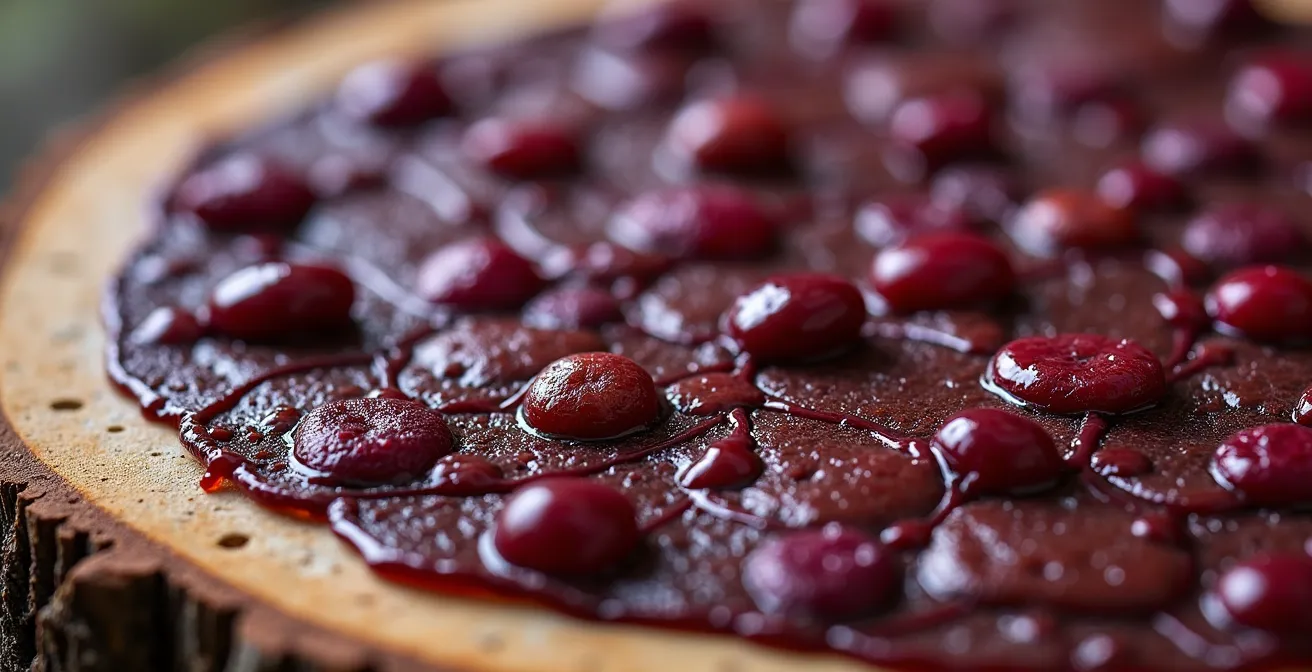
The texture of authentic pemmican, as seen here, is a testament to its functional design. The rendered fat binds the powdered meat and berries into a dense, portable energy source, a technique perfected over centuries on the prairies.
Where to Buy Bison Meat in Calgary to Cook at Your Airbnb?
You’re staying in Calgary, the heart of Alberta’s cattle country, but you’re determined to cook its wilder counterpart. Fortunately, the city offers excellent options for sourcing high-quality, locally-raised bison. Your first stop should be one of the city’s vibrant farmers’ markets. These are not just places to buy food; they are hubs where you can speak directly with producers or knowledgeable butchers who have relationships with the ranchers.
When you approach a butcher, don’t be shy. Ask specific questions to ensure you get the best product for your bison burger. Inquire about the source ranch—many Calgary butchers pride themselves on working with local and Indigenous-owned operations in Treaty 7 territory. Ask about the fat content, specifically requesting ground bison with 10-15% fat for juicier results. This shows you know what you’re looking for. A great butcher will appreciate the question and guide you to the perfect cut. As the experts at Urban Butcher in Calgary advise:
We recommend cooking Bison to a state of rare or medium-rare to ensure maximum tenderness. Our bison is raised without the use of hormones or antibiotics.
– Urban Butcher Calgary, Urban Butcher website – Premium meat purveyors
This advice reinforces the core principle of cooking bison: gentle heat for a shorter time. Here are a few top locations in and around Calgary to find excellent Alberta bison:
- Bauer Meats: With locations at both the South and West Calgary Farmers’ Markets, they are a trusted source for fresh bison cuts and fantastic sausages.
- Urban Butcher: Located in Mission, this specialty butcher shop focuses on naturally raised Alberta meats and can offer premium cuts like bison ribeye or striploin.
- Rocky View Bison: For a true farm-to-table experience, this ranch located just outside Calgary offers farm-direct sales and sometimes even delivery, allowing you to get meat straight from the source.
Gamey or Sweet: What Does Bison Actually Taste Like?
One of the biggest misconceptions about bison is that it must taste “gamey.” This term, often associated with wild-hunted animals, implies a strong, sometimes musky flavour that can be off-putting to some. However, properly raised and handled Alberta bison has no gamey taste whatsoever. Instead, its flavour profile is best described as clean, rich, and slightly sweet with earthy undertones—a direct reflection of its diet of native prairie grasses and fescues. This is what chefs refer to as prairie terroir: the taste of the land itself, embodied in the meat.
The main difference in taste compared to beef comes from the fat content. The rich, buttery flavour many people associate with a high-end beef steak comes from intramuscular fat, or marbling. Since bison is much leaner, its flavour is more concentrated in the meat itself. It’s a purer, more straightforward expression of red meat flavour without the heavy, lingering finish that high-fat beef can sometimes have. Its texture is also denser, yet it can be incredibly tender when cooked correctly.
To truly understand the distinction, a side-by-side comparison is invaluable. The following table breaks down the key differences between typical Alberta grass-finished bison and the province’s other famous product, barley-fed beef.
| Characteristic | Alberta Grass-Finished Bison | Alberta Barley-Fed Beef |
|---|---|---|
| Primary Flavor | Clean, slightly sweet, earthy | Rich, hearty, familiar |
| Texture | Lean, dense, tender when cooked properly | Marbled, softer, more forgiving |
| Aftertaste | No gamey notes when prairie-raised | Buttery from marbling |
| Best Cooking Method | Quick sear, medium-rare maximum | Flexible, can handle well-done |
| Alberta Pairing | Big Rock Grasshopper wheat beer | Local red wines or stouts |
Why is Bison More Expensive Than Beef in the Supermarket?
Walking through a Calgary supermarket, you’ll quickly notice a price difference between bison and beef. It’s not a marketing gimmick; the higher cost is a direct reflection of the fundamentally different ways these animals are raised, the time it takes to bring them to market, and the smaller scale of the industry. The single biggest factor is the animal’s natural life cycle and growth rate. Bison are raised with minimal intervention, and they mature at a much slower, more natural pace.
The economic reality is stark: data from industry experts shows that bison require 4-5 years to reach market weight, compared to just 14-18 months for cattle in a typical feedlot system. This extended timeline means significantly more land, feed, and care are invested into each animal before any return is seen. Bison ranching is a long-term commitment that simply cannot be rushed or industrialized in the same way as conventional beef production.
Furthermore, many Alberta bison producers are committed to sustainable and restorative ranching practices. This approach focuses on managing herds in a way that mimics their natural grazing patterns, which helps improve soil health, increase biodiversity, and conserve the native prairie ecosystem. Brands like Noble Premium Bison, an Alberta-based company, build their entire philosophy on this culture of care, processing their meat in specialized, single-species facilities to ensure quality and safety. These higher standards, from pasture to plate, contribute to the final cost but also result in a premium product that is ethically raised and nutritionally superior. You are not just paying for meat; you are investing in a more sustainable agricultural system.
Wood Bison vs Plains Bison: What Makes the Northern Giants Unique?
When you see a bison in Alberta, you’re likely looking at one of two distinct subspecies: the Plains Bison or the Wood Bison. While they may look similar at first glance, they are genetically distinct and have unique physical characteristics adapted to their different historical habitats. The bison you find in butcher shops and on restaurant menus across Alberta is exclusively Plains Bison, the iconic animal of the Great Plains, historically found roaming in vast herds across the vast grasslands.
Plains Bison are characterized by a massive head, a large, shaggy cape of hair over their shoulders, and a distinct, rounded hump that sits directly above their front legs. They are slightly smaller than their northern cousins and were the foundation of the plains Indigenous cultures. To see them in a managed but naturalistic setting, a trip to Elk Island National Park, just east of Edmonton, is a must. The park is a key conservation success story and home to a thriving, easily viewable herd.
In contrast, the Wood Bison is the heavyweight champion. As Canada’s largest land animal, they are taller, heavier, and have a more angular, taller hump that is positioned further forward. Their beards are more pointed and V-shaped, and their shaggy coat is less pronounced than that of the Plains Bison. These giants are adapted to the forests and meadows of the boreal north. Their last truly wild, free-roaming herds are found in the vast wilderness of Wood Buffalo National Park in northern Alberta. Distinguishing between the two is a rewarding skill for any wildlife enthusiast visiting the province.
- Hump Shape: Wood Bison have a taller, more angular hump. Plains Bison have a rounder hump.
- Highest Point: The hump on a Wood Bison is the highest point of its body, located well before the front legs. On a Plains Bison, its head is often held at or above the hump’s height.
- Beard and Cape: Plains Bison have a fuller, shaggier beard and a more defined “cape” of long hair.
Barley Fed: Why Does Alberta Beef Taste Different Than Texas Beef?
While this guide focuses on bison, understanding Alberta’s other famous red meat—barley-fed beef—provides crucial context. The taste of any grazing animal is profoundly shaped by its “finishing” diet, the food it eats in the final months before market. This is where Alberta beef forges its unique identity, setting it apart from beef produced in other famous regions like Texas. While Texan cattle are often finished on corn, Alberta ranchers have long utilized the province’s other major agricultural strength: premium barley.
Finishing on barley gives Alberta beef a distinct flavour profile. It creates brilliant white, firm fat and extensive marbling, which results in a rich, buttery, and slightly sweet taste that is exceptionally tender. This contrasts with bison, which is almost exclusively grass-finished in Alberta. Bison’s diet of native fescues and prairie grasses gives it that clean, earthy “prairie terroir” we discussed earlier. The nutritional profiles are also starkly different, as the diet directly impacts the type of fat stored in the animal.
The following comparison highlights the nutritional trade-offs between a lean, grass-finished animal and a marbled, grain-finished one. This data clarifies why bison is often recommended for its superior fat profile, especially its Omega-3 content.
| Nutrient (per 100g) | Grass-Finished Bison | Barley-Fed Alberta Beef |
|---|---|---|
| Total Fat | 2.4g | 8-10g |
| Omega-3 Fatty Acids | High (3:1 ratio omega-6 to omega-3) | Lower (20:1 ratio) |
| Iron | 3.4mg (higher bioavailability) | 2.6mg |
| Flavor Profile | Earthy, complex, true prairie taste | Sweet, marbled, buttery |
| Finishing Diet | Native fescues and spear grass | Alberta barley grain |
Key Takeaways
- The key to a juicy bison burger is managing moisture retention, not just avoiding high heat.
- Bison’s lean profile means its proteins coagulate faster; gentle heat and a proper rest are non-negotiable.
- Alberta bison tastes clean and sweet, not gamey, reflecting its grass-fed diet on the prairies.
Is the 12-Hour Drive to Wood Buffalo National Park Worth the Effort?
For the truly adventurous traveller in Alberta, the question of Wood Buffalo National Park looms large. Is a 12-hour drive north from Edmonton into a vast, remote wilderness really worth it? For the right person, the answer is an emphatic yes. It’s a pilgrimage for those who seek authentic, untamed nature on a scale that is hard to comprehend. This is not a casual day trip; it’s an expedition that rewards careful planning with unparalleled experiences.
Case Study: Comparing Alberta’s Bison Viewing Experiences
A visitor’s choice between Alberta’s two main bison habitats comes down to priorities. Elk Island National Park offers a guaranteed, accessible wildlife experience just 35 minutes from Edmonton. Its fenced preserve is home to over 400 Plains Bison, making sightings almost certain. In contrast, Wood Buffalo National Park, a UNESCO World Heritage Site, offers something different: the chance to see the world’s largest free-roaming herd of Wood Bison in their natural, unfenced habitat. The trade-off for the long drive is the thrill of a wild encounter, complemented by access to the world’s largest Dark Sky Preserve for incredible stargazing and the stunning Peace-Athabasca Delta, one of the world’s largest freshwater deltas.
The journey itself is part of the adventure, taking you through the heart of Alberta’s boreal forest. However, this trip requires serious preparation. Services are sparse, road conditions can be variable, and self-sufficiency is key. Committing to the drive means embracing the remoteness and planning accordingly to ensure a safe and memorable trip into one of Canada’s greatest natural treasures.
Action Plan: Essential Planning for the Wood Buffalo Drive
- Plan your drive for late July to early September for the most reliable road conditions on Highway 35.
- Stop at the 60th Parallel Territorial Park for the classic photo opportunity crossing into the Northwest Territories.
- Book your accommodation in Fort Smith well in advance, as options are limited and fill up quickly.
- Ensure your vehicle is in good condition, equipped with a full-size spare tire and a comprehensive emergency supply kit.
- Download offline maps for the entire region, as cell service is unreliable or non-existent north of High Level.
Now equipped with the knowledge to source, understand, and cook Alberta bison, the final step is to put it all into practice in your own kitchen, transforming a potentially intimidating ingredient into a culinary triumph.