
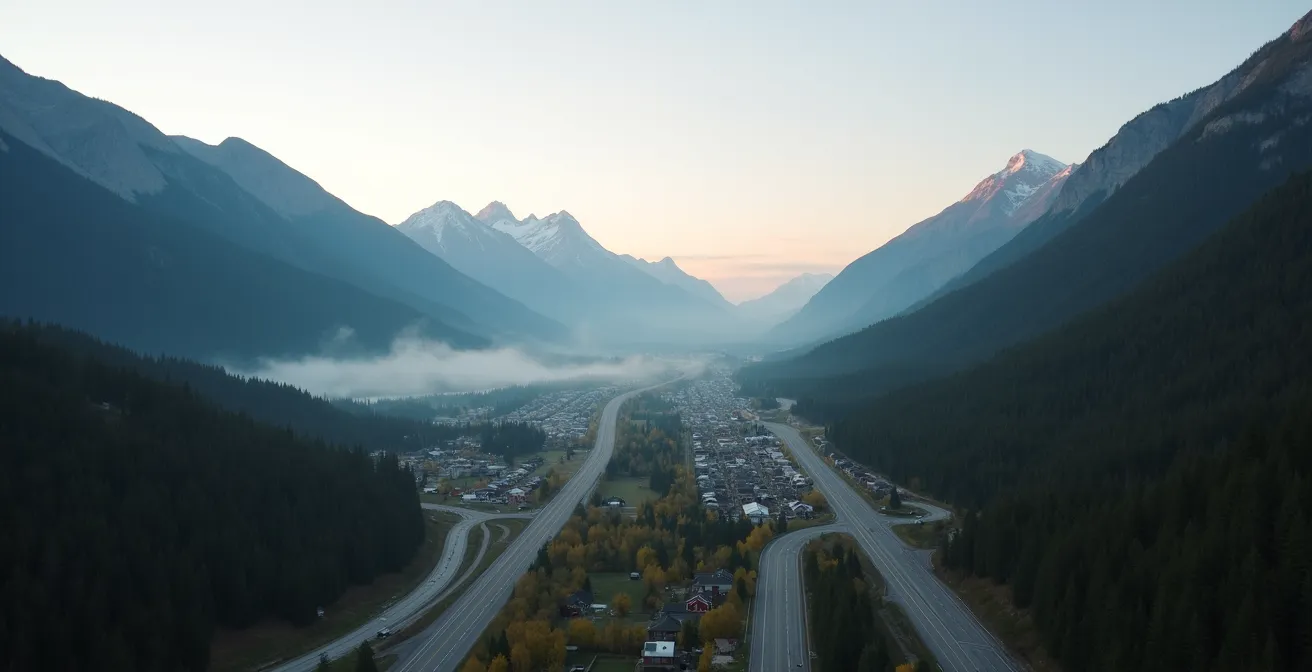
The real difference between Banff and Canmore isn’t the sticker price—it’s the hidden “friction costs” that impact your total vacation investment.
- Banff offers unparalleled access-at-a-price, but you’ll pay a premium in dollars and time for parking, dining reservations, and navigating crowds.
- Canmore provides better value on accommodation and a more authentic local atmosphere, but requires factoring in the daily financial and time cost of park entry.
Recommendation: Choose Banff for a short, high-impact trip focused on iconic sights; choose Canmore for a longer stay where budget control and a quieter, local experience are the priority.
For any traveler planning a trip to the Alberta Rockies, the first major decision is a financial crossroads: Banff or Canmore? On the surface, the choice seems simple. Tourist forums will tell you that Banff is the bustling, iconic hub for visitors, while Canmore is the quieter, more “local” alternative. The common advice is to pick Banff for convenience and Canmore to save a few dollars. But this is a dangerously incomplete picture. As a local who analyzes property and value for a living, I can tell you that the nightly hotel rate is only one line item on a much larger ledger.
The true cost of your mountain getaway isn’t just about accommodation. It’s a complex calculation of what I call the Total Cost of Experience (TCE). This includes not only your room, but also resort fees, parking, park passes, and the often-overlooked “friction costs”—the time and money wasted dealing with crowds, traffic, and a lack of availability. Choosing the right town is an investment decision. You’re investing both your money and your limited vacation time, and you want the best possible Experience ROI.
Instead of just comparing hotel prices, we are going to conduct a proper financial audit. We will dissect the hidden costs, quantify the value of “peace and quiet,” and analyze the financial impact of timing your trip. This isn’t about finding the cheapest option; it’s about understanding the full financial landscape so you can make the smartest investment for the type of mountain vacation you truly want.
This in-depth analysis will equip you with the financial insights needed to make a strategic choice. We will break down every component of your trip’s real cost, from seasonal price hikes to the authenticity of your souvenirs.
Summary: A Financial Breakdown of Banff vs. Canmore
- Why Booking Alberta Hotels Last Minute Costs You 40% More in July?
- November or April: Which “Dead Season” Actually Offers Cheap Hotels?
- Why You Can’t Get a Table in Banff at 7 PM Without a Reservation?
- Resort Fees and Parking: How Much Extra Will Your Hotel Really Cost?
- Downtown vs Tunnel Mountain: Where to Sleep for Peace and Quiet?
- Made in China or Canada: How to Spot Fake Souvenirs on Banff Avenue?
- Strathcona or Downtown: Which Farmers Market Requires the “Make It, Bake It, Grow It” Rule?
- Why Edmonton’s River Valley is Larger Than Central Park and How to Hike It?
Why Booking Alberta Hotels Last Minute Costs You 40% More in July?
The single most significant factor in your trip’s budget is timing, and in Alberta, all roads lead back to the Calgary Stampede. This world-famous event in July creates a massive tourism ripple effect that washes over the entire region. As hundreds of thousands of visitors pour into Calgary, demand for accommodation doesn’t just stay within the city limits; it surges west along the Trans-Canada Highway. This spike in demand allows hotels in both Banff and Canmore to implement aggressive dynamic pricing, triggering rate increases of 40% to 100% compared to the shoulder season. Waiting to book a July trip is the equivalent of buying a stock at its absolute peak.
This isn’t just about the Stampede itself. July is peak season for mountain tourism regardless, with long days and generally favorable weather. Hotels and rental owners know this, and their pricing models are built to capitalize on this guaranteed demand. From a financial perspective, booking a last-minute trip in July is the worst possible investment. You pay a significant premium for the same room you could have secured for much less with advance planning or by shifting your travel dates by just a few weeks. The key takeaway for any budget-conscious traveler is that your biggest savings aren’t found by choosing one town over the other, but by avoiding the predictable, high-demand corridor of mid-summer.
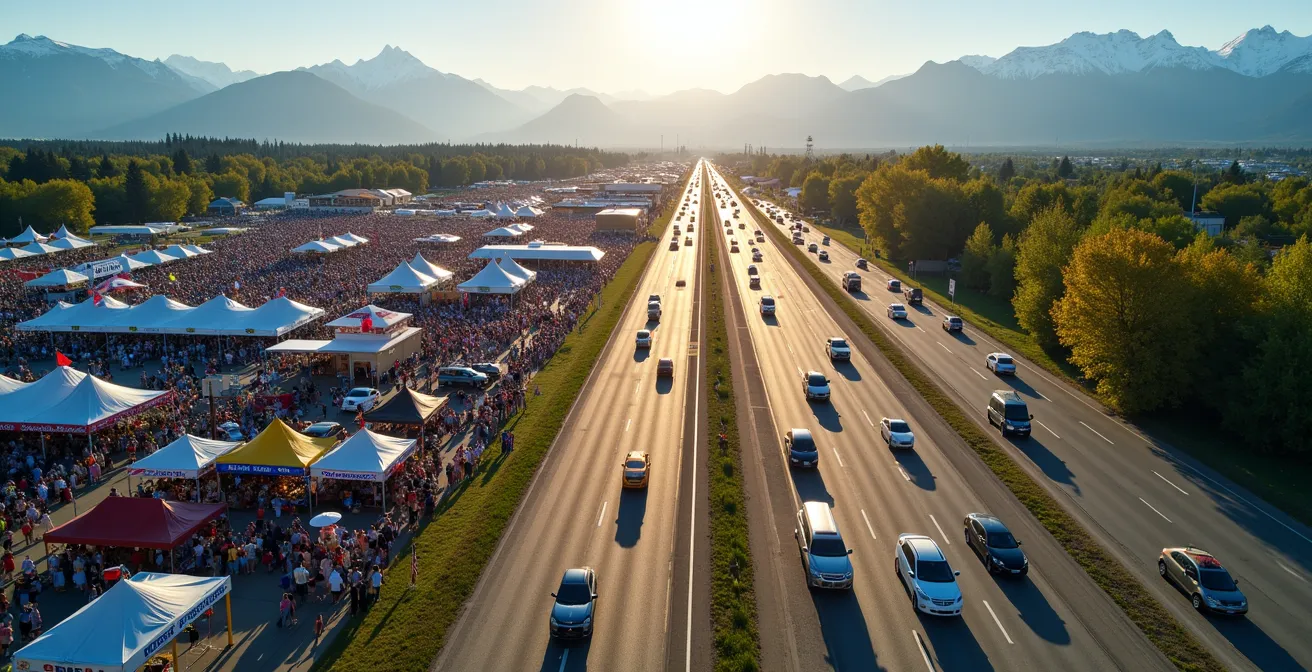
This visualization shows the direct flow of tourism traffic from major events like the Stampede directly into the Bow Valley. This concentrated demand gives hotels immense pricing power, making advance booking not just a suggestion, but a financial necessity. Planning your visit outside of this peak window is the first and most effective lever you can pull to manage your Total Cost of Experience.
November or April: Which “Dead Season” Actually Offers Cheap Hotels?
For savvy travelers looking to maximize value, the “shoulder seasons” of spring and late fall are prime territory. Both November and April are considered “dead seasons” in the Rockies, but from an investment standpoint, they offer vastly different returns. While both months promise lower accommodation prices, April is the clear winner for achieving a higher Experience ROI. Data shows that travelers can find significant discounts, with some hotel prices dropping by up to 46% in April compared to the summer peak. This is a substantial capital saving on the largest line item of your trip budget.
But the real value of April over November isn’t just the discount; it’s what you get for it. November in the mountains is often cold, brown, and slushy. It’s too late for fall colours and too early for reliable skiing. Many seasonal attractions and roads are closed, limiting your activity options. You get a cheap room, but your ability to experience the park is compromised. April, on the other hand, is a month of potential. While still unpredictable, it brings longer daylight hours, the start of the wildlife awakening, and the possibility of both spring skiing at higher elevations and thawed-out hiking trails in the valley bottoms. You’re paying the same discounted rate as in November, but your “portfolio” of accessible activities is significantly larger and more appealing. Choosing April is a strategic move to get peak-season beauty and access at off-season prices, representing the best value proposition for your travel dollar.
Why You Can’t Get a Table in Banff at 7 PM Without a Reservation?
The frustration of not being able to walk into a restaurant for dinner in Banff is not just an inconvenience; it’s a quantifiable “friction cost” that directly impacts the value of your vacation. The issue is a simple matter of supply and demand at a staggering scale. The Town of Banff is an island of commerce within a national park, and its infrastructure was never designed to handle the sheer volume of modern tourism. To put it in financial terms, imagine a market where 4.29 million annual visitors descend upon a town with only 8,000 permanent residents. This creates an extreme imbalance, particularly in services like dining.
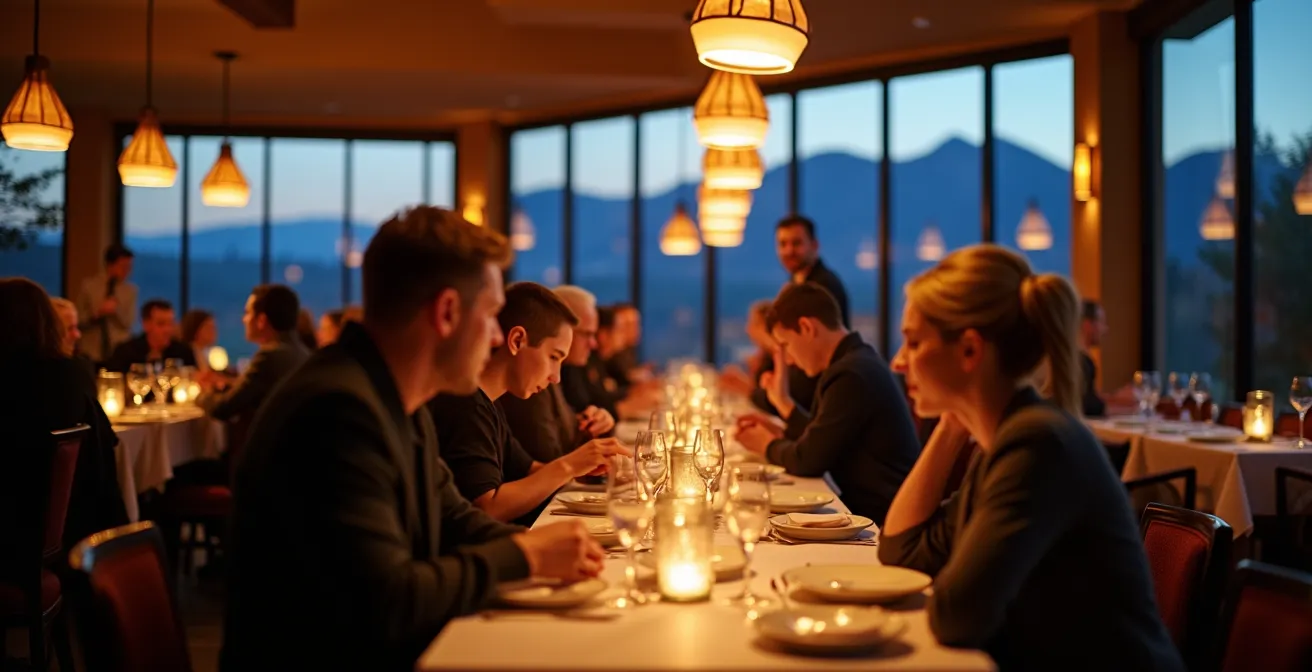
This scene is the nightly reality in downtown Banff during peak season. Every seat represents a transaction, and the demand for those seats far outstrips the supply. As the Town of Banff’s own officials note, “More than 4 million people visit Banff National Park every year, and almost all of them visit the Town of Banff.” This concentration means that prime dinner hours (6 PM to 8 PM) become a competitive sport. Without a reservation made days or even weeks in advance, you’ll spend valuable vacation time waiting in lines, walking from one packed restaurant to another, or settling for a less-desirable meal at an off-peak time. This lost time and added stress are a direct debit from your Experience ROI. In Canmore, while still busy, the larger resident base and more sprawling town layout diffuse this pressure, making spontaneous dining a more realistic possibility. When choosing your town, you must price in the cost of convenience—or the lack thereof.
Resort Fees and Parking: How Much Extra Will Your Hotel Really Cost?
The advertised nightly rate for your hotel is merely the starting point of your accommodation cost. In the competitive Banff and Canmore markets, what appears to be a good deal can quickly inflate once you account for the mandatory add-ons. These ancillary fees are a critical component of your Total Cost of Experience and can dramatically alter the financial comparison between the two towns. The most common hidden cost, particularly in Banff, is the “resort fee.” Often buried in the fine print, these fees typically range from $15 to $30 per night and are rarely optional. Hotels justify them by bundling amenities like local transit passes or Wi-Fi, but for your budget, it’s simply a non-negotiable price increase.
Parking is the second major hidden expense, and it represents a clear dividing line between Banff and Canmore. Most hotels in downtown Banff charge for parking, with nightly rates of $25 or more being standard. In contrast, parking is typically included for free at most Canmore hotels and vacation rentals. For a week-long trip, that’s a $175+ difference right there. However, the calculation isn’t complete without factoring in the Parks Canada pass. If you stay in Canmore to save on parking but plan to visit Lake Louise or the Icefields Parkway, you must purchase the mandatory $21.00 daily Parks Canada pass for your vehicle. For a seven-day trip, that’s $147. Suddenly, the “free” parking in Canmore is offset by the park entry fee. This is why a surface-level price comparison is so misleading.
Your Pre-Booking Financial Audit: A Checklist for Hidden Costs
- Resort Fees: Before booking, call the hotel and ask for the exact, all-inclusive nightly cost. Is a “resort,” “destination,” or “amenity” fee mandatory?
- Parking Charges: Verify the nightly parking cost. If staying in Canmore, add the daily Parks Canada pass fee to your budget for every day you plan to enter the national park.
- Incidental Holds: Ask about the incidental hold policy. Hotels will pre-authorize a security deposit ($50-$200 per night) on your credit card, reducing your available credit for the duration of your stay.
- In-room “Conveniences”: Check if Wi-Fi, in-room coffee, or other basic amenities are included or come with an extra charge.
- Tax Calculation: Ensure all quotes include the 4% Alberta Tourism Levy and 5% Goods and Services Tax (GST).
Downtown vs Tunnel Mountain: Where to Sleep for Peace and Quiet?
Within Banff itself, there’s another “real estate” decision to make: do you stay in the bustling downtown core or opt for the quieter seclusion of Tunnel Mountain? This choice is a classic trade-off between walkability and tranquility. Staying on Banff Avenue puts you steps from shops and restaurants, but it also means constant foot traffic, vehicle noise, and late-night revelry. For travelers whose primary goal is relaxation, the “peace and quiet” of Tunnel Mountain is a tangible asset worth investing in. The properties here are set amongst the trees, often visited by local wildlife, and offer a genuine sense of being *in* the mountains, away from the commercial hustle.
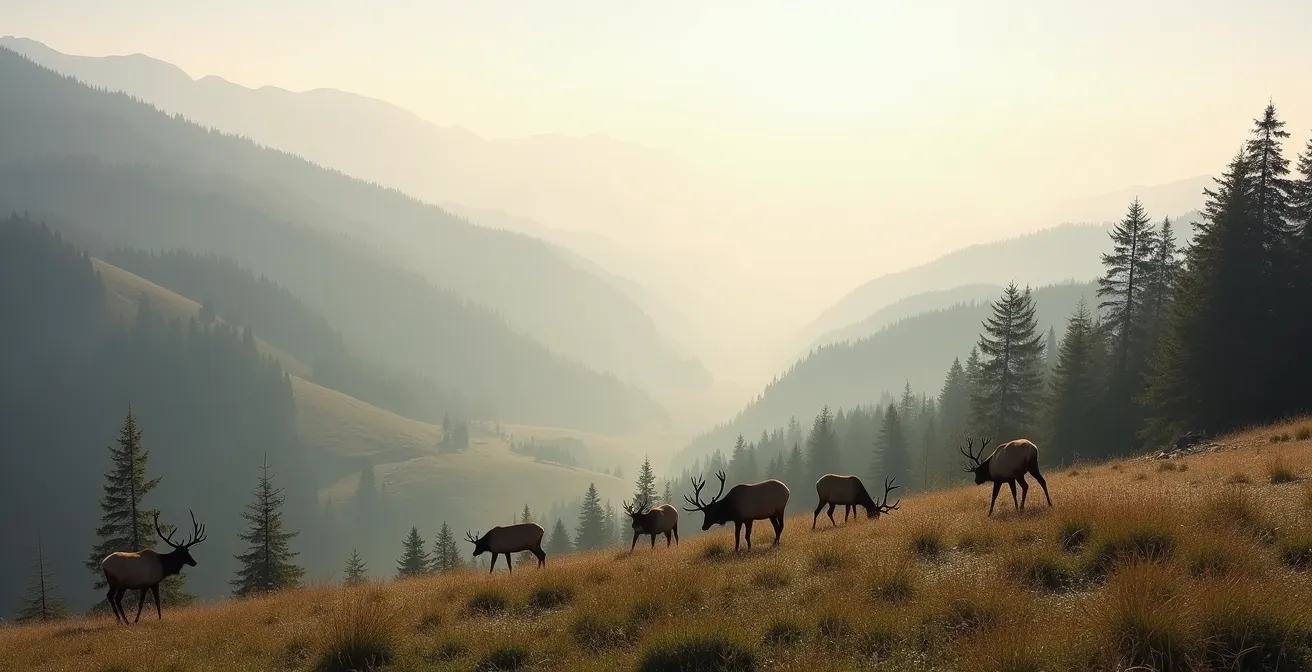
The trade-off, of course, is a loss of walkability. From Tunnel Mountain, you’ll likely need to drive or take the Roam transit bus to get downtown, adding a small “friction cost” in time. Interestingly, this dynamic is mirrored in Canmore, offering a parallel choice for value-seeking travelers.
Case Study: Three Sisters Mountain Village as Canmore’s “Tunnel Mountain”
For those seeking the quiet, spacious feel of Banff’s Tunnel Mountain but at a more favorable price point, Canmore’s Three Sisters Mountain Village is the direct equivalent. This purpose-built community offers larger vacation rentals and condos, often starting in the $300-500/night range, with more space for families. Just like Tunnel Mountain, it provides a serene, nature-focused environment but requires a short drive to reach the downtown area. The key financial advantage is that these properties almost always include free parking, eliminating a significant cost associated with comparable properties in Banff.
Ultimately, the decision to stay downtown or on the periphery is a lifestyle choice with clear financial implications. By “purchasing” peace and quiet on Tunnel Mountain or in Three Sisters, you are prioritizing a key aspect of the mountain experience, but you must factor in the minor transportation costs required to access the town centers.
Made in China or Canada: How to Spot Fake Souvenirs on Banff Avenue?
The final line item in your vacation budget is often souvenirs, and here, the difference between Banff and Canmore’s retail landscape becomes stark. Banff Avenue is lined with dozens of shops selling mountain memorabilia, but a discerning eye will notice that much of it is generic and mass-produced overseas. Canmore, with its strong local artisan community, offers a greater opportunity to purchase authentic, locally made goods. This is where the concept of the “Authenticity Premium” comes into play: the price you pay for something genuinely crafted in Alberta. While a mass-produced t-shirt might be cheaper, the value and story behind a piece of local art or craft are immeasurably higher.
So, how do you, as a visitor, distinguish a genuine artisan from a reseller of imported goods? You must become an auditor. Don’t be afraid to engage with vendors and ask direct questions. True artisans are passionate about their work and will be happy to answer.
- “Where is your workshop or farm located?” An authentic Albertan maker will proudly tell you exactly where they create their products, be it a studio in Canmore or a farm near Cochrane.
- “What percentage of your products do you make yourself?” A real craftsperson controls their inventory. They should be making 80% to 100% of what they sell.
- “Can you explain your creation process?” Ask about the materials and techniques. A potter will love to talk about their clay and glazes; a reseller will have no story to tell.
A local artisan expert from the Canmore market offers a blunt but effective financial rule of thumb that perfectly illustrates this divide:
If a ‘stone’ carving costs $10, it’s resin. A small, genuine soapstone carving by an indigenous artist will start at $100+, not $15.
– Local Artisan Expert, Canmore Artisan Market Guidelines
This isn’t just about price; it’s about value. Paying the Authenticity Premium means your money supports the local economy directly, and you leave with a souvenir that has a genuine connection to the place you visited.
Strathcona or Downtown: Which Farmers Market Requires the “Make It, Bake It, Grow It” Rule?
The search for authenticity extends to one of Alberta’s most cherished traditions: the farmers’ market. For Albertans, the gold standard is Edmonton’s Strathcona Market, which is famous for its strict adherence to a 100% “Make It, Bake It, Grow It” policy. This means every single vendor is a primary producer. This ethos is the foundation of the Alberta Approved Farmers’ Market program, which requires that a minimum of 80% of vendors must be a primary producer who has grown, baked, or made the goods they are selling within the province. This rule is what separates a true farmers’ market, which fosters direct connections between producers and consumers, from a flea market of resellers.
This provincial standard has a direct impact on your experience as a visitor in the mountains. While Banff has a market, it often feels more geared towards tourists, with a mix of local goods and more commercial items. Canmore’s Mountain Market, however, is renowned for its closer alignment with the strict Strathcona philosophy. It provides a more genuine community atmosphere where you can speak directly with the farmer who grew your vegetables or the artisan who crafted your pottery. You’re not just making a retail transaction; you’re participating in the local economy in a meaningful way.
Case Study: Canmore Mountain Market’s Authentic Community Hub
The Canmore Mountain Market functions as the town’s social and economic hub on market days, closely mirroring the “Make It, Bake It, Grow It” ethos. With a strong majority of vendors being local producers and artisans from the Bow Valley and surrounding Alberta regions, visitors have a much higher probability of interacting directly with the person who made or grew the product. This creates a genuine, less-commercialized atmosphere that many visitors find more rewarding and authentic than more tourist-focused markets.
For travelers, this difference affects the entire vibe. Stricter adherence to the “80/20” rule means you are buying directly from the source, building real connections and ensuring your money stays within the community. It’s the difference between buying a souvenir and buying a story.
Key Takeaways
- Banff’s Premium: You pay for immediate access, but this comes with significant “friction costs” (parking, reservations, crowds) that must be factored into your total budget.
- Canmore’s Value: Offers lower accommodation costs and a more authentic, relaxed atmosphere, but requires a daily financial and time investment (Parks Pass, driving) to access Banff’s main attractions.
- Timing is Everything: Booking during shoulder seasons (especially April) or well in advance of July can reduce your base cost by 40% or more, dramatically changing your trip’s financial equation.
Why Edmonton’s River Valley is Larger Than Central Park and How to Hike It?
To truly understand the Albertan perspective on value and access to nature, one must look east to Edmonton’s River Valley. This massive network of urban parkland is over 22 times larger than New York’s Central Park, offering hundreds of kilometers of trails right in the heart of the province’s capital. For many Albertans, this is their baseline for outdoor recreation: vast, accessible, and completely free to use. This cultural context profoundly shapes how locals view the “pay-to-play” model of a national park like Banff.
The hiking experience itself provides a fascinating bridge from the urban to the alpine. An Edmonton hiker accustomed to a 10km loop in Whitemud Ravine can use that as a training ground for the mountains. Canmore’s trail system, in particular, offers a perfect progression. A trail like Grassi Lakes (a 4km loop with 300m of elevation gain) is a gentle introduction to mountain hiking. From there, one can graduate to a more challenging objective like Ha Ling Peak (a 5.5km trail with 740m of gain). The key difference is the intentionality; Canmore’s trails are often designed and marketed for tourism, while Edmonton’s are preserved natural systems integrated into the city. A local recreation expert frames the financial and cultural divide perfectly:
The ‘free’ access to Edmonton’s massive park system vs. the ‘pay-to-play’ nature of Banff National Park frames the River Valley as an incredible local asset for Albertans.
– Local Recreation Expert, Alberta Parks Comparison Study
This perspective is crucial for any visitor trying to decide between Banff and Canmore. Canmore’s vibe is much closer to this accessible, community-integrated model of recreation. Banff, as the crown jewel of the national park system, necessarily operates under a different, more regulated and monetized framework. Choosing between them is not just a choice of scenery, but a choice between two different philosophies of interacting with the natural world.
Now that you have the full financial ledger, you are equipped to make an informed investment in your Rocky Mountain experience. Choose the town that aligns not just with your wallet, but with your personal definition of value, access, and authenticity.
Frequently Asked Questions on Alberta Travel and Markets
What does ‘Alberta Approved Farmers’ Market’ mean?
This official designation signifies that a market meets provincial standards, chief among them being that at least 80% of its vendors must be primary producers who personally make, bake, or grow the products they sell within Alberta. This ensures a high level of authenticity and supports the local economy.
How does Strathcona Market exceed provincial standards?
Edmonton’s Strathcona Market sets the “gold standard” for authenticity by enforcing a 100% rule. This means every single vendor is a primary producer, completely eliminating resellers and guaranteeing that customers are buying directly from the source.
Why do market rules affect the atmosphere?
Stricter rules, like the “Make It, Bake It, Grow It” policy, fundamentally change the market’s dynamic. It shifts the atmosphere from a simple retail environment to a community hub where consumers can build genuine connections with the farmers, bakers, and artisans behind the products.