
Alberta’s landscape tells a story that spans hundreds of millions of years, written in layers of rock, preserved in bone beds, and carved by ice. When you stand before a turquoise glacial lake, walk among otherworldly hoodoos, or explore world-renowned fossil sites, you’re witnessing chapters of Earth’s history that few places on the planet can reveal with such clarity. This province serves as an open-air museum where ancient seabeds, dinosaur ecosystems, and glacial forces have left their signatures in stone and landform.
Understanding this geological and paleontological context transforms any visit to Alberta from simple sightseeing into a journey through deep time. Whether you’re planning to explore the Canadian Badlands, visit the Royal Tyrrell Museum, or hike through mountain valleys shaped by retreating ice, knowing what you’re looking at—and why it matters—enriches every moment. This resource connects the dots between visible landscapes, the science that explains them, and the practical considerations for experiencing Alberta’s temporal depth as a curious traveler.
Alberta occupies a unique position in North America’s geological narrative. The province sits where ancient tropical seas once deposited layers of sediment that would become the Western Canada Sedimentary Basin, the same formations that now yield both fossil treasures and energy resources. Mountain-building forces thrust older rocks skyward to create the Rockies, while erosion has carved away softer layers to expose timelines you can read with your own eyes.
For travelers, this geological accessibility creates opportunities rare in modern tourism. Unlike many fossil-rich regions where specimens hide underground or behind museum glass, Alberta offers in-situ experiences—places where you can see bones still embedded in ancient riverbanks, touch rock formations that preserve ripple marks from Cretaceous streams, or witness the ongoing process of glacial retreat. The province’s commitment to preservation through provincial parks and UNESCO World Heritage designation means these resources remain protected while still accessible to those who approach them with respect and curiosity.
This combination of scientific significance and visitor access requires informed engagement. Understanding what makes a site globally important, why certain areas have restricted access, or how human activity impacts fragile formations allows you to participate responsibly in Alberta’s geological heritage rather than simply consuming it as scenery.
Alberta’s visible geology functions as a multilayered textbook, each stratum and landform revealing different chapters of planetary history. Learning to recognize these features adds dimension to every landscape you encounter.
The sedimentary rocks that dominate much of Alberta formed in shallow seas, river deltas, and coastal plains between roughly 145 and 66 million years ago. The distinctive banding you’ll notice in badlands exposures represents different depositional environments—dark coal seams mark ancient swamps, while tan sandstones indicate river channels that carried sediment from the emerging Rocky Mountains.
Key formations to recognize include the Horseshoe Canyon Formation, which produces many museum-quality dinosaur specimens, and the older Dinosaur Park Formation, known for exceptional diversity of preserved species. These aren’t just geological abstractions—they represent specific moments in time, each with characteristic plant life, climate conditions, and animal communities. When you identify a formation, you’re essentially dating the landscape around you to within a few million years.
The startling blue-green waters of lakes like Peyto, Moraine, and Louise puzzled visitors for generations before scientists fully explained the mechanism. These colors result from glacial flour—rock ground to powder-fine consistency by glacial movement, then suspended in meltwater. The particles are sized precisely to scatter blue and green wavelengths while absorbing others, creating colors so vivid they seem artificial.
This phenomenon connects directly to active geological processes. The intensity of color peaks in late summer when glacial melt reaches maximum volume, carrying the highest concentration of suspended sediment. As glaciers continue retreating, the character and timing of this color display shifts, making it a visible indicator of broader climate patterns affecting alpine environments.
While Alberta’s dinosaurs vanished 66 million years ago, its glacial history is recent enough to feel almost contemporary—the last major ice sheets retreated only about 12,000 years ago. The landscape still bears fresh scars from this icy past: U-shaped valleys, hanging valleys where tributaries enter main valleys high above current valley floors, and erratic boulders transported hundreds of kilometers from their source.
Today’s remaining glaciers, including the accessible Athabasca Glacier, are remnants of the Little Ice Age rather than the Pleistocene ice sheets, but they continue the same erosive work at a diminished scale. Markers showing glacial extent from previous decades illustrate the reality of current retreat—the ice has receded several hundred meters in many locations within living memory. This isn’t abstract climate science; it’s change you can measure with your own footsteps.
Alberta ranks among the world’s most productive dinosaur fossil regions, with bone beds that have fundamentally shaped scientific understanding of Cretaceous ecosystems. This paleontological wealth creates both opportunities and responsibilities for visitors.
Dinosaur Provincial Park earned UNESCO World Heritage designation based on the exceptional quality and quantity of its fossil deposits. The park has yielded more than 40 dinosaur species and hundreds of museum-quality specimens since systematic excavation began. This concentration results from ideal preservation conditions—periodic flooding buried carcasses in sediment before scavengers could destroy them, while the semi-arid modern climate erodes overlying rock at just the right pace to expose bones without destroying them.
The global significance extends beyond raw numbers. Sites here preserve complete ecosystems, not just isolated specimens. You find not only the famous herbivores like Centrosaurus and predators like Albertosaurus, but also turtles, crocodilians, fish, plants, and even insects preserved in amber—a complete snapshot of life 75 million years ago. Few other locations offer such comprehensive windows into prehistoric biodiversity.
Among Alberta’s paleontological treasures, the Centrosaurus bone beds stand out for their dramatic story and scientific value. These deposits contain remains of hundreds of individuals from the same species, apparently killed simultaneously in a catastrophic event—likely a flooding river during seasonal migration. The concentration is so dense that bones lie stacked atop one another, creating what researchers call “fossil logjams.”
These mass mortality sites provide evidence about dinosaur behavior that isolated skeletons never could. The presence of juveniles alongside adults suggests family group migration. The sheer numbers indicate herd sizes comparable to modern ungulate migrations. For scientists, each bone bed functions as a frozen moment, preserving social behavior and ecological relationships that usually leave no trace in the fossil record.
Alberta’s paleontological resources operate under strict legal protection through the Historical Resources Act, which designates all fossils on public and private land as provincial property. This means even finding a fossil fragment obligates you to report it rather than collect it—a regulation that puzzles some visitors but serves crucial purposes.
These rules protect scientific value that isn’t always obvious to untrained eyes. What looks like a nondescript rock chip might preserve microscopic details crucial for understanding species relationships or ancient diseases. Context matters enormously in paleontology—where a bone lies relative to other remains, which layer it occupies, and what other fossils surround it can matter as much as the specimen itself. Well-meaning collection destroys this context irretrievably.
For visitors, this creates a look-but-don’t-touch paradigm. Designated areas in Dinosaur Provincial Park allow access to fossil-bearing badlands where you can photograph and observe exposed bones in their natural setting, while restricted preserve areas protect the densest concentrations for research. This tiered system balances public access with preservation of scientific resources for future study.
Alberta’s hoodoos—mushroom-shaped rock formations with erosion-resistant capstones protecting softer pillars beneath—create landscapes that feel simultaneously alien and ancient. These formations carry both geological and cultural significance that deepens with understanding.
Geologically, hoodoos form through differential erosion: harder rock layers slow weathering of the softer sediments below them, creating temporary protection that preserves pillars while surrounding material erodes away. The process is ongoing and ultimately self-limiting—eventually the capstone topples and the pillar rapidly erodes to match surrounding terrain. This means hoodoo fields are temporary features in geological terms, making them particularly fragile despite their imposing appearance.
For Indigenous peoples of the region, including Blackfoot, Cree, and Nakoda nations, these formations hold cultural significance that long predates geological understanding. Many sites figure in oral histories and traditional narratives, representing connections between landscape and heritage that span thousands of years of human habitation. This dual significance—geological process and cultural meaning—requires visitors to approach these sites with awareness of multiple layers of value.
Timing dramatically affects hoodoo experiences. Early morning and late afternoon provide optimal lighting for photography, with low sun angles emphasizing the three-dimensional texture of eroded surfaces and creating dramatic shadows. Midday light flattens these features into pale monotones that fail to convey their sculptural quality.
Winter accessibility varies by location. Some sites near major highways remain accessible year-round, while others in more remote badlands become challenging or impossible to reach safely. Winter visits offer advantages—fewer crowds, unique snow-dusted aesthetics—but require more careful planning regarding road conditions and daylight hours. The same formations can feel entirely different in summer heat versus winter stillness, offering distinct experiences across seasons.
Translating Alberta’s geological heritage into actual travel experiences requires practical strategies for navigating museums, camping in fossil-rich badlands, and capturing images in challenging light conditions.
The Royal Tyrrell Museum near Drumheller ranks among the world’s premier paleontological institutions, which creates both opportunity and challenge for visitors. The museum houses more than 160,000 specimens, with extensive exhibits that can easily overwhelm first-time visitors trying to see everything in a single visit.
Advance ticket booking, particularly during summer peak season and weekends, prevents disappointment and reduces entry wait times. The museum’s layout follows evolutionary progression, but strategic visitors often begin with the Dinosaur Hall—the collection’s centerpiece—while energy and attention remain fresh, then work backward through earlier periods or forward into extinction events and modern paleontology.
Practical considerations matter: parking fills by mid-morning on busy days, with overflow lots requiring a shuttle ride. The on-site restaurant serves functional rather than memorable food, and lineups peak at noon—bringing lunch or eating early/late saves time. For those prone to sensory overload from crowds and stimulation, early opening or late afternoon visits during shoulder season offer calmer experiences that allow more contemplative engagement with exhibits.
Staying overnight in badlands environments like Dinosaur Provincial Park creates opportunities to experience these landscapes in their most dramatic moods—dawn and dusk, when wildlife becomes active and lighting transforms the terrain. However, badlands camping presents distinct challenges that differ from typical mountain or forest camping.
The environment offers minimal shade, making summer heat management crucial. Wind can be relentless, requiring robust tent staking and sheltered cooking arrangements. Water is scarce or nonexistent at some sites, necessitating complete self-sufficiency. Yet these same harsh conditions that challenge human comfort create the erosion that reveals fossils and the clear skies that deliver spectacular stargazing—the badlands’ character emerges from their severity.
Badlands and fossil sites present photographers with extremes: intense midday sun that bleaches color and eliminates shadow detail, or golden hour light so dramatic it risks looking oversaturated. The landscape’s inherent lack of scale markers—no trees, no familiar objects—makes conveying the actual size of formations difficult.
Successful approaches include embracing harsh light for its graphic quality rather than fighting it, using long shadows during low sun to emphasize texture and depth, and deliberately including people or vehicles to establish scale. The distinctive color palette of Alberta’s badlands—tans, grays, dark coal seams, occasional bentonite clays in cream or pale green—benefits from slight desaturation to avoid the artificial look that over-vivid rendering can create.
For those wanting to go deeper than surface appreciation, understanding the scientific narratives that Alberta’s rocks and fossils reveal adds intellectual satisfaction to visual wonder.
The Late Cretaceous Alberta that dinosaurs inhabited bore little resemblance to today’s prairie and mountain landscape. Sea levels stood 200 meters higher than present, with a shallow inland sea—the Western Interior Seaway—splitting North America longitudinally. Alberta occupied the western coastline of this sea, creating a lush coastal plain with a warm, humid climate supporting dense vegetation and diverse dinosaur communities.
Evidence for this radically different world appears throughout the rock record: marine fossils including ammonites and mosasaurs in formations that now sit in dry badlands, coal seams representing vast coastal swamps, and the plant fossils showing tropical to subtropical flora. Understanding this context transforms badlands hiking into time travel—you’re walking through what was once a dinosaur-populated river delta fronting a continent-spanning sea.
The disappearance of non-avian dinosaurs 66 million years ago remains one of paleontology’s most studied events, with Alberta’s rocks providing crucial evidence for competing theories. The asteroid impact hypothesis—now widely accepted—finds support in the iridium layer marking the Cretaceous-Paleogene boundary in Alberta sections, though the boundary itself is subtle and difficult for casual observers to identify.
Recent research complicates the simple “asteroid killed the dinosaurs” narrative by revealing that dinosaur diversity was already declining in the final million years before impact, possibly due to volcanic activity, climate change, or ecosystem disruptions. Alberta’s exceptionally complete late Cretaceous record makes it a key testing ground for these more nuanced scenarios, where researchers can track species richness and abundance approaching the final boundary.
The paleontology visible in Alberta museums increasingly reflects technologies that didn’t exist a generation ago. CT scanning reveals internal bone structure and lets researchers digitally prepare specimens without risking damage to original fossils. 3D printing reproduces fragile bones for handling and display while originals remain protected, and creates mirrors of left-side bones to complete right-side skeletons.
Soft tissue preservation—once considered impossible in fossils tens of millions of years old—has emerged as a frontier research area, with some Alberta specimens yielding preserved melanosomes that reveal original skin color patterns. These discoveries push the boundaries of what fossils can tell us, transforming dinosaurs from gray hypothetical reconstructions into animals with specific colors, patterns, and textures rooted in direct evidence.
Alberta’s paleontological heritage isn’t just for passive consumption—opportunities exist for interested visitors to contribute meaningfully to ongoing research and conservation.
Programs like the Royal Tyrrell Museum’s volunteer opportunities allow properly trained individuals to participate in fossil preparation, collection maintenance, and even field excavation. These aren’t token activities—citizen scientists make real contributions to research while gaining hands-on understanding of paleontological work. Some participants develop this into serious avocations or career paths, with Alberta’s institutions offering internationally recognized training in paleontology and museum science.
For those unable to commit to ongoing volunteering, reporting fossil finds to appropriate authorities (Alberta Parks, the Royal Tyrrell Museum, or university paleontology departments) constitutes a valuable citizen science contribution. Many significant discoveries in Alberta started with alert hikers noticing unusual bones eroding from outcrops—what matters is preserving the context and getting trained personnel to the site before erosion destroys the evidence.
Paleontological research operates with limited public funding, making private support crucial for field work, specimen preparation, and scientific analysis. Museum memberships, donations to university paleontology programs, and support for specific excavation projects all help sustain the work that continues revealing Alberta’s prehistoric past. Even modest contributions aggregate to fund student positions, laboratory equipment, and field supplies that make discoveries possible.
This support creates a virtuous cycle: funding enables research, research produces discoveries and knowledge, and that expanding understanding enriches the experience for future visitors. By participating in this cycle—through citizen science, financial support, or simply informed and respectful visitation—travelers become stakeholders in preserving and understanding Alberta’s deep time heritage for generations to come.
Alberta’s geological and paleontological resources offer experiences that span from simple wonder at turquoise waters and weathered hoodoos to deep engagement with scientific frontiers in extinction research and fossil preservation technology. The depth you bring to these encounters—through understanding what you’re seeing, why it matters, and how to engage responsibly—determines whether your visit remains superficial tourism or becomes genuine connection with the vast stretches of time that shaped this landscape and everything on it.
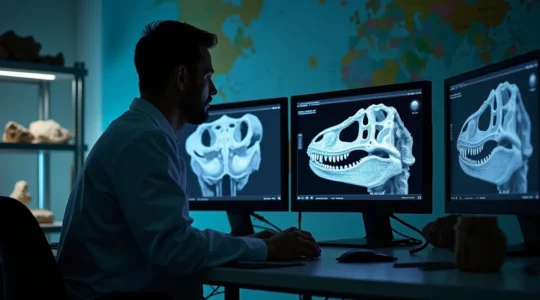
CT scanning is transforming Alberta’s paleontology by converting physical fossils into dynamic, immortal digital data, not just creating 3D images. This “datafication” allows for non-destructive analysis of delicate structures like skin and organs, revealing secrets without damaging the original specimen….
Read more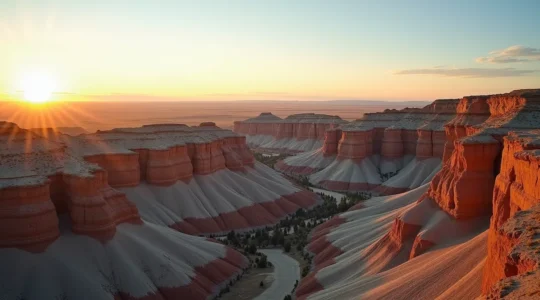
Alberta’s dinosaur bounty isn’t luck; it’s the result of a unique geological “perfect storm” that occurred roughly 75 million years ago. Rapid burial by rivers flowing from the young Rocky Mountains preserved skeletons before they could scatter. The specific chemistry…
Read more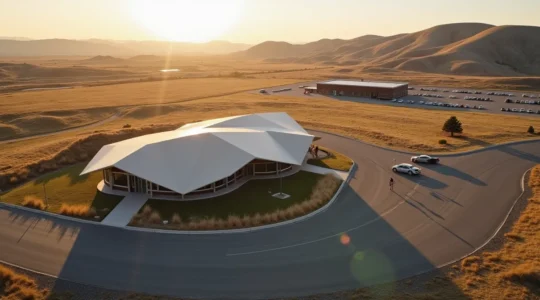
In summary: Book timed tickets 2-3 weeks in advance for a 10 AM or 2 PM slot to avoid the peak 11 AM to 1 PM visitor pulse. Prioritize high-impact exhibits like Dinosaur Hall for later in the day and…
Read more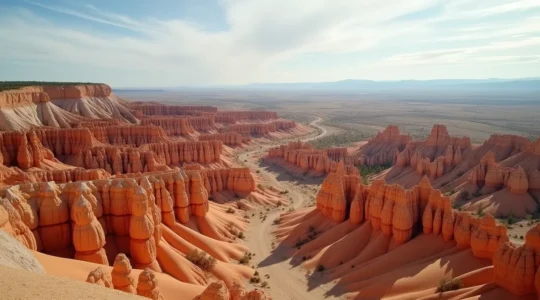
Dinosaur Provincial Park’s UNESCO status recognizes its role not merely as a place with fossils, but as the world’s most significant, undisturbed window into a complete ecosystem from the Late Cretaceous period. It contains an unparalleled concentration of high-quality fossils…
Read more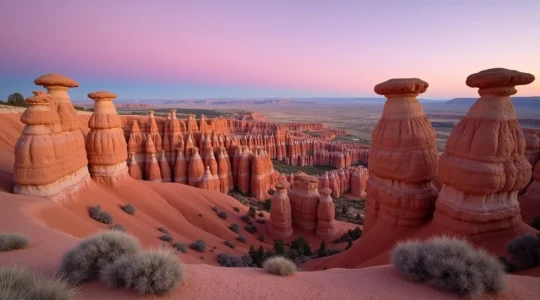
The geological process that creates Alberta’s hoodoos—differential erosion—is the very same one that ensures their destruction, a process now dangerously accelerated by human activity. Hoodoos are not static; they are temporary structures formed when soft sandstone erodes faster than its…
Read more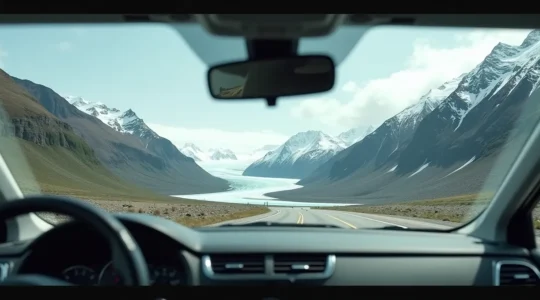
In summary: Identify “trimlines” on valley walls, which act as bathtub rings showing a glacier’s former height. Understand that the milky turquoise or emerald green colour of lakes is caused by “rock flour”—finely ground sediment from glacial erosion. Recognize the…
Read more