
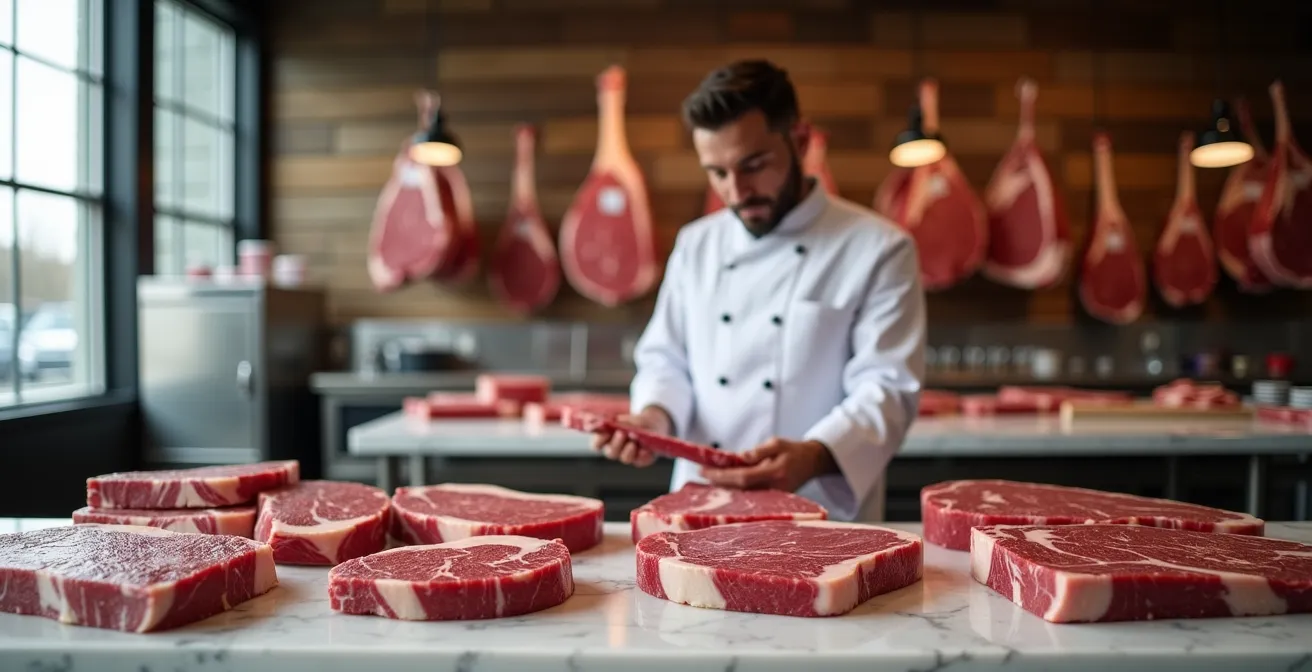
Choosing the best Alberta steak isn’t about the grade on the label, but about understanding the story behind the meat—from the barley feed to the butcher’s aging room.
- Alberta’s unique barley-fed beef offers a distinct nutty flavour and white fat, unlike corn-fed alternatives.
- Dry-aging concentrates flavour but comes at a significant cost; a 21-30 day age is the sweet spot for most.
Recommendation: Engage your butcher. Ask about hanging time, feed, and sourcing to find a steak that truly represents the best of the province.
Standing at the butcher counter, faced with labels like ‘AAA’ and ‘Prime’, it’s easy to feel a little lost. You know Alberta beef is world-class, but what truly separates a good steak from an unforgettable one? It’s a question that goes to the very heart of Alberta’s identity. For meat lovers, whether you’re a lifelong Albertan or a visitor wanting to taste the province’s most famous export, making the right choice feels important.
Many will tell you to “just look for the highest grade” or “pick the one with the most marbling.” While not entirely wrong, this advice barely scratches the surface. It ignores the real magic of Alberta beef—a story that begins long before the grading stamp is applied. This story encompasses the province’s unique climate, its signature feed, and a deep-rooted ranching culture that prioritizes quality over all else. It’s about understanding the ‘terroir on the hoof,’ a concept that gives our beef its unique character.
The secret isn’t just in deciphering grades, but in learning to read the meat itself. The true difference between Alberta and Texas beef, for instance, lies in the nutty, clean flavour imparted by our local barley. The choice between a fresh steak and a 45-day dry-aged one is a choice between bright, beefy flavour and deep, funky complexity. This guide will take you beyond the labels and into the mind of a butcher. We’ll explore what makes a dry-aged steak worth the price, decode the “barley signature,” find the perfect cut for a campfire cookout, and uncover the stories that made beef Alberta’s cultural identity. You’ll learn not just how to buy a steak, but how to truly appreciate it.
Before you sharpen your knives, let’s lay out the journey. This guide is structured to take you from the butcher’s counter to the heart of Alberta’s beef culture, answering the key questions every meat lover has.
Summary: Your Complete Guide to Choosing and Appreciating Alberta Beef
- Is a 45-Day Dry-Aged Steak Worth the Extra $40?
- Barley Fed: Why Does Alberta Beef Taste Different Than Texas Beef?
- Tomahawk or Tenderloin: Which Cut is Best for a BBQ Camping Dinner?
- How to Buy a Side of Beef: Is it Practical for Visitors?
- Brandings and BBQ: How Did Beef Become the Province’s Identity?
- Scorpions or Crickets: Why Do People Eat Weird Food at Stampede?
- Longview Jerky: Is the Lineup Worth the Wait?
- How to Find True Farm-to-Table Restaurants in Calgary and Edmonton?
Is a 45-Day Dry-Aged Steak Worth the Extra $40?
When you see a dry-aged steak with a hefty price tag, you’re not just paying for time; you’re paying for transformation. Dry-aging is an art form where beef is stored in a carefully controlled environment. Over weeks, two key things happen. First, moisture evaporates from the muscle, concentrating its flavour into something intensely beefy and rich. Second, the meat’s natural enzymes break down connective tissues, resulting in a steak that is exceptionally tender. This process requires expertise and patience, which is why it commands a premium.
Case Study: D’Arcy’s Meats Dry-Aging Program
To understand this in a local context, look at a shop like D’Arcy’s Meats in Edmonton. They age their local Alberta beef for anywhere from 30 to 60 days. Their process highlights how Alberta’s naturally dry climate creates ideal conditions for developing the signature nutty, umami-rich flavours that connoisseurs seek. According to a profile on their offerings, beef aged for 30-60 days produces enhanced flavour and a more tender steak, making it a staff favourite and a prime example of artisanal Albertan butchery.
But is a longer age always better? Not necessarily. The flavour profile changes dramatically with time. A 21-30 day age yields a tender steak with a more pronounced beefy taste. Push it to 45-60 days, and you’ll get a steak with a distinct “funk” and nuttiness, similar to aged cheese. Go beyond 90 days, and the flavour becomes incredibly intense and complex, an experience for the truly adventurous palate. The cost also rises steeply due to yield loss—the longer a steak ages, the more of its original weight is lost to evaporation and trimming.
| Days Aged | Flavor Profile | Yield Loss | Price Premium |
|---|---|---|---|
| 21-30 days | More tender, beefier taste | 12-15% | $10-15/lb extra |
| 45-60 days | Pronounced funk and nuttiness | 25-30% | $25-40/lb extra |
| 90+ days | Cheese-like, intense experience | 35-40% | $50+/lb extra |
Ultimately, a 45-day dry-aged steak is “worth it” if you are specifically seeking that deep, complex, and funky flavour profile. For many, the 21-30 day range offers the perfect balance of enhanced tenderness and flavour without the polarizing intensity—or the prohibitive cost—of a longer age.
Barley Fed: Why Does Alberta Beef Taste Different Than Texas Beef?
The single greatest factor defining the unique taste of Alberta beef is its diet. While much of the world’s beef, including from Texas, is finished on corn, Alberta’s herds are predominantly finished on barley. This isn’t an accident; it’s a direct result of our agricultural landscape. This difference in feed creates a distinct “flavour architecture” that sets our beef apart on a global stage. The result is what I call the Barley Signature: a cleaner, nuttier, and almost buttery flavour that doesn’t coat the palate.
Corn-fed beef is often sweeter and can have a more pronounced “gamey” or mineral-rich flavour. The fat from corn-finishing also tends to be softer and more yellow in hue. Barley, on the other hand, creates a different kind of marbling. According to the Canadian Beef Grading Agency, it’s a specific regional advantage. As their standards report notes, Alberta’s specific grain-growing regions produce high-energy barley that creates the prized white, firm fat and intricate marbling that our beef is famous for. This physical difference is the foundation of our grading system and the visual cue for quality.
This difference in fat composition is something you can see and taste. The marbling in a barley-fed steak is often finer and more evenly distributed, melting beautifully during cooking to baste the meat from within. This difference in feed is visually apparent in the marbling, which is the basis for grading like AAA and Prime.
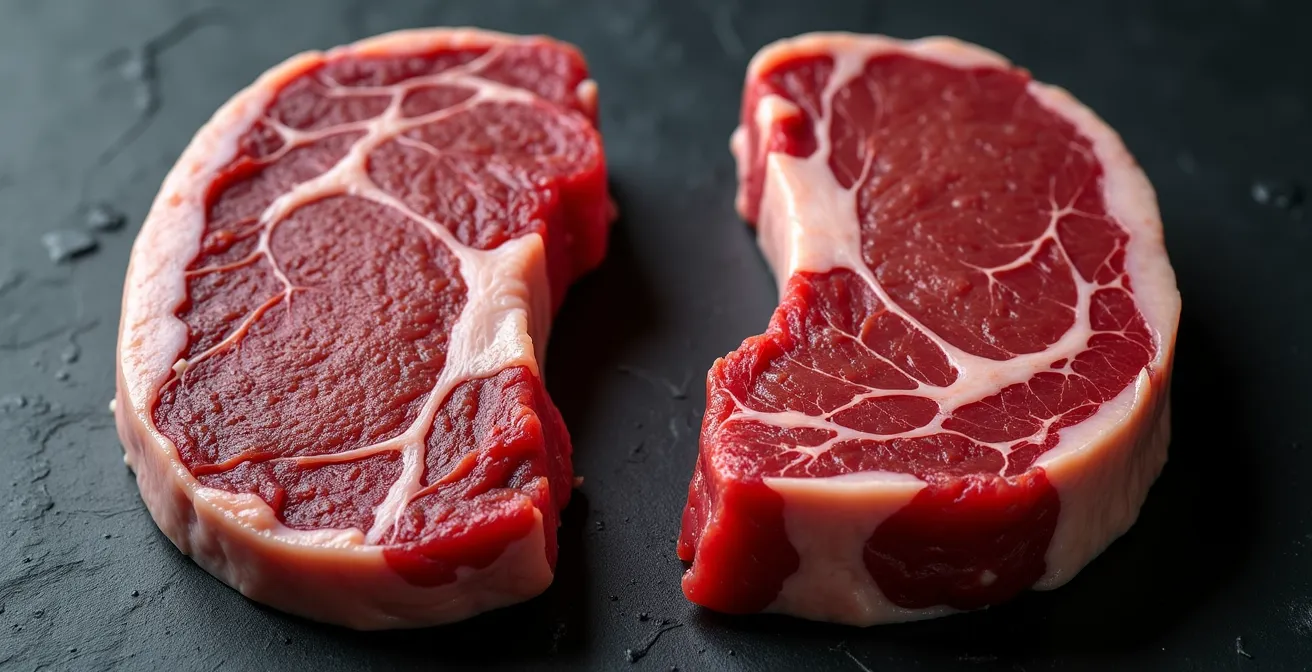
As you can see, the higher the grade, the more abundant the marbling. This intramuscular fat is what delivers flavour and juiciness. When you’re comparing Alberta beef to others, look for that clean, white fat. It’s the hallmark of the barley-fed diet and a promise of the unique, clean flavour that defines our province’s most delicious export.
Tomahawk or Tenderloin: Which Cut is Best for a BBQ Camping Dinner?
Choosing a steak for a campfire dinner isn’t just about flavour; it’s a logistical puzzle. You need a cut that travels well, cooks evenly over unpredictable heat, and delivers that “wow” factor worthy of a meal under the stars. The giant, bone-in tomahawk is pure spectacle, but it’s awkward to pack and notoriously difficult to cook evenly over open flame. The tenderloin is incredibly tender and easy to pack, but its leanness makes it prone to drying out, and it offers poor value for feeding a group.
So, what’s the butcher’s choice for the perfect camping steak? My money is on a thick-cut striploin or, for the more adventurous, the picanha (sirloin cap). A 1.5- to 2-inch thick striploin offers a fantastic balance of robust beefy flavour, good marbling, and a manageable shape for even cooking. The picanha, a favourite in Brazil, is a triangular cut with a thick fat cap that bastes the meat as it cooks, keeping it incredibly juicy and flavourful. It’s a ‘culinary landmark’ of a cut that is both impressive and practical.
A comparative look at the options makes the choice clearer, especially when considering the realities of cooking in the wild. As a recent analysis from a local Calgary butcher shows, practicality often trumps sheer size.
| Cut | Wow Factor | Cooking Ease | Pack/Handle | Value for Group |
|---|---|---|---|---|
| Tomahawk | High | Difficult | Awkward | Moderate |
| Tenderloin | Medium | Easy | Easy | Low (expensive) |
| Thick-cut Striploin | High | Moderate | Easy | High |
| Picanha (Sirloin Cap) | Very High | Easy | Easy | Excellent |
The Rancher’s Sear Technique
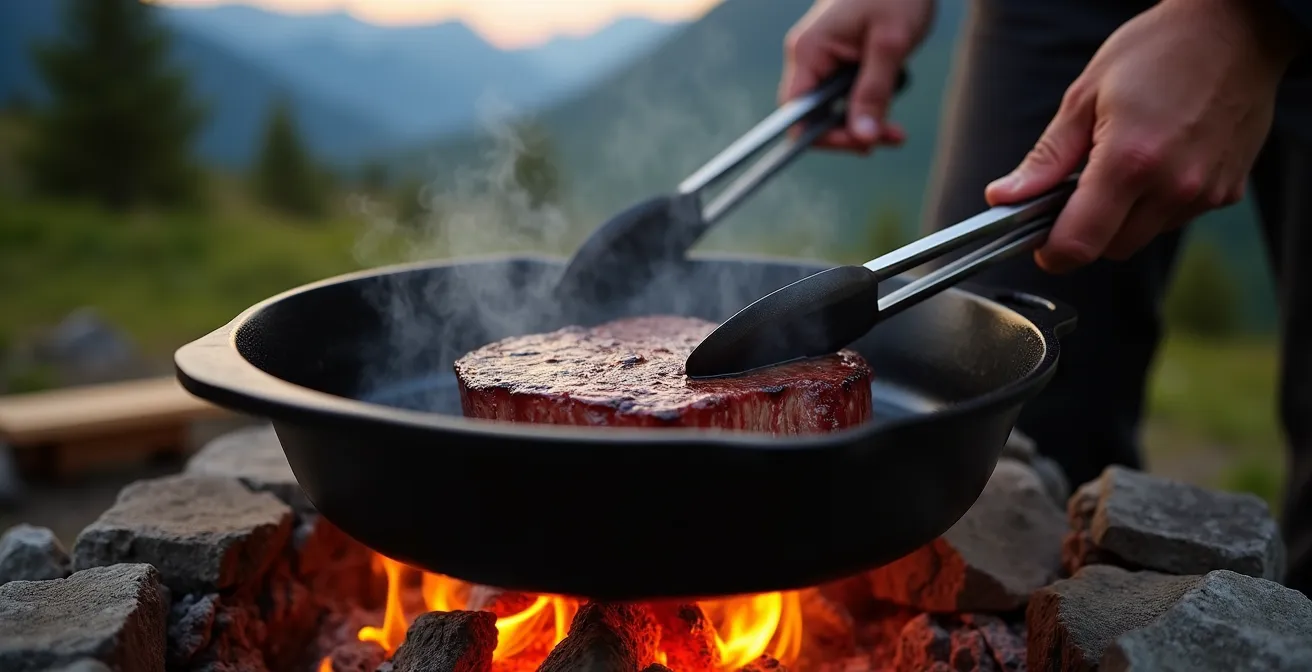
For the ultimate campfire sear, forget the flimsy grill grate. Embrace the traditional Alberta rancher’s method: a heavy cast-iron pan placed directly on the hot coals. This technique, practiced on ranges throughout the province, provides intense, even heat that a campfire grill can’t match. It creates a perfect, edge-to-edge crust that locks in all the juices of your quality Alberta beef, delivering a restaurant-quality steak in the heart of the wilderness.
How to Buy a Side of Beef: Is it Practical for Visitors?
The idea of buying a “side of beef” is romantic. It conjures images of a deep freezer stocked with custom-cut steaks, roasts, and ground beef straight from a local ranch. For an Albertan family, it can be an economical way to secure high-quality, local meat for months. A side of beef typically weighs between 300 to 400 pounds (hanging weight) and yields hundreds of pounds of finished cuts. For a visitor, however, the logistics are a nightmare. You’d need a massive cooler, a place to store it, and a plan to consume it all before heading home. In short, it’s completely impractical.
But that doesn’t mean you can’t get the same “direct from the source” experience on a smaller scale. The modern Alberta butcher has adapted to the needs of visitors and smaller households. Instead of a whole side, you can tap into the world of curated butcher boxes. These are smaller, thoughtfully assembled collections of a rancher’s best offerings, perfect for a week-long trip or for taking a taste of Alberta home with you.
Here are some visitor-friendly options to get that side-of-beef experience without buying the whole cow:
- Order a ‘Curated Butcher’s Box’ (typically 10-20 lbs) from renowned shops like Acme Meat Market in Edmonton or Bessie in Calgary.
- Request all your portions be vacuum-sealed, which keeps them fresh and makes them easy to fit in a large cooler for a road trip.
- Ask about shipping services. Many top-tier Alberta butchers offer frozen shipping across Canada, allowing you to send a box of prime cuts home.
- Consider pre-ordering online for pickup. This ensures the butcher has the specific cuts you want and saves you time when you arrive.
Your Action Plan: Key Questions for Your Butcher
- What’s the hanging time on this particular animal? (Look for 21+ days for optimal tenderness and flavour development).
- Which of your suppliers practices rotational grazing? (This indicates a focus on sustainable, quality-driven ranching).
- Is this beef finished on barley or a mixed grain? (Ask for the barley-fed to experience Alberta’s signature flavour).
- For this cut, do you recommend a reverse sear or a high-heat sear? (Shows you respect their craft and want the best result).
- What’s a lesser-known cut that’s eating particularly well right now? (This often uncovers hidden gems like picanha or bavette).
Brandings and BBQ: How Did Beef Become the Province’s Identity?
Alberta’s identity is inextricably linked with beef. It’s on our license plates (“Wild Rose Country,” but the spirit is there), in our festival names, and it’s the centerpiece of our hospitality. But this wasn’t always the case. The transformation of beef from an agricultural commodity to a provincial icon is a story of ambitious policy, vast grasslands, and the creation of a powerful cultural myth: the Alberta cowboy.
The Foundation: The Great Ranching Lease of 1881
The bedrock of the industry was laid in the late 19th century. A pivotal moment was the federal government’s policy of 1881, which leased millions of acres of southern Alberta’s pristine grasslands to aspiring ranchers for a mere one cent per acre per year. This policy kickstarted the era of the “big four” ranches, including the legendary Cochrane Ranche, and established the vast, open-range cattle operations that would define the province for a century. This single decision cemented the industry’s foundation and set the stage for Alberta to become a global beef powerhouse.
However, an industry alone doesn’t create an identity. For decades, Alberta beef was primarily an industrial product, raised for export to markets like Great Britain. The cultural shift happened after World War II, with the meteoric rise of an event that would mythologize the ranching life: the Calgary Stampede. This is where the narrative changed, as noted by industry historians.
Alberta beef was primarily raised for export to Britain in the early days, but after WWII and with the rise of the Calgary Stampede, the cowboy and his cattle transformed from an industrial figure to a cultural icon.
– Alberta Beef Producers, Historical Archives
The Stampede packaged the grit and labour of ranching into a romantic spectacle. The cowboy became a folk hero, and his cattle became a symbol of Alberta’s rugged independence and connection to the land. From the chuckwagon races to the massive pancake breakfasts, beef was no longer just a product; it was the star of the show. This cultural branding was so successful that today, a perfectly grilled steak is seen as the ultimate expression of Albertan hospitality and pride.
Scorpions or Crickets: Why Do People Eat Weird Food at Stampede?
Every year, alongside the mini donuts and corn dogs, the Calgary Stampede midway unveils a menu of foods designed to shock and awe: scorpion pizza, cricket-topped hot dogs, mealworm sundaes. For an outsider, it might seem bizarre. Why would anyone willingly eat insects on a stick? The answer has little to do with gourmet flavour and everything to do with what can be called the “Dare Economy.” It’s not just food; it’s a social experience and a rite of passage.
Eating these strange concoctions has become a form of social currency. It’s about proving your mettle, earning bragging rights, and, most importantly, creating a story. In the age of social media, that picture of you tentatively biting into a deep-fried scorpion is a guaranteed conversation starter. It’s an experience designed to be shared.
Eating ‘weird food’ at Stampede has become a rite of passage and social currency. Visitors share these moments on social media, making it as much a part of the experience as watching the rodeo. The novelty creates stories to tell and memories that define their Alberta visit.
– The Dare Economy Experience
This manufactured adventure is a key part of the modern Stampede experience. It provides a low-stakes thrill that anyone can participate in. If you’re feeling squeamish but want to join the fun, the key is to start small. Here’s a handy scale to help you navigate the midway’s wilder side:
- Adventurous but Tasty: This is your entry level. Think new and unusual flavours of classic mini donuts, or creative poutine combinations with unexpected toppings like mac & cheese.
- Moderately Daring: Here you’re pushing the boundaries a bit. This category includes things like deep-fried butter, pickle-stuffed corn dogs, or unconventional meat pairings. They’re weird, but still recognizably “food.”
- Purely for the Dare: This is the main event. Scorpion pizza, cricket mac & cheese, or any treat topped with a variety of insects falls into this category. The flavour is secondary to the act of eating it.
The pro tip is simple: start at level one and see how you feel. The goal isn’t necessarily to enjoy the taste of a cricket, but to participate in the collective, quirky ritual that makes the Stampede unlike anything else.
Longview Jerky: Is the Lineup Worth the Wait?
On any given weekend, the highway heading west from Calgary towards the mountains sees a peculiar ritual. Cars pull over in the small town of Longview, and a lineup forms outside a small, unassuming storefront: the Longview Jerky Shop. For decades, this has been a mandatory pit stop for Calgarians on their way to a weekend of hiking or skiing. The jerky is legendary, but for first-timers, the long wait can be baffling. Is it really that good?
The answer is yes, but the question misses the point. The value of Longview Jerky isn’t just in the perfectly spiced and dried Alberta beef. It’s in the tradition. The wait, the chat with fellow customers, the smell wafting from the shop—it’s all part of a shared cultural experience. It has become a “culinary landmark,” a pilgrimage where the journey and the destination are one and the same. The lineup isn’t a bug; it’s a feature. It signifies that you’re part of a long-standing local tradition.
That said, even the most dedicated traditionalist doesn’t love waiting in line forever. As a butcher, I appreciate efficiency as much as tradition. So, if you want the prize without paying the full price in time, here are a few insider strategies to navigate the Longview pilgrimage:
- Visit on a Tuesday morning. This is consistently the quietest time, allowing you to get in and out with minimal fuss.
- Call ahead for large orders. If you’re stocking up, their number is (403) 558-2244. You can place your order and arrange a pickup time, bypassing the main queue entirely.
- Try the hidden gems. Everyone goes for the regular jerky, but their pepperoni and garlic sausage are local favourites that often have shorter wait times.
- Travel during the shoulder seasons. A visit in late September or early May offers the same mountain views with a fraction of the summer and ski season crowds.
So, is the lineup worth the wait? Absolutely, at least once. It’s a quintessential Alberta experience. But once you’ve earned your stripes, use these tips to make your jerky run a little more efficient. The mountains are calling, after all.
Key Takeaways
- Alberta’s unique flavour comes from its barley feed, creating a nutty taste and firm, white fat.
- Dry-aging (45+ days) creates intense, funky flavours but is a costly luxury; 21-30 days offers a great balance of tenderness and value.
- The best way to choose a steak is to talk to your butcher: ask about aging, feed, and sourcing.
How to Find True Farm-to-Table Restaurants in Calgary and Edmonton?
The term “farm-to-table” is everywhere these days, but it often means very different things. Some restaurants use it as a trendy label for having one or two locally sourced ingredients on an otherwise static menu. But a true farm-to-table restaurant operates on a different philosophy entirely. It’s a deep commitment to showcasing the best of a region’s agriculture, building direct relationships with farmers, and creating a menu that is a living reflection of the current season. In Alberta, this means a menu that celebrates everything from summer Taber corn to autumn root vegetables and, of course, exceptional local beef.
So how do you tell the difference between a restaurant that’s truly committed and one that’s just using buzzwords? You need to look for specific indicators that reveal a deeper connection to the local food system. It’s about becoming a detective and looking beyond the menu’s surface-level claims.
To help you distinguish the authentic from the aspirational, here’s a guide to the key indicators, based on how true farm-to-table butcheries and restaurants operate. An analysis from one of Edmonton’s leading farm-to-table butcher shops provides a clear framework for what to look for.
| True Farm-to-Table | ‘Featuring Local’ |
|---|---|
| Menu changes weekly or seasonally | Static menu with 1-2 local items |
| Specific farm names listed on the menu | Generic ‘local’ designation |
| Chef is a known presence at farmers’ markets | No visible farm relationships |
| Credits given to specific ranches/producers | Vague sourcing descriptions |
Another powerful clue is the restaurant’s connection to the broader culinary community. As experts from The Butchery by RGE RD in Edmonton point out, there’s a strong link between education and genuine farm-to-table philosophy. They advise diners to look for affiliations with top culinary schools.
Look for affiliations with local culinary schools like SAIT in Calgary, which are hubs for farm-to-table chefs committed to showcasing Alberta’s agricultural bounty.
– The Butchery by RGE RD, Edmonton’s Farm-to-Table Guide
By using this checklist, you can move beyond the marketing and find those special places where the menu tells a genuine story about Alberta’s land, its farmers, and its seasons. It transforms a simple dinner out into a delicious exploration of the province’s flavour.
Now that you’re armed with a butcher’s knowledge, the next step is to start the conversation. Visit a local, independent Alberta butcher, ask these questions, and discover the story behind your next great steak.